

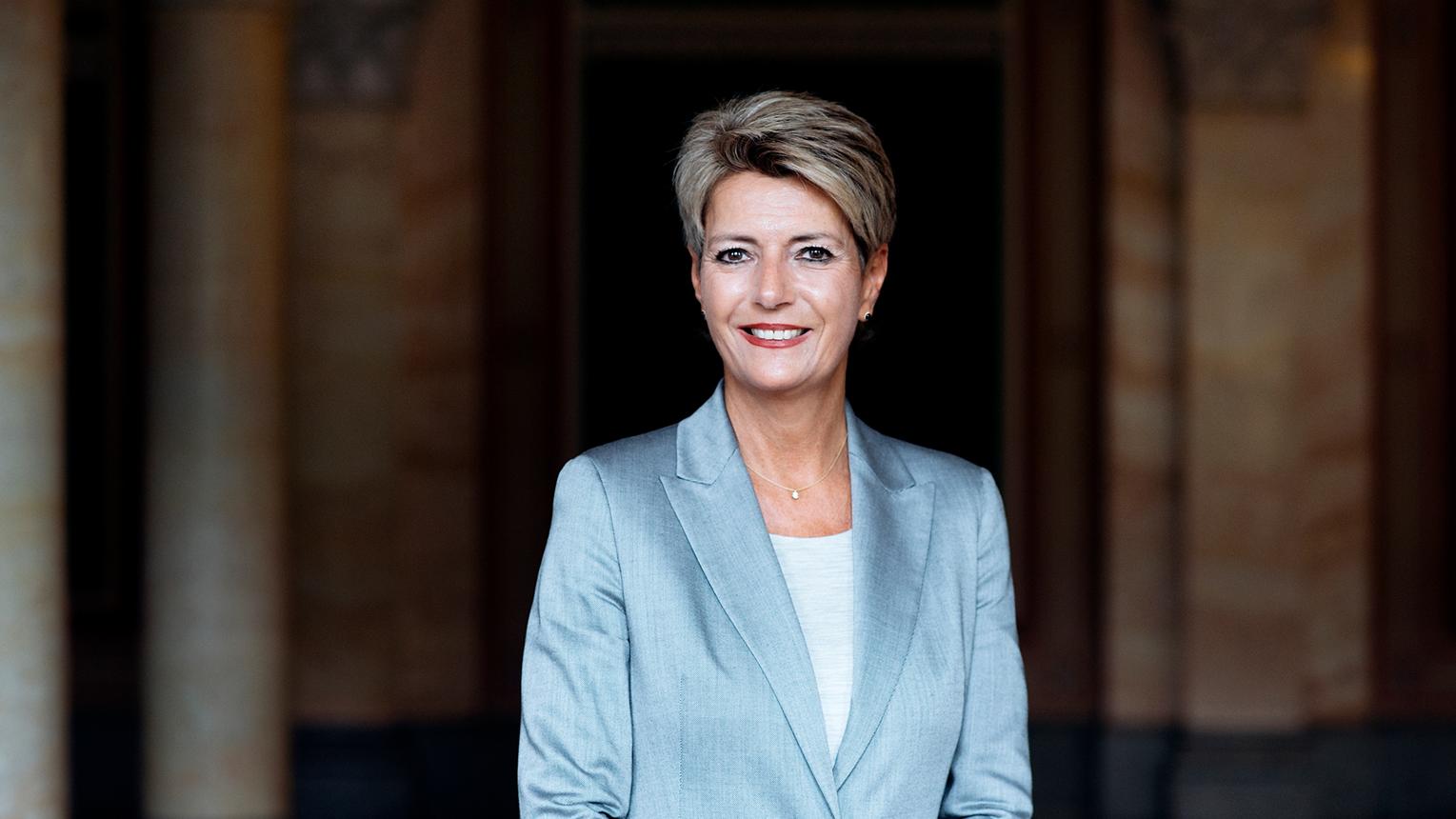

Swiss Finance Minister Defends Strict UBS Capital Requirements
Swiss Finance Minister Karin Keller-Sutter has reaffirmed her support for maintaining strict capital requirements for UBS, arguing that strong financial safeguards are essential to protect Switzerland’s banking system and maintain global financial stability.
Speaking at the Point Zero Forum near Zurich Airport, Keller-Sutter emphasized that requiring UBS to fully cover the capital needs of its foreign subsidiaries remains a necessary measure. She stated that the current regulatory proposals are justified and designed to strengthen confidence in Switzerland’s financial sector.
According to the finance minister, the issue extends beyond Switzerland. She warned that instability within major international banks could have wider consequences for the global financial system. Keller-Sutter also expressed concerns about ongoing financial deregulation efforts in the United States, suggesting that weaker oversight could increase the risk of another international financial crisis.
The minister highlighted that well-capitalized banks enjoy significant advantages in global markets. Strong financial reserves help institutions withstand economic shocks, attract investment, and build trust among customers and investors. She pointed to the collapse of Credit Suisse as a reminder that a loss of confidence can quickly become one of the greatest threats facing a major bank.
Recent media reports suggested that Swiss lawmakers may consider easing future capital rules for UBS. Under those discussions, the bank’s overseas subsidiaries could be required to maintain a Common Equity Tier 1 (CET1) capital ratio of between 70% and 80%, rather than the originally proposed 100% coverage.
Such a change could significantly reduce the amount of capital UBS would need to hold. Estimates indicate that the banking giant would require approximately CHF 12.1 billion under a relaxed framework, compared with around CHF 20 billion under the government’s full-coverage proposal.
However, public opinion appears to support tougher banking regulations. A recent survey found that more than three-quarters of Swiss residents favor stricter oversight of systemically important financial institutions. The findings suggest that many citizens remain concerned about financial stability following the Credit Suisse crisis and want stronger protections in place for the future.
As Switzerland continues to debate the future of banking regulation, Keller-Sutter remains committed to ensuring that UBS maintains sufficient capital buffers to safeguard both the national economy and the broader financial system.