Meta Pushes Congress for Legal Shield in Child Safety Lawsuits

Meta Platforms is reportedly lobbying the United States Congress to secure legal immunity from child-harm lawsuits linked to its social media platforms, including Instagram, as regulatory pressure over online safety intensifies.

According to sources familiar with the matter, Meta has proposed legislative language as part of the Kids Online Safety Act (KOSA), a major US bill aimed at strengthening protections for children online.

The proposed provision would limit lawsuits against technology companies by granting immunity from state-level claims related to harms affecting users under the age of 18. If adopted, the measure could significantly affect thousands of ongoing and future legal cases against Meta and other major platforms.

Growing Legal Pressure on Social Media Platforms

Meta and Google’s YouTube are currently facing increasing legal scrutiny over allegations that platform design features contributed to harmful or addictive behaviour among young users.

Earlier this year, both companies were found liable in a case that resulted in approximately $6 million in damages. The ruling marked a significant development in ongoing litigation targeting the safety design of major social media platforms.

Plaintiffs in multiple cases argue that features such as infinite scrolling, push notifications, and algorithm-driven feeds contribute to compulsive usage patterns and negatively impact mental health among minors.

KOSA Bill at the Centre of Debate

The Kids Online Safety Act is one of the most significant proposed reforms to US digital regulation in recent years. The bill would require social media companies to take stronger measures to prevent harm to minors and redesign features that could encourage excessive usage.

Under the proposed framework, companies would be expected to apply “duty of care” standards when designing features such as auto-play videos, notifications, and visual filters.

While the bill has received bipartisan support in the Senate, it has previously faced challenges in the House of Representatives. It has now been reintroduced amid renewed political negotiations.

Controversy Over Immunity Provision

The most controversial aspect of the proposed amendment is the suggestion that platforms could receive immunity from lawsuits related to child safety harms if they comply with federal standards.

Critics argue that such a provision could block families and advocacy groups from seeking legal accountability for alleged harms caused by platform design choices. Supporters, however, claim that a unified federal standard would reduce fragmented state-level regulation and provide clearer compliance rules for companies.

Meta has stated that the proposed language is intended to create consistent national standards rather than eliminate legal accountability.

Political Negotiations Continue

The bill is currently under discussion between US lawmakers and the White House, with efforts underway to combine child safety legislation with broader technology regulation, including artificial intelligence governance.

Despite strong Senate support in previous votes, the final outcome remains uncertain as debates continue over the balance between child protection, innovation, and corporate liability.


“Broken English” Documentary Honors Marianne Faithfull Legacy

The documentary Broken English – Marianne Faithfull** offers an intimate reflection on the life and legacy of the legendary singer, songwriter, and actress Marianne Faithfull, who passed away in 2025.

Directed by Iain Forsyth and Jane Pollard, and guided creatively by Tilda Swinton, the film presents Faithfull’s story through a fictional interview setting known as the “Ministry of Not Forgetting.” She is portrayed in her late seventies, reflecting on a career that began unexpectedly in the 1960s.

Faithfull rose to fame during the cultural revolution of the 1960s, becoming an icon of British music and a muse to The Rolling Stones. The documentary highlights not only her fame but also her struggles, resilience, and artistic reinvention across more than six decades.

The film is largely driven by her own words, as she speaks candidly with actor George MacKay in a stylized studio environment. While some narrative sections focus heavily on surrounding fictional characters, the most powerful moments emerge when Faithfull herself reflects on her extraordinary life journey.

Despite health challenges in her later years, including reliance on an oxygen machine, she is portrayed as warm, honest, and intellectually sharp. The documentary ultimately paints her as a survivor of both fame and personal struggle, preserving her legacy as a cultural icon.

Pixar’s Toy Story 5 Receives Mixed Reaction

In contrast, Pixar’s Toy Story 5 marks the return of the beloved animated franchise, but with a more divisive reception.

The story follows Jessie and other familiar characters now living with a new child, Bonnie, who struggles with loneliness and social isolation. The film introduces a modern theme centered around children becoming increasingly attached to digital screens.

When Bonnie receives her own device, the toys fear they may become obsolete in a rapidly changing technological world. Woody returns to guide the group through this crisis, while Buzz Lightyear appears in multiple versions, creating chaotic and comedic tension.

While the film attempts to address relevant social issues such as technology dependence and childhood isolation, the execution has received mixed reactions, with some critics questioning its narrative direction.

Cultural Reflection

Both films highlight different aspects of modern storytelling—one reflecting on real-life artistic legacy, and the other exploring how animation adapts to digital-age concerns.

Fertility Decline and Smaller Families Reshape Switzerland’s Future

Switzerland is experiencing a continued decline in birth rates and marriages, reinforcing long-term demographic changes that are reshaping the country’s population structure.

According to the Federal Statistical Office, 78,200 children were born in Switzerland in 2025, marking a slight decrease from the previous year and the fourth consecutive annual decline. Although the drop appears small, it confirms a steady downward trend over the past decade.

Over the last ten years, the number of births in Switzerland has fallen by nearly 10%, while fertility rates have dropped more sharply from 1.54 to 1.28 children per woman. These figures remain well below the replacement level needed for long-term population stability.

Delayed Parenthood and Fewer Children

The decline is largely driven by two key patterns: fewer people choosing to become parents, and those who do increasingly limiting family size to one or two children.

Births among women under 35 have fallen significantly, while births among women aged 35 and above have increased. This shift has pushed the average age of motherhood in Switzerland to 32.5 years.

Experts note that delayed parenthood reduces the total number of childbearing years, increasing the likelihood that some people will have fewer children than originally planned.

At the same time, surveys show changing attitudes toward parenthood. A growing share of young adults now express no desire to have children, particularly in urban areas and among highly educated women.

Stable Deaths but Slowing Growth

Deaths in Switzerland remained broadly stable at around 71,900 in 2025. As a result, the country still recorded a natural population increase of about 6,300 people.

However, this surplus has declined sharply compared to previous years, reflecting a long-term weakening of natural population growth. In 2016, for example, the surplus was nearly four times higher.

Demographers warn that if current trends continue, Switzerland could see natural population growth stall by the mid-2030s. Without immigration, population decline could follow as deaths begin to exceed births.

Marriage and Divorce Trends

Marriage rates are also falling. Around 35,900 couples married in 2025, representing a 2.3% decline compared to the previous year. This marks the third consecutive annual drop.

The total includes approximately 800 same-sex marriages, following the introduction of marriage equality in 2022. However, the initial increase in weddings after the reform appears to have stabilized.

Divorces also declined slightly, with Swiss courts recording around 15,800 cases in 2025. Despite this drop, long-term projections suggest that nearly 40% of marriages could eventually end in divorce if current trends continue.

Long-Term Economic Impact

The combination of lower fertility, delayed family formation, and an ageing population presents significant long-term challenges for Switzerland.

Fewer working-age people will eventually need to support a growing elderly population, increasing pressure on pension systems, healthcare services, and public finances.

Policymakers increasingly view demographic change as one of the most important structural challenges facing Switzerland in the coming decades.

Swiss Parliament Approves Pension Boost but Funding Gap Remains

Switzerland’s parliament has approved a partial funding plan for the country’s new 13th annual state pension payment, but a significant financing gap remains unresolved.

After months of political debate, the National Council backed an increase in Value Added Tax (VAT) while rejecting higher payroll contributions. The decision means that only part of the additional pension costs will be covered by dedicated funding.

Under the approved plan, Switzerland’s standard VAT rate will increase from 8.1% to 8.5%. The special VAT rate applied to hotels will rise from 3.8% to 4%. However, the reduced VAT rate of 2.6% on essential goods such as food and medicines will remain unchanged.

The breakthrough came after the Green Liberal Party changed its position and agreed to support a permanent VAT increase. This shift helped secure parliamentary approval for the measure.

Despite the agreement, lawmakers narrowly rejected a proposal to increase payroll contributions by 0.2 percentage points. That proposal had been part of a compromise designed to fully finance the new pension benefit.

As a result, the approved VAT increase is expected to cover only around half of the total cost of the 13th pension payment.

Funding Challenge Still Unresolved

The Swiss Federal Council had previously prepared alternative financing options in case parliament failed to agree on a funding plan. These options included a larger VAT increase or a combination of higher VAT and payroll deductions.

At present, neither of these alternatives appears to have sufficient political support. This leaves the government facing the challenge of finding additional funding sources in the coming years.

Swiss Voters Likely to Decide

The VAT increase is expected to pass parliament’s final approval process. Because it requires a constitutional amendment, the proposal must also be approved by Swiss voters and cantons through a national referendum.

Political observers expect the vote to take place in November.

First Payments Begin This Year

The first 13th pension payments are scheduled to be distributed in December. The program is expected to cost approximately CHF 4.2 billion during its first year alone.

Even if voters approve the VAT increase, implementation will take time because businesses must update systems and pricing structures. As a result, the pension supplement will likely be paid for roughly two years before dedicated funding begins flowing into the system.

Experts estimate that this temporary shortfall could create a funding gap of approximately CHF 9 billion.

Long-Term Pressure on the Pension System

Switzerland’s ageing population continues to place increasing pressure on the state pension system. As the number of retirees grows faster than the working population, pension expenses continue to rise.

While strong financial market performance has helped support pension funds in recent years, economists warn that long-term sustainability remains a major concern.

Without additional reforms, the gap between pension obligations and available funding could continue to widen, increasing future costs for taxpayers and workers.

Swiss Government Rejects Food Security Initiative Ahead of Vote

The Swiss government has officially recommended rejecting a controversial food security initiative that will be put before voters on September 27. The proposal aims to increase Switzerland’s food self-sufficiency rate to 70% within the next decade while promoting sustainable domestic production and greater consumption of plant-based foods.

Food security has long been a significant issue in Switzerland. During World War II, the country launched the famous Wahlen Plan, a national strategy that dramatically increased domestic food production to prepare for potential supply disruptions. The initiative remains an important symbol of Swiss resilience and self-sufficiency.

Supporters of the current proposal argue that Switzerland should strengthen its food independence and reduce reliance on imported products. They believe the initiative would boost sustainable agriculture, encourage healthier eating habits, and improve long-term food security.

However, opponents say the proposal is unrealistic and could create serious economic challenges. Critics argue that increasing food self-sufficiency from approximately 46% today to 70% within ten years would require extensive government intervention and significant changes to consumer behavior.

Business groups, food industry representatives, and farming organizations have warned that the initiative could increase bureaucracy, raise food prices, and encourage more consumers to shop across the border where products are often cheaper.

Some political leaders also argue that the proposal could indirectly push consumers toward a largely plant-based diet, limiting personal choice. They believe Switzerland already operates one of the world’s most sustainable agricultural systems and does not require such drastic reforms.

The Swiss Farmers’ Union has expressed concerns about the practical challenges of implementing the proposal, while business associations warn that additional regulations could affect thousands of companies involved in food production, processing, and distribution. The initiative was launched by campaigner Franziska Herren, who previously led the drinking water initiative that Swiss voters rejected in 2021. Officially, the proposal seeks to secure food supplies through stronger sustainable domestic production, increased plant-based food consumption, and cleaner drinking water.

Unlike many previous referendums, the Swiss government has chosen not to present a counterproposal. Voters will therefore decide directly whether to approve or reject the initiative later this year.

The debate has also revived discussion about Switzerland’s wartime Wahlen Plan. While supporters point to the success of that strategy, opponents argue that wartime measures designed for national survival are not suitable for modern Switzerland, which faces very different economic and social conditions.

Teenager Dies After Devastating Zurich Storm

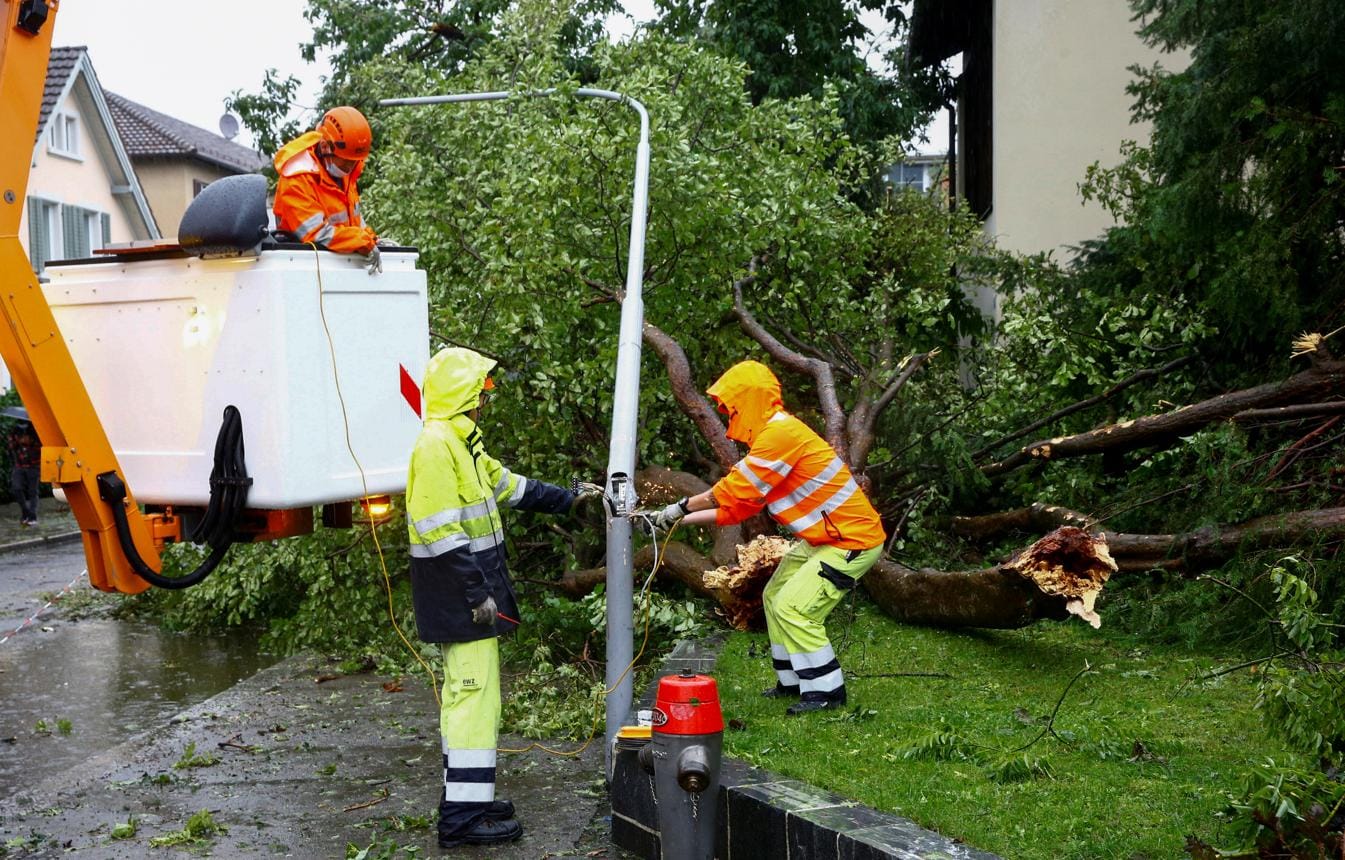
A tragic incident has shaken Zurich after a 16-year-old girl died from injuries sustained during a powerful storm that swept across the city on Friday evening.

The teenager was critically injured when a falling tree branch struck her during the severe weather. Emergency responders rushed her to hospital, where doctors fought to save her life. However, Zurich’s Protection and Rescue Service later confirmed that she had passed away from her injuries.

Authorities have launched an investigation into the exact circumstances surrounding the accident. Zurich City Police, the Zurich Institute of Forensic Medicine, and the public prosecutor’s office are working together to determine the cause of death and establish all relevant details.

The fatal incident occurred as intense thunderstorms moved across large parts of Switzerland. One particularly severe storm travelled from Urdorf toward Winterthur at around 6:00 p.m. and remained over Zurich for nearly two hours, bringing strong winds, heavy rain, and dangerous conditions. Emergency services faced a challenging night as the storm caused widespread disruption throughout the city. Zurich’s Protection and Rescue Service responded to approximately 270 emergency incidents linked to the extreme weather conditions.

Ambulance teams were dispatched to around 50 separate emergencies, assisting injured residents and addressing storm-related hazards. Officials confirmed that the storm resulted in one fatality and several additional injuries across the city.

Weather experts have warned that severe thunderstorms can develop rapidly during Switzerland’s summer season, creating risks from falling branches, flying debris, flash flooding, and strong wind gusts.

Local authorities continue to urge residents to monitor weather alerts, avoid parks and wooded areas during storms, and seek shelter immediately when severe weather warnings are issued.

Bürgenstock No-Fly Zone Disrupts Zurich Airport Flights

Flight operations at Zurich Airport were temporarily disrupted on Sunday after the activation of a special no-fly zone around the Bürgenstock peace summit triggered a technical fault within Switzerland’s air traffic control system.

According to Swiss air traffic controller Skyguide, the no-fly zone was implemented at short notice following the decision to host high-level Iran–United States peace negotiations at the Bürgenstock resort. The late activation created an unexpected technical issue affecting radar systems.

The fault impacted radar displays at Skyguide’s Dübendorf control centre as well as Zurich Airport’s control tower. As a result, Swiss authorities temporarily closed airspace east of Bern to ensure flight safety while specialists investigated the problem.

The disruption had a significant impact on Zurich Airport operations. For part of the morning, aircraft were unable to take off, although arriving flights continued to land until approximately 6:45 a.m.

Skyguide confirmed that aircraft already approaching Zurich were exempt from restrictions. Delegations travelling to the Bürgenstock peace summit were also able to land according to schedule despite the operational challenges.

Authorities stressed that passenger and aviation safety remained fully protected throughout the incident. Emergency procedures were immediately activated, and technical teams worked rapidly to identify the source of the problem.

Engineers successfully located the fault, allowing flight operations at Zurich Airport to gradually resume from 7:45 a.m. Normal operations have since been restored, with flights once again operating without major restrictions.

However, Skyguide stated that a small reduction in airspace capacity for overflying aircraft will remain in effect until Monday morning as a precautionary measure. Additional airspace sectors have been opened to minimise disruption, and the impact on passengers is expected to be minimal.

The incident highlights the complexity of managing major international events while maintaining uninterrupted air traffic operations in one of Europe’s busiest aviation networks.

Historic Iran-US Peace Talks Officially Begin in Switzerland

A major diplomatic milestone has been reached as peace negotiations between the United States and Iran officially began on Sunday at the renowned Bürgenstock resort in Switzerland.

The high-level summit has brought together key international leaders, including US Vice President JD Vance, Iranian Parliament Speaker Mohammed Ghalibaf, Qatar’s Prime Minister, and Pakistan’s Prime Minister. The talks mark the beginning of what is expected to be a two-month negotiation process aimed at reducing tensions across the Middle East.

The negotiations follow a memorandum of understanding signed earlier this week by both nations, creating a framework for discussions on some of the region’s most sensitive issues.

Speaking at the opening session, JD Vance described the gathering as a “historic meeting” and called on all parties to work toward “turning a new page” for the Middle East. His remarks reflected hopes that diplomacy could replace years of confrontation and instability.

The Bürgenstock summit comes just days after US President Donald Trump and Iranian President Massoud Pezeshkian signed a framework agreement in Versailles aimed at ending ongoing regional conflicts and establishing conditions for future cooperation.

Negotiators are expected to focus primarily on Iran’s nuclear program, the easing of economic sanctions, and the release of Iranian financial assets currently restricted by the United States. Discussions are also expected to address the fragile ceasefire situation in Lebanon and broader regional security concerns.

Switzerland, known globally for its neutrality and diplomatic role, is once again hosting a significant international summit. Swiss Foreign Minister Ignazio Cassis welcomed both US and Iranian representatives as discussions commenced.

Security has been significantly strengthened around the Bürgenstock venue, with approximately 2,000 military personnel and police officers deployed to ensure the safety of delegates and participants.

Officials have indicated that negotiations may continue for several days before the next phase of talks begins. International observers are closely monitoring developments, as the outcome could have far-reaching consequences for regional stability, global energy markets, and international relations.