Valais Allocates CHF1.25M for Crans-Montana Fire Probe

The Grand Council of the Swiss canton of Valais has approved funding of CHF1.255 million to support the ongoing investigation into the deadly fire in Crans-Montana. The financial package will strengthen the resources of the Public Prosecutor’s Office and cantonal police as they continue their work on the case.

A significant portion of the funding, CHF670,000, has been allocated to the Public Prosecutor’s Office. This includes the recruitment and support of additional staff such as registrars, executive secretaries, and administrative personnel to ensure the investigation progresses efficiently.

Further funds totaling CHF150,000 have been set aside for project management costs. These expenses include expert evaluations, rental and equipment of hearing facilities, as well as logistical support required for legal proceedings. Additional allocations cover administrative expenses, translation services, expert mandates, and office equipment.

The cantonal police will receive CHF585,000 to support their operational responsibilities. Of this amount, CHF500,000 is dedicated to security operations linked to the investigation. The remaining funds will cover accommodation, travel expenses, subsistence costs, and necessary equipment for officers involved in the case.

The funding follows the devastating New Year’s Eve fire at a bar in Crans-Montana, which resulted in 41 deaths and left 115 people injured. The incident has been described as one of the most serious tragedies in the region’s recent history.

Authorities continue to investigate the causes of the fire while supporting victims and their families. The additional financial resources are intended to ensure a thorough and well-supported judicial process.

Officials in Valais emphasize that the investigation remains a top priority, with all necessary measures being taken to establish the circumstances surrounding the tragedy and ensure accountability where required.
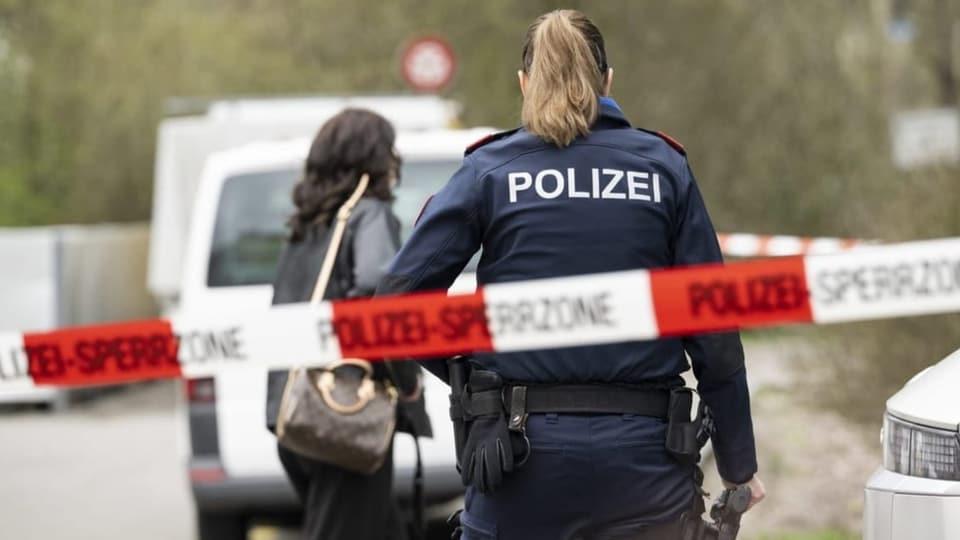
Winterthur Stabbing Case: Swiss Probe Digital Evidence.

The Swiss Attorney General’s Office is currently unable to access the electronic devices of a 31-year-old Turkish-Swiss man accused of a knife attack that injured three people in Winterthur, as legal proceedings over data access continue.

Federal prosecutor Stefan Blättler confirmed that the suspect has objected to the search of his laptop and mobile phone. As a result, authorities have submitted an application to the coercive measures court requesting permission to unlock and examine the devices. A decision is still pending.

Blättler explained that investigators are currently unable to review critical digital evidence, including communication records and messages that could reveal the suspect’s contacts before the attack. He emphasized that such information is essential for understanding potential links to other individuals or networks.

According to the prosecutor, electronic devices have become one of the most important sources of evidence in modern criminal investigations. However, legal protections around data “sealing” can delay access. This procedure was originally designed to protect sensitive or unrelated personal data, such as privileged legal correspondence or private information not relevant to investigations.

Blättler noted that while sealing was appropriate in an earlier legal era dominated by paper documents, it has become increasingly challenging in the digital age. He warned that prolonged delays in accessing data could hinder investigations, particularly in urgent cases involving public safety risks.

The federal prosecutor suggested that reforms may be needed to balance privacy protections with investigative urgency. He indicated that authorities may need faster access to seized data in certain cases, while still protecting legally privileged or irrelevant information.

The suspect is currently in pre-trial detention. He is accused of carrying out a violent attack at Winterthur station on May 28, where three men were injured, one seriously. The day before the incident, he had reportedly been in a psychiatric facility.

Swiss authorities have opened a criminal investigation for attempted multiple murder and alleged involvement in or support of a terrorist organization. The case remains under active judicial review as investigators await access to key digital evidence.

Authorities Rule Out Terrorism in Bellinzona Knife Attack Case.

Swiss authorities have confirmed that no terrorist or jihadist motive was identified in a knife attack that took place in Bellinzona, despite earlier concerns raised in media reports.

In late January, a 37-year-old Swiss-Turkish woman entered a mobile phone shop in the Ticino town and threatened employees with a knife. Reports indicated that she allegedly shouted religious phrases during the incident, which initially raised suspicions of a possible extremist link.

However, the Office of the Attorney General of Switzerland (OAG) has now confirmed that investigations found no evidence of a terrorist background or ideological motive. The case is being treated as a criminal incident rather than an act of terrorism.

Authorities also stated that the suspect is currently receiving outpatient psychiatric treatment. Medical assessments indicated that she was not fit for questioning or trial at the time of the incident, leading to her involuntary admission to a psychiatric facility.

The legal proceedings remain ongoing, and officials have not released further details due to the sensitivity of the case.

The clarification highlights the importance of distinguishing between mental health-related incidents and ideologically motivated attacks during criminal investigations.

French Authorities Carry Out Surprise Searches at Nestlé Waters Sites

French authorities carried out unannounced inspections and searches at two industrial sites operated by Nestlé Waters, the bottled water subsidiary of Swiss-based food giant Nestlé.

The raids took place on Tuesday at the Perrier plant in Vergèze and a laboratory in Vittel, according to Radio France investigative reporting. Around 40 officials from French fraud authorities were involved in the coordinated operation.

The inspections are part of an ongoing investigation led by the Paris public prosecutor’s office following a complaint filed by the NGO Foodwatch, which alleges potential fraud linked to bottled water operations.

Authorities have not yet disclosed specific findings from the searches. However, the investigation is understood to focus on regulatory compliance and possible misconduct within water treatment or labeling practices.

Nestlé Waters confirmed that unannounced inspections were taking place at its sites and stated that it is fully cooperating with the relevant authorities throughout the process.

The case adds further scrutiny to Switzerland’s Nestlé, which has faced multiple regulatory and public trust challenges in recent years related to food and water safety concerns.

French investigators continue to examine evidence as part of a broader inquiry into corporate practices in the bottled water sector.

University Hospital Zurich Faces Criminal Investigation Over Heart Surgery Cases.

University Hospital Zurich is facing a major criminal investigation after authorities opened inquiries into deaths and medical device incidents linked to its cardiac surgery clinic.

The hospital’s board has filed multiple criminal complaints involving 11 patient deaths and 13 separate cases connected to the use of medical devices. Prosecutors are now examining whether negligence or misconduct contributed to the incidents.

An investigative team from the Zurich public prosecutor’s office has launched formal proceedings focusing on suspected involuntary manslaughter, grievous bodily harm through negligence, and forgery of documents.

The case has intensified public scrutiny over patient safety standards and oversight within one of Switzerland’s leading medical institutions.

Authorities have not yet disclosed detailed information about the specific surgeries or devices involved. However, investigators are reviewing medical records, operational procedures, and documentation linked to the cases.

The scandal has raised concerns about accountability, transparency, and quality control in highly specialized cardiac procedures. Legal experts say the investigation could become one of the country’s most significant healthcare-related criminal cases in recent years.

The University Hospital Zurich has stated that it is cooperating fully with prosecutors as investigations continue.

Fourteenth Suspect Charged in Crans-Montana Fire Investigation.

Swiss investigators have charged another individual in connection with the deadly Crans-Montana fire case, expanding the ongoing criminal investigation into one of the country’s worst recent tragedies.

According to reports from RTS, a municipal employee from Crans-Montana was formally placed under investigation during police questioning in the city of Sion on Tuesday.

The employee initially appeared before authorities as a person asked to provide information, a legal status positioned between witness and suspect. However, investigators reportedly interrupted the hearing and consulted prosecutors overseeing the case before changing the individual’s status to that of a formal defendant.

After being informed of the new status, the employee declined to continue the interrogation, which then ended.

Authorities believe the suspect may have had knowledge linked to renovation work carried out in 2015 at the Le Constellation bar, the site of the deadly fire. At the time, the employee worked in the Construction Department of the former municipality of Chermignon and currently remains active in the construction sector for the municipality of Crans-Montana.

The latest development brings the total number of individuals under investigation to 14. Those being investigated now include the bar owners, elected or former public officials, and several municipal employees.

The tragedy triggered widespread scrutiny over fire safety standards, renovation oversight, and administrative accountability in Switzerland. Investigators continue examining whether violations of construction regulations or oversight failures contributed to the disaster.

Driverless PostBus Hits Swiss Bank in Nunningen

A driverless public transport bus operated by PostBus Switzerland crashed into a bank building in Nunningen on Thursday evening, causing significant property damage but no injuries.

According to the cantonal police, the articulated autonomous bus began rolling for reasons that are still under investigation at around 8:35 pm while it was stationary at a stop on Zullwilerstrasse.

The vehicle crossed a traffic island before colliding directly with the façade of a local bank branch. Authorities confirmed that both the building and the bus sustained considerable damage in the impact.

Emergency services responded quickly to the scene, but no passengers or bystanders were injured in the incident.

Police in Switzerland have launched an investigation to determine what caused the driverless vehicle to move unexpectedly. Technical failure, system malfunction, or braking issues have not been ruled out at this stage.

Driverless and semi-autonomous public transport systems have been increasingly tested across Switzerland and Europe as part of efforts to modernise urban mobility and improve efficiency. However, the incident highlights ongoing safety challenges associated with autonomous transport technologies.

Authorities have not yet confirmed whether the bus was in fully autonomous mode at the time of the accident or whether a remote operator was monitoring the system.

The investigation is ongoing, and further technical assessments are expected in the coming days.

Zurich Hospital Admits Fatal Heart Surgery Failures.

The University Hospital Zurich has confirmed serious medical failures in its cardiac surgery department, following an independent investigation covering the years 2016 to 2020.

The report reveals that between 68 and 74 excess patient deaths may have occurred during this period. Authorities have also identified 11 particularly concerning deaths and 13 cases involving improper use of medical devices, which have been reported to the public prosecutor for further investigation.

Investigators are now examining whether criminal offences were committed, as concerns grow over systemic failures in hospital management and oversight.

According to the findings, the root cause of the issues lies in a major governance breakdown. Former leadership, including cardiac surgery head Francesco Maisano, was appointed in 2014 without sufficient review of qualifications and potential conflicts of interest.

The report also highlights that hospital management at the time failed in its supervisory responsibilities, ignoring warning signs that could have prevented the crisis.

In response to the investigation, three long-standing members of the hospital board have resigned, stating the need for organizational renewal and accountability.

The University Hospital Zurich has issued a formal apology to affected patients and their families and has established a dedicated counselling service to support them.

Despite the scandal, the hospital stated that its cardiac surgery department has since improved under new leadership, with mortality rates returning to normal levels.

To prevent future incidents, the hospital is introducing stricter compliance rules, a conflict-of-interest register, and a whistleblowing system designed to improve transparency and patient safety.