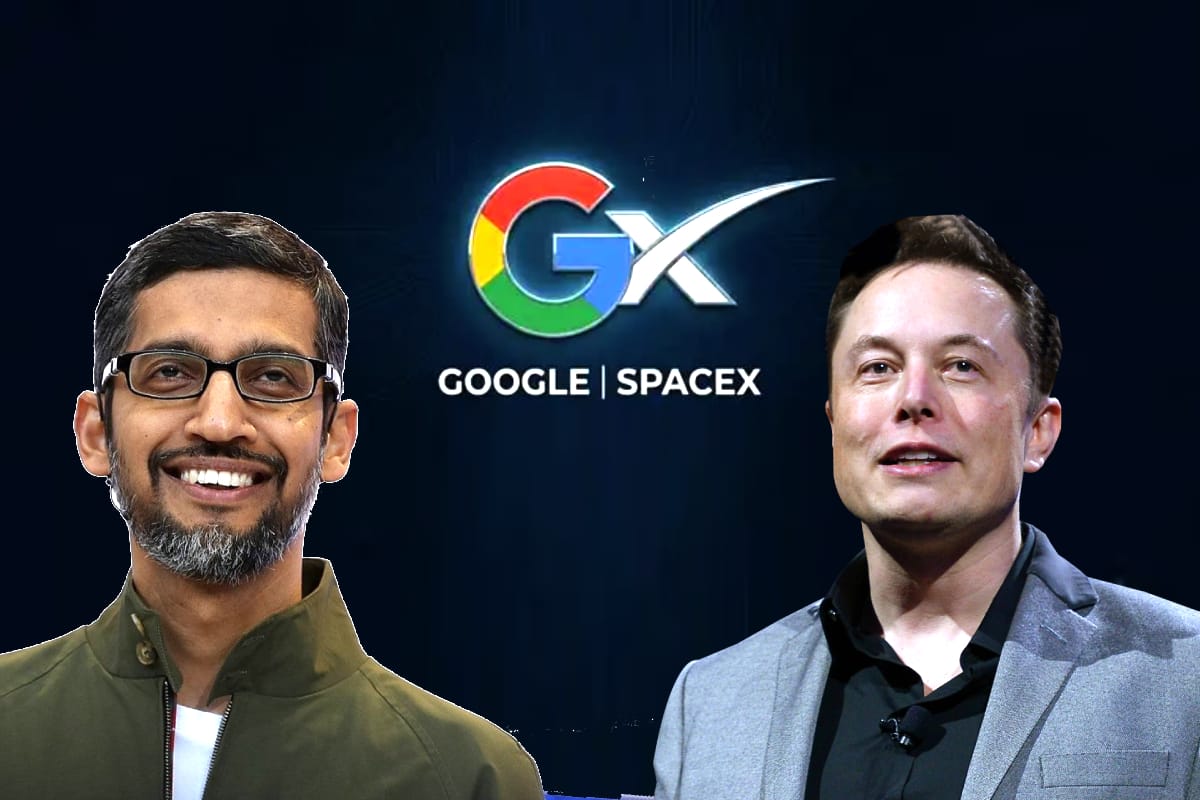

Google and Google Secure Massive AI Infrastructure Deal with SpaceX.
Google has reportedly signed a massive $30 billion artificial intelligence infrastructure agreement with SpaceX, marking one of the largest AI computing partnerships in the tech industry.
The deal is scheduled to begin in October 2026 and will run through 2029, according to Bloomberg reports. Under this agreement, Google will invest nearly $920 million per month to access high-performance computing resources powered by Nvidia GPU-based systems operated through SpaceX’s expanding infrastructure network.
This partnership is designed to support Google’s rapidly growing AI ecosystem, especially its Gemini AI platform. As demand for advanced AI services continues to rise, Google requires massive computing capacity to train and deploy next-generation models efficiently.
SpaceX, traditionally known for its dominance in space exploration and satellite communications, is now expanding into AI infrastructure. The company is investing heavily in large-scale data systems, high-performance computing clusters, and advanced hardware systems to support global tech demands.
The agreement is expected to provide Google with thousands of Nvidia GPUs along with CPUs, memory systems, and additional AI optimization hardware. This will significantly strengthen Google’s cloud AI capabilities and reduce infrastructure bottlenecks.
Industry experts believe this deal signals a new era of AI competition, where computing power is becoming the most valuable resource in the technology sector.