

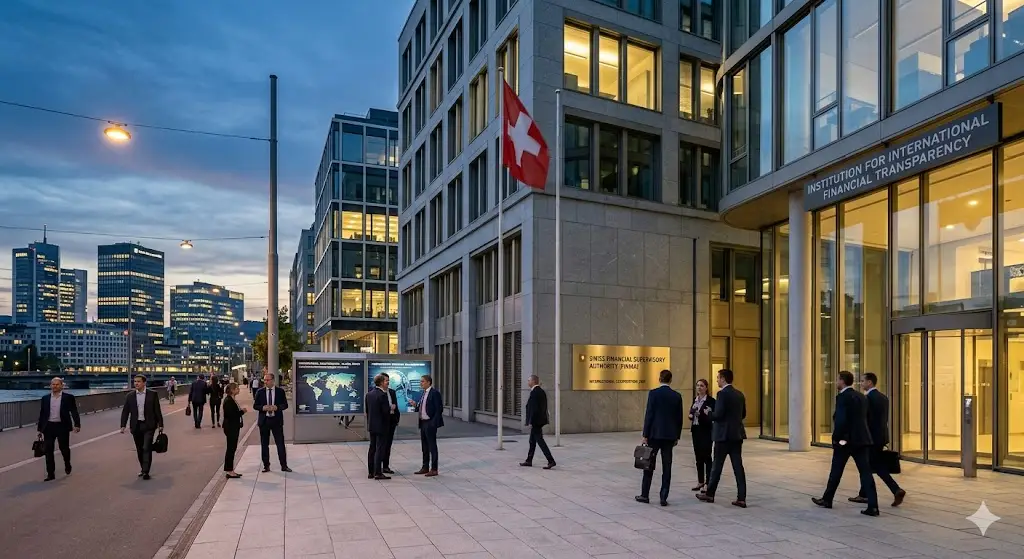
Swiss Government Responds to Epstein Property Questions.

The Switzerland government says it cannot confirm whether late American financier Jeffrey Epstein owned property in Switzerland.

The statement came in response to a parliamentary inquiry submitted following growing attention on Epstein’s alleged Swiss connections revealed in recent months.

In its official response, the Swiss Federal Council stated that it has “no knowledge” of any property purchases made by Epstein in Switzerland. However, authorities also acknowledged that they cannot completely rule out the possibility.

The government explained that oversight of foreign property purchases falls under the responsibility of individual Swiss cantons rather than federal authorities.

Swiss officials remained cautious when responding to additional parliamentary questions related to Epstein’s activities and potential financial links within Switzerland.

Interest in Epstein’s international network intensified after United States authorities released approximately 3.5 million declassified pages connected to investigations involving the convicted sex offender, who died in prison in 2019.

According to multiple media reports, Epstein allegedly financed educational opportunities for several young women in Switzerland and maintained connections with influential figures in international finance.

The revelations have renewed public and political discussions about financial transparency, oversight of international wealth, and Switzerland’s historical links to high-profile global figures.

Swiss authorities have not announced any criminal investigation related to the reported property questions.

The case continues to attract international attention due to Epstein’s extensive network of global contacts and the ongoing release of previously classified information connected to his activities.

Switzerland Warns of Worsening Security Situation

The Switzerland government has warned that the country’s security situation has deteriorated significantly over the past year amid rising geopolitical tensions across Europe and the Middle East.

In its latest national security report released on Wednesday, Swiss authorities stated that growing international instability is increasing pressure on Switzerland to contribute more actively to European security efforts.

The report highlights that Switzerland is being directly affected by Russia’s hybrid warfare strategies, including cyber threats, disinformation campaigns, and espionage activities. Officials also noted that the ongoing conflict in the Middle East continues to create broader security risks and political instability.

According to the government, global geopolitical developments are now having a direct impact on Switzerland’s internal security environment.

Authorities warned that the terrorist threat remains heavily influenced by jihadist movements, while violent extremism from both far-left and far-right groups continues to pose risks inside Europe.

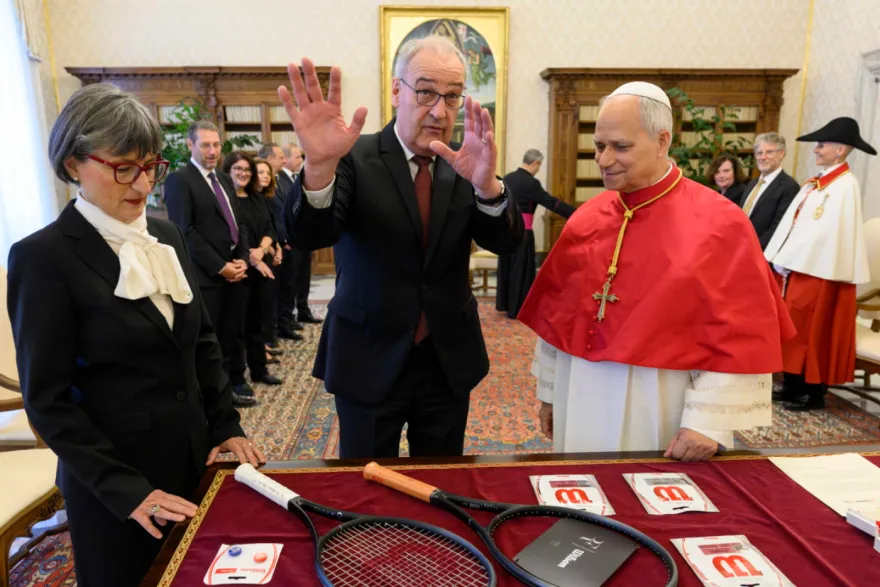
Swiss President Meets Pope Leo XIV at Vatican.

Guy Parmelin met with Pope Leo XIV at the Vatican on Wednesday morning ahead of the swearing-in ceremony of the Pontifical Swiss Guard.

During the meeting, both leaders discussed plans for the construction of new barracks for the Swiss Guard within the Vatican. The project is expected to begin next year as part of preparations for the 500th anniversary of the historic Sack of Rome on May 6, 1527.

The anniversary commemorates the sacrifice of 147 Swiss Guards who lost their lives while defending Pope Clement VII against the forces of Emperor Charles V during the attack on Rome.

President Parmelin emphasized the symbolic importance of beginning construction work on May 6, aligning the project with the historic anniversary celebrations.

However, the Vatican is still awaiting approval from UNESCO before major construction can proceed. Since the Vatican is a UNESCO-listed heritage site, international authorization is required for significant infrastructure work.

Parmelin stated that Switzerland hopes to cooperate closely with the Vatican in preparing for the anniversary events, describing them as highly significant for both the Catholic Church and Switzerland’s national heritage.