EU Jobless Reform Could Cost Switzerland Up to CHF 900 Million

A proposed reform by the European Union on unemployment insurance rules for cross-border workers could significantly increase costs for Switzerland, according to estimates from the State Secretariat for Economic Affairs.

The Swiss government agency warned that the planned changes could result in additional annual expenses ranging between CHF 600 million and CHF 900 million (approximately $771 million to CHF 1.1 billion).

The reform, currently being discussed within the European Union, aims to change the system for paying unemployment benefits for cross-border workers.

Under the new proposal, responsibility for unemployment payments would shift from the worker’s country of residence to the country where the individual last worked before becoming unemployed.

SECO published the cost estimates on its official website, following earlier reporting by the Swiss newspaper Neue Zürcher Zeitung.

However, Swiss authorities stressed that the figures remain highly uncertain due to limited data on unemployed cross-border workers.

Officials stated that a more accurate financial assessment will only be possible once the final version of the EU regulation is approved.

Before implementation, the proposal must be accepted by both the EU Council and the European Parliament. An EU diplomat reportedly expressed confidence that the reform is likely to pass.

The issue is particularly important for Switzerland due to its large number of cross-border workers from neighboring EU countries, especially in regions such as Geneva, Basel, and Ticino.

Experts warn that any change in benefit responsibility could place additional pressure on Switzerland’s unemployment insurance system and federal budget.


Swiss Government Responds to Epstein Property Questions.

The Switzerland government says it cannot confirm whether late American financier Jeffrey Epstein owned property in Switzerland.

The statement came in response to a parliamentary inquiry submitted following growing attention on Epstein’s alleged Swiss connections revealed in recent months.

In its official response, the Swiss Federal Council stated that it has “no knowledge” of any property purchases made by Epstein in Switzerland. However, authorities also acknowledged that they cannot completely rule out the possibility.

The government explained that oversight of foreign property purchases falls under the responsibility of individual Swiss cantons rather than federal authorities.

Swiss officials remained cautious when responding to additional parliamentary questions related to Epstein’s activities and potential financial links within Switzerland.

Interest in Epstein’s international network intensified after United States authorities released approximately 3.5 million declassified pages connected to investigations involving the convicted sex offender, who died in prison in 2019.

According to multiple media reports, Epstein allegedly financed educational opportunities for several young women in Switzerland and maintained connections with influential figures in international finance.

The revelations have renewed public and political discussions about financial transparency, oversight of international wealth, and Switzerland’s historical links to high-profile global figures.

Swiss authorities have not announced any criminal investigation related to the reported property questions.

The case continues to attract international attention due to Epstein’s extensive network of global contacts and the ongoing release of previously classified information connected to his activities.

Swiss Government Warns Food Waste Remains Too High.

The Switzerland government has warned that food waste levels across the country remain far too high, despite ongoing national efforts to reduce waste by 2030.

In an interim report released on Wednesday, authorities revealed that food waste declined by only around 5% between 2017 and 2024, falling well short of the targeted 25% reduction by 2025.

Switzerland launched its national action plan against food waste in 2022, aiming to cut avoidable food losses in half by the year 2030. While some sectors have shown measurable improvement, officials say overall progress remains too slow.

The retail industry achieved the strongest results, reducing food waste by approximately 20% through improved inventory management, discount systems, and food redistribution initiatives.

However, Swiss households continue to lag behind, remaining one of the biggest contributors to unnecessary food waste. Authorities say consumer behavior, over-purchasing, and poor meal planning remain major challenges.

The government emphasized that reducing food waste is essential for environmental protection, resource conservation, and climate goals, as discarded food contributes significantly to greenhouse gas emissions.

Officials are now calling for stronger public awareness campaigns and greater cooperation between households, businesses, and food service sectors to accelerate progress toward the 2030 target.

Food waste reduction has become a major sustainability issue across Europe as governments seek to improve resource efficiency and reduce environmental impact.

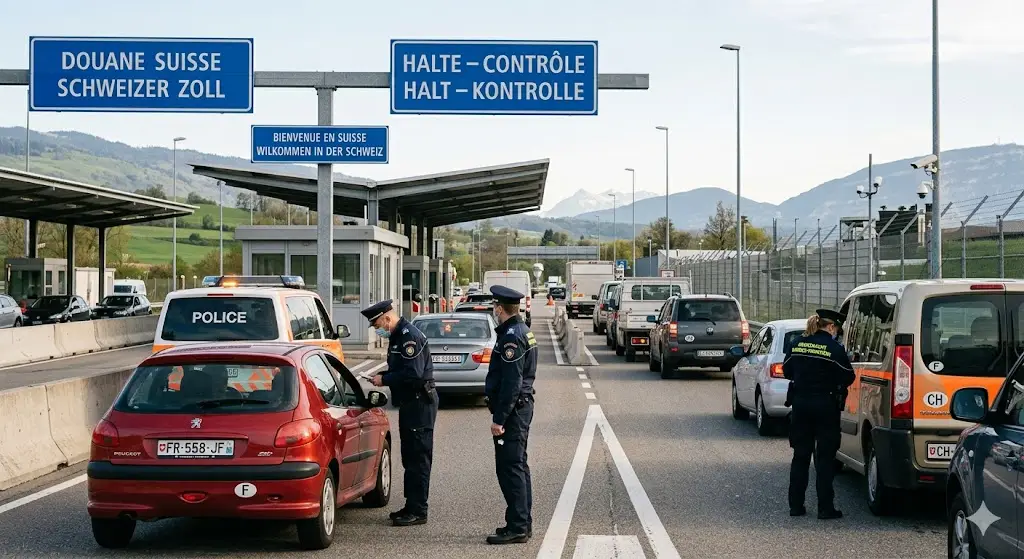
Switzerland Reintroduces French Border Checks for G7 Summit

Switzerland will temporarily reintroduce border checks along parts of its border with France ahead of the upcoming G7 Summit 2026 in Évian.

The Swiss government confirmed on Wednesday that the temporary controls will remain in effect from June 10 to June 19 as part of heightened security measures surrounding the summit.

Although the G7 meeting will take place in Évian, Swiss authorities stated that nearby regions including Geneva, Lausanne, and the wider Lake Geneva area face increased security risks during the international gathering.

Officials noted that previous G7 summits have sometimes resulted in violent protests, acts of sabotage, public disorder, and property damage. Authorities also highlighted concerns linked to the current geopolitical climate and the large concentration of international organizations based in Geneva.

The request to temporarily restore border controls was submitted by the Canton of Geneva, reflecting growing concerns about public safety and regional security during the summit period.

The G7 Summit is scheduled to take place from June 15 to June 17, bringing together leaders from major industrialized nations to discuss global political, economic, and security issues.

Swiss authorities are expected to increase police presence and strengthen monitoring around border crossings, transportation hubs, and sensitive areas during the event.

Switzerland Warns of Worsening Security Situation

The Switzerland government has warned that the country’s security situation has deteriorated significantly over the past year amid rising geopolitical tensions across Europe and the Middle East.

In its latest national security report released on Wednesday, Swiss authorities stated that growing international instability is increasing pressure on Switzerland to contribute more actively to European security efforts.

The report highlights that Switzerland is being directly affected by Russia’s hybrid warfare strategies, including cyber threats, disinformation campaigns, and espionage activities. Officials also noted that the ongoing conflict in the Middle East continues to create broader security risks and political instability.

According to the government, global geopolitical developments are now having a direct impact on Switzerland’s internal security environment.

Authorities warned that the terrorist threat remains heavily influenced by jihadist movements, while violent extremism from both far-left and far-right groups continues to pose risks inside Europe.