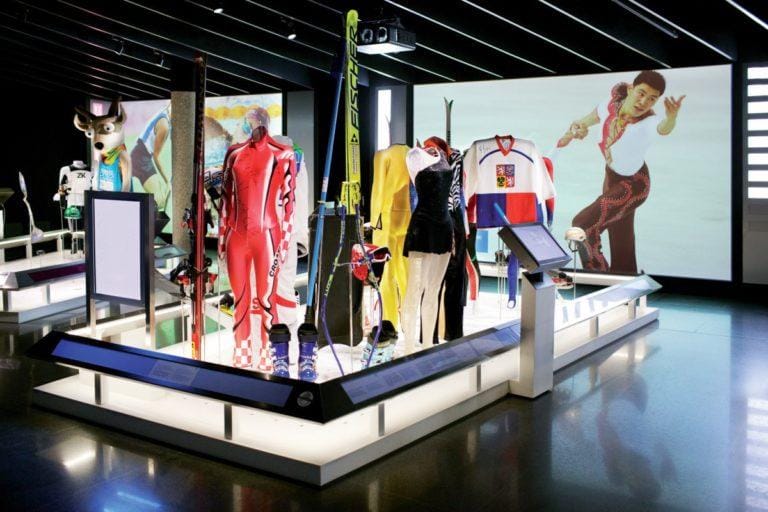
Olympic Museum in Lausanne Expands Collection with New Olympic Memorabilia

The Olympic Museum in Lausanne has unveiled more than 300 new objects collected during the Winter Olympic Games held in Milan and Cortina, enriching one of the world’s most important sports heritage collections.

Among the latest additions are items used by several Swiss Olympic champions, including the skis of Mathilde Gremaud, the helmet of Franjo von Allmen, and the racing suit worn by Loïc Meillard. Equipment belonging to Marianne Fatton, who secured Olympic gold for Switzerland in Italy, has also joined the museum’s growing collection.

The museum also received contributions from international sporting stars. Norwegian cross-country skiing legend Johannes Klæbo, a six-time Olympic champion, donated his competition poles. Italian speed skater Francesca Lollobrigida, a double Olympic gold medallist, contributed her racing suit to the collection.

A public donation ceremony took place in Lausanne on Tuesday, bringing together athletes who participated in the Olympic Games. Swiss ice hockey player Alina Müller, who won a bronze medal and served as Switzerland’s flag bearer during the closing ceremony, also attended the event.

In addition to sporting equipment, museum representatives collected objects connected to the visual identity of the Games, including materials from the opening and closing ceremonies. These items help preserve the atmosphere and cultural significance of each Olympic edition.

The Olympic Museum currently houses more than 90,000 objects gathered over the last 120 years. The institution credits athletes for helping preserve Olympic history by donating valuable items that tell the stories of sporting achievement and international competition.

With each new acquisition, the Lausanne-based museum continues its mission of safeguarding Olympic heritage and inspiring future generations through the history of sport.


Swiss Government Boosts Funding for Global Sports Events.

The Swiss government has announced additional financial support for major international sporting events scheduled to take place across the country between 2027 and 2029. The Federal Council is proposing two supplementary credits totaling CHF8.24 million to help Switzerland host world-class competitions and strengthen the nation’s sporting profile.

Officials believe that international sporting events generate significant benefits beyond athletics. Major tournaments contribute to economic growth, tourism, community engagement, and the promotion of both elite and grassroots sports. Recent successes, including the Ice Hockey World Championship and the UEFA Women’s Euro tournament, demonstrated the positive impact such events can have on Switzerland.

The proposed funding package includes CHF5.24 million to support the organization and hosting of international competitions. An additional CHF3 million will be allocated to sports development initiatives linked to these events, helping to encourage participation and long-term growth in various sports disciplines.

Several major championships are set to benefit from the funding. The 2028 Judo World Championships in Lausanne will receive CHF1.4 million, while the 2028 European Men’s Handball Championship in Zurich will be supported with CHF1.15 million. The 2027 World Rowing Championships in Lucerne will receive CHF825,000.

Additional funding has been proposed for the 2029 Women’s European Basketball Championship in Geneva, the 2027 European Figure Skating Championships in Lausanne, and the 2027 Short Course Swimming Championships in Basel. Support will also be provided for the 2028 World Bobsleigh and Skeleton Championships in St. Moritz.

The government also plans to extend the deadline for financial assistance under the National Sports Facilities Programme (CISIN 5), ensuring continued support for sports infrastructure projects of national importance.

By investing in these events, Switzerland aims to strengthen its reputation as a leading international sports destination while creating lasting economic and social benefits for local communities.

Yodelling Singer Nadja Räss Awarded Swiss Grand Prix for Music 2026.

Swiss yodelling singer Nadja Räss has been awarded the 2026 Swiss Grand Prix for Music, receiving one of the country’s most prestigious cultural honours along with a prize of CHF 100,000.

The Federal Office of Culture announced the award on Thursday, recognizing Räss as one of the most influential voices in Swiss yodelling and traditional folk music. At 47 years old, the singer from the canton of Schwyz has played a key role in preserving and promoting Switzerland’s alpine musical heritage.

Räss has also worked as a cultural mediator and was instrumental in supporting the inclusion of yodelling on UNESCO’s list of intangible cultural heritage last December. The jury highlighted her contribution to elevating traditional Swiss folk music on an international level.

She becomes the first folk musician ever to receive the Swiss Grand Prix for Music, marking a significant milestone for traditional music genres in Switzerland’s contemporary cultural scene.

Alongside the Grand Prix winner, ten other musicians, collectives, and institutions were also honoured this year. Among them were Geneva-based artist Flèche Love and Neuchâtel musician Louis Schild, reflecting the diversity of Switzerland’s modern music landscape.

The jury for the 2026 awards was chaired by Ticino musician and journalist Gian-Andrea Costa. The Swiss Music Awards ceremony is scheduled to take place in Lausanne on September 19.

The recognition of Nadja Räss highlights the growing appreciation for traditional Swiss music and its evolving role in the country’s cultural identity.

Association for Burn Victims Founded After Crans-Montana Fire.

A new organisation called Initiative Phoenix has been founded in Switzerland to support victims of the devastating Crans-Montana fire disaster, which killed 41 people and left 115 injured.

The association was created five months after the tragedy and aims to improve medical care, rehabilitation, and long-term support for burn victims. It focuses on promoting medical innovation in burn treatment and strengthening cooperation between international specialists.

Initiative Phoenix also plans to develop practical therapeutic guidelines for victims and their families. These recommendations will be created through collaboration between doctors and experts, allowing affected individuals to access structured medical and psychological support.

The organisation will further support humanitarian, scientific, and social initiatives related to severe accident recovery. A key goal is to improve coordination between medical institutions treating serious burn injuries across Switzerland and abroad.

The project was initiated by Belgian plastic surgeon Johann Wary, who resides in Crans-Montana. He is supported by a medical committee consisting of six Swiss and Belgian doctors, including specialists from CHUV Lausanne, one of Switzerland’s leading university hospitals.

The initiative reflects growing efforts to provide long-term care and structured recovery pathways for victims of large-scale disasters.

Thousands Explore New RTS Media Centre in Lausanne.

More than 15,000 people visited the new production site of Swiss public broadcaster RTS in Lausanne-Ecublens during a highly successful open weekend event. The new facility, located on the campus of the Swiss Federal Institute of Technology Lausanne (EPFL), welcomed visitors of all ages eager to discover the world of media production and broadcasting.

Large crowds gathered even before the official opening, with many visitors exploring exhibitions, interactive activities, and behind-the-scenes tours. Families, students, and media enthusiasts had the opportunity to experience how television, radio, and digital content are produced.

One of the most popular attractions allowed visitors to step into the role of a journalist by reading news from a teleprompter and presenting weather forecasts. Guests also explored RTS news vehicles, production studios, and broadcasting facilities, gaining a unique insight into the daily work of media professionals.

The event featured live radio broadcasts, public podcast recordings, and guided tours of the new production centre. Studio 1 attracted particularly strong interest, with audiences filling seats to watch programmes being produced in real time.

RTS announced that public engagement activities will continue throughout June, offering additional opportunities for visitors to explore media careers, content creation, and public service broadcasting. Registration will be required for many of these activities.

The broadcaster also revealed plans to expand its media education programme. From next year, RTS will increase the number of workshops from 300 to 400 annually, with most sessions remaining free for schools and the public.

The new Lausanne-Ecublens production hub replaces several older facilities in Lausanne and Geneva, creating a modern centre for broadcasting, digital media production, and audience engagement.

RTS expects to welcome approximately 10,000 visitors each year through guided tours, workshops, and educational activities, strengthening its connection with the Swiss public and future generations of media professionals.

Royal Pop Watches Trigger Massive Queues Across Switzerland

The launch of the new Royal Pop watch collection by Swatch Group created huge excitement across Switzerland, with hundreds of people lining up outside stores in multiple cities.

Large crowds began gathering from Friday night in hopes of purchasing the trendy new watches when sales officially opened on Saturday morning. In Geneva alone, more than a thousand people reportedly filled nearby streets around the Swatch store as police officers monitored the growing crowds.

Hundreds of customers also gathered near the Swatch Group headquarters in Biel/Bienne, while around 400 people queued outside the Zurich store early Saturday morning. Due to the overwhelming demand, the Zurich branch reportedly opened earlier than scheduled.

The situation became tense in some cities as crowd-control problems emerged. Local media reported scuffles and minor clashes in Basel and Lausanne, forcing police to intervene to maintain order and public safety.

Following the incidents, Swatch announced on Instagram that several stores would remain closed temporarily. Branches located on Rue du Marché in Geneva, as well as stores in Lausanne and Basel, were shut down due to safety concerns linked to the large crowds.

The Royal Pop launch quickly became one of the biggest retail events in Switzerland this year. Social media hype, limited availability, and growing collector interest contributed to the massive turnout.

Industry observers say the event highlights the strong global demand for limited-edition Swiss watches and the growing influence of hype-driven fashion culture. Videos and photos of long queues outside stores have already gone viral online, attracting international attention.

The Swiss watch industry continues to remain a major global luxury market, with brands increasingly using exclusive launches and social media marketing to drive consumer excitement.

Housing Prices Continue to Rise Across Switzerland in 2026

Housing prices in Switzerland continue to increase steadily in 2026, with major cities such as Zurich, Geneva, and Lausanne experiencing significant price growth in the property market.

According to recent 2026 housing market data, apartment prices across Switzerland have increased by nearly 4% annually, while prices for individual houses have risen by around 3%. Real estate experts say strong demand and limited housing supply continue to push prices higher across the country.

Property demand remains especially high in Zurich and other large urban areas. However, the pace of new housing construction has not matched the growing population and demand, creating pressure on the Swiss housing market.

Several major factors continue to drive the increase in Swiss housing prices. Rising immigration, limited construction of new homes, and low interest rates have contributed to higher demand for residential properties. Switzerland’s reputation as a safe and stable investment destination has also attracted both local and international investors.

Economic experts additionally point to Switzerland’s high salaries and strong employment opportunities as reasons why many foreign workers continue to move to the country. This growing workforce further increases demand for housing in major Swiss cities.

The continued rise in property prices has become an important topic among residents, investors, and policymakers. Many people are now concerned about long-term housing affordability, especially for middle-income families and first-time home buyers in Switzerland.

Last Swiss Victim of Crans-Montana Fire Set to Return Home

Only one Swiss national injured in the devastating Crans-Montana fire tragedy remains hospitalised abroad and is expected to return to Switzerland next week, according to Swiss authorities.

The tragic fire at the Le Constellation bar on New Year’s Eve claimed the lives of 41 people and left 115 others injured, making it one of Switzerland’s deadliest recent disasters.

Swiss officials confirmed that 38 victims are still receiving specialist medical treatment or remain hospitalised in Switzerland.

The Federal Office for Civil Protection (FOCP) announced that it will no longer publish weekly updates on the number of hospitalised victims linked to the tragedy.

According to the FOCP, the primary purpose of collecting nationwide injury data was to coordinate medical repatriations and manage hospital capacity across Switzerland.

Authorities stated that this process has now largely been completed, reducing the need for ongoing public reporting.

The latest available figures showed that six victims were receiving treatment at Lausanne University Hospital (CHUV), while four others remained under care in Zurich hospitals.

The fire disaster deeply shocked Switzerland and triggered national mourning, particularly within the Crans-Montana community and among families affected by the tragedy.

Investigations into the cause of the fire and safety conditions at the venue continue as authorities work to prevent similar incidents in the future.

The return of the final Swiss patient marks an important moment in the country’s long recovery process following the devastating incident.

Switzerland Reintroduces French Border Checks for G7 Summit

Switzerland will temporarily reintroduce border checks along parts of its border with France ahead of the upcoming G7 Summit 2026 in Évian.

The Swiss government confirmed on Wednesday that the temporary controls will remain in effect from June 10 to June 19 as part of heightened security measures surrounding the summit.

Although the G7 meeting will take place in Évian, Swiss authorities stated that nearby regions including Geneva, Lausanne, and the wider Lake Geneva area face increased security risks during the international gathering.

Officials noted that previous G7 summits have sometimes resulted in violent protests, acts of sabotage, public disorder, and property damage. Authorities also highlighted concerns linked to the current geopolitical climate and the large concentration of international organizations based in Geneva.

The request to temporarily restore border controls was submitted by the Canton of Geneva, reflecting growing concerns about public safety and regional security during the summit period.

The G7 Summit is scheduled to take place from June 15 to June 17, bringing together leaders from major industrialized nations to discuss global political, economic, and security issues.

Swiss authorities are expected to increase police presence and strengthen monitoring around border crossings, transportation hubs, and sensitive areas during the event.