ETH Zurich Safely Removes Hazardous Chemical.

A major safety operation at ETH Zurich concluded successfully after specialists removed and transported a highly hazardous chemical substance from a former research facility. The operation was completed without any incidents, allowing evacuated residents to return to their homes later the same day.

Authorities temporarily evacuated nearly 270 residents living near the affected area as a precautionary measure. The evacuation was part of a carefully coordinated plan designed to ensure public safety while experts handled the dangerous material.

The substance involved was a gas cylinder containing chlorine trifluoride, a chemical widely recognized as one of the most hazardous compounds used in scientific research. Specialists transferred the cylinder into a specially designed recovery container before transporting it away for secure handling and disposal.

The operation began on Sunday morning and involved close coordination between ETH Zurich, emergency services, and Zurich cantonal police. Safety measures remained in place for several hours while teams completed the transfer process inside a secure laboratory environment.

Following the successful completion of the operation, authorities lifted evacuation orders and temporary traffic restrictions. Residents were allowed to return to their homes after officials confirmed that the area was safe.

Police reported that the entire operation proceeded according to plan and that all activities were carried out under strict safety protocols. No injuries, leaks, or unexpected incidents occurred during the removal process.

According to ETH Zurich, chlorine trifluoride was previously used in geological research to analyze rock samples. The chemical is highly toxic and can ignite rapidly when exposed to certain materials, making specialized handling procedures essential.

The successful operation highlights Switzerland’s strong emergency preparedness and commitment to public safety when dealing with hazardous scientific materials. Officials praised the cooperation between emergency responders, researchers, and local residents throughout the process.


AI-Designed Vaccine Successfully Tested in Human Trial.

Scientists at the University of Cambridge have successfully completed early human trials of a new artificial intelligence-designed vaccine called pEVAC-PS, marking a major breakthrough in medical technology and infectious disease prevention.

The vaccine was developed using advanced AI systems that analyzed global genomic data to identify shared characteristics across multiple viruses. This approach allowed researchers to design a broad-spectrum antigen capable of targeting a wide range of coronavirus-related strains.

Unlike traditional vaccines, pEVAC-PS was administered using a microfluid jet-like delivery device that injects the vaccine into the skin without a conventional needle. Researchers say this method could improve precision and patient comfort in future immunizations.

The clinical trial involved 39 healthy volunteers aged between 18 and 50. Participants were recruited from medical research centers in Southampton and Cambridge, where they received different dosage levels ranging from 0.2 mg to 1.2 mg.

The results showed that the vaccine was well tolerated, with no significant adverse side effects reported during the initial trial phase. Scientists confirmed that the study demonstrated both safety and early immune response potential.

The AI system behind the vaccine was trained to identify a common antigen structure shared among Sarbeco coronavirus family members, including SARS-CoV-2, SARS, and other related bat-origin coronaviruses. This could allow the vaccine to provide broader protection against future emerging variants.

Researchers believe this approach could revolutionize vaccine development by enabling faster design of treatments for viruses such as influenza, Ebola, and other high-risk pathogens.

Experts involved in the study say AI-driven vaccine design may significantly shorten development time and improve global preparedness for future pandemics.

Cannabis and Testosterone: What a New Study Reveals.

A new Swiss study suggests that cannabis use may be linked to higher testosterone levels in young men, challenging earlier assumptions that the substance lowers male hormone levels.

Study Overview

Researchers from the University of Geneva analyzed blood samples from 94 Swiss military recruits aged between 18 and 23. The participants were divided into two groups: 47 cannabis users and 47 non-users.

The findings showed that testosterone levels were approximately 23% higher in the cannabis-using group compared to non-users.

Biological Mechanism

According to researchers, the increase in testosterone appears to originate in the testicles, specifically in the Leydig cells, which are responsible for producing male sex hormones. The adrenal glands, however, showed no significant change in hormone production.

This suggests that cannabis may have a direct biological effect on testosterone production mechanisms in the male reproductive system.

No Direct Link to Fertility

Despite the increase in testosterone levels, researchers caution against interpreting the results as improved fertility. The relationship between testosterone and reproductive health is complex and cannot be measured by hormone levels alone.

Scientists propose that the increase may be a compensatory response to reduced sensitivity in hormone receptors. Another possibility is that individuals with naturally higher testosterone levels may be more likely to engage in risk-taking behaviors, including cannabis use.

Wider Scientific Context

The study aligns with earlier research from Denmark and the United States, which also observed a correlation between cannabis use and increased testosterone levels. However, earlier smaller studies had produced mixed or contradictory findings.

Conclusion

Researchers emphasize that while cannabis appears to influence hormone levels, its long-term effects on fertility and reproductive health remain unclear. Further large-scale studies are needed to understand the full clinical implications.

Weight Loss Drugs May Impact Brain Reward System.

Researchers have raised concerns that new-generation weight loss medications may directly affect the brain’s pleasure and reward system in addition to reducing appetite.

Recent studies on GLP-1 based weight loss drugs suggest that these medications may influence dopamine activity in the brain. Dopamine is a chemical linked to pleasure, motivation, reward, and addictive behavior.

The research, supported by the National Institutes of Health and conducted by scientists at University of Virginia, found that GLP-1 medications may alter how the brain responds to food cravings and reward signals.

Experts say these medicines not only reduce hunger but also decrease cravings for high-calorie foods by affecting brain pathways related to pleasure and satisfaction. Scientists believe this could help people better control overeating and manage obesity more effectively.

However, researchers also warn that altering dopamine-related brain activity could potentially influence emotional responses, addictive behaviors, and feelings of enjoyment. Medical experts stress that further long-term studies are needed to fully understand the neurological impact of these drugs.

Health specialists recommend that people use weight loss medications only under professional medical supervision. Doctors say careful monitoring is important because these treatments may affect both physical and mental health.

GLP-1 based medicines have become increasingly popular worldwide for obesity treatment and diabetes management, but scientists continue to study their broader effects on the human brain and behavior.

Rare Hearing Disorder Prevents Woman From Hearing Male Voices in China

Doctors in China were surprised after a young woman reportedly developed a rare hearing condition that prevented her from hearing male voices clearly while still being able to hear female voices.

The unusual medical case was reported in Xiamen, China, where the woman woke up one morning and discovered that she could not properly hear her boyfriend speaking. She later realized that male voices around her sounded unclear or completely inaudible.

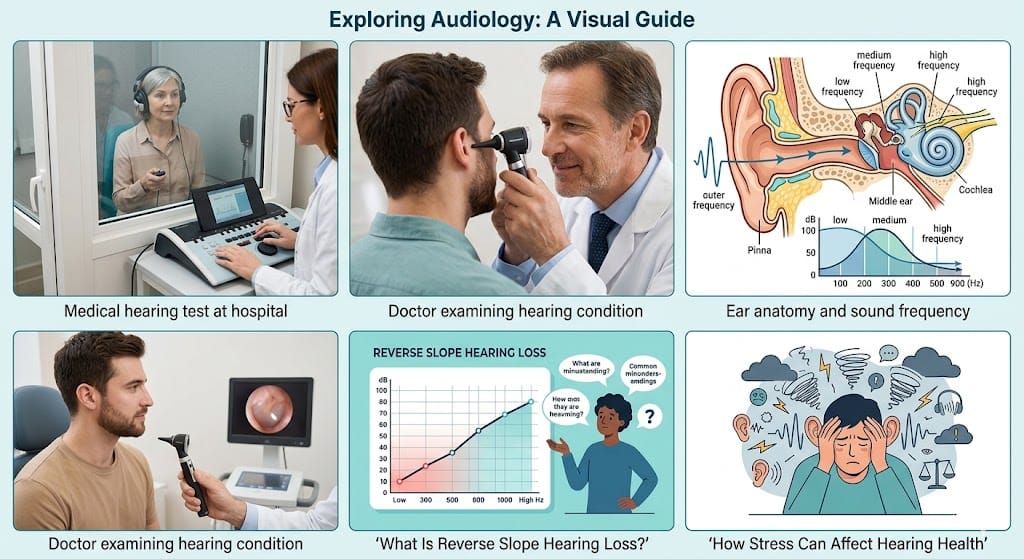
Medical experts diagnosed the condition as “Reverse Slope Hearing Loss,” a rare form of hearing impairment that affects the ability to hear low-frequency sounds. Since male voices generally have lower sound frequencies compared to female voices, the woman struggled to hear conversations involving men.

Doctors explained that the condition may have been triggered by severe stress, emotional exhaustion, and lack of sleep. According to reports, the woman had recently experienced high stress levels and sleep deprivation before the symptoms appeared.

When she visited the hospital, she reportedly heard female nurses speaking without difficulty, while male voices remained difficult to understand. The unusual case quickly attracted public attention and sparked discussions about hearing health and stress-related medical conditions.

Medical professionals say Reverse Slope Hearing Loss is extremely rare compared to common hearing disorders. Experts also warn that chronic stress and poor sleep can negatively affect both mental and physical health, including hearing ability in some cases.

Doctors recommend seeking medical attention immediately if sudden hearing changes or unusual auditory symptoms appear.

Scientists Warn Human Y Chromosome Could Slowly Disappear in the Future

Scientists have raised fresh discussions about the future of the human Y chromosome after research suggested it may continue shrinking over millions of years. The Y chromosome plays a major role in determining male biological sex in humans, while the X chromosome is present in both males and females.

Australian genetic researcher Jennifer Graves, a professor associated with La Trobe University, previously published research examining the long-term evolution of sex chromosomes in mammals.

According to her findings, the human Y chromosome has gradually lost a large number of genes over millions of years. Early in mammalian evolution, X and Y chromosomes were believed to be similar in size and genetic structure. However, scientific comparisons with ancient mammals such as the platypus suggested that the human Y chromosome has continued shrinking over evolutionary time.

Professor Graves estimated that the Y chromosome may have lost around 1,400 genes throughout evolution. Based on earlier calculations, some researchers suggested that if this gradual decline continued at the same rate, the Y chromosome could theoretically disappear millions of years in the future.

However, many modern scientists emphasize that this does not mean men will disappear anytime soon. Researchers say evolution is extremely complex, and some species have already developed alternative biological systems for sex determination even without a traditional Y chromosome.

Genetics experts also note that current studies continue to debate whether the human Y chromosome is still shrinking or has now stabilized over time. The topic remains an important area of research in evolutionary biology and human genetics.

Scientists stress that the possible disappearance of the Y chromosome, if it ever happens, would occur over millions of years and would not affect present or future generations anytime soon.

Scientists Trigger Controlled Quakes Beneath the Swiss Alps

Researchers in Switzerland have successfully triggered thousands of tiny controlled earthquakes beneath the Swiss Alps as part of a groundbreaking scientific experiment aimed at improving earthquake research and reducing future seismic risks.

The project took place deep underground inside the ETH Zurich research facility known as BedrettoLab. Scientists conducted the experiment inside a 5.2-kilometre ventilation tunnel connected to the Furka railway tunnel in southern Switzerland.

Leading geologist Domenico Giardini described the experiment as a major success. Researchers intentionally created controlled seismic activity to better understand how the Earth behaves deep below the surface when tectonic movement occurs.

According to scientists, the experiment generated thousands of very small earthquakes in a fully monitored environment. Advanced sensors and monitoring systems allowed researchers to study underground rock movements, pressure changes, and seismic reactions in real time.

Experts believe the findings could help improve earthquake prediction models, underground construction safety, geothermal energy projects, and seismic risk management in the future.

The BedrettoLab research centre has become one of Europe’s leading underground laboratories for studying seismic activity and Earth science technology. Scientists say controlled experiments like this could provide valuable information about natural earthquakes and help protect communities in earthquake-prone regions.

Blue Moon and Meteor Shower to Light Up the Sky This May

Skywatchers and astronomy enthusiasts are preparing to witness two rare celestial events this May, including the appearance of a Blue Moon and a spectacular meteor shower.

A Blue Moon usually occurs when two full moons appear within the same calendar month. The second full moon is traditionally called a “Blue Moon,” making it a rare and special astronomical event. Since a full moon already appeared on May 1, another full moon is expected to brighten the night sky again on May 31.

People will be able to observe this beautiful phenomenon with the naked eye without needing any special equipment. Astronomy lovers around the world are eagerly waiting to capture photographs and enjoy the glowing full moon during the late-night hours.

In addition to the Blue Moon, a stunning meteor shower is also expected to appear in the sky this month. During a meteor shower, several meteors travel across the night sky at high speed, creating bright streaks of light that resemble falling stars.

Astronomers say the occurrence of both a Blue Moon and a meteor shower within the same month makes May an exciting period for stargazers and space enthusiasts. Social media users and photographers are already discussing the best viewing locations and times for these rare cosmic events.

Experts recommend observing the sky from areas with low light pollution to enjoy the clearest possible view of the celestial display.