
Economiesuisse Calls US Forced Labour Allegations ‘Unfounded’.
Switzerland’s leading business federation, Economiesuisse, has strongly rejected recent US allegations of forced labour, describing the claims as “completely unfounded” and inconsistent with Swiss law.
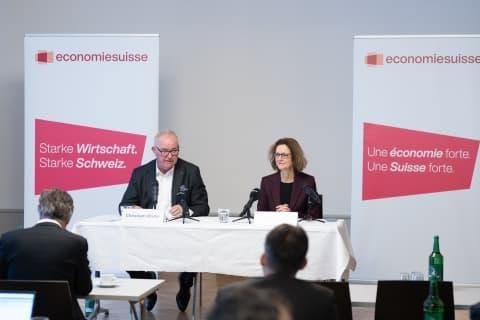
Speaking at a media conference, Economiesuisse chief economist Rudolf Minsch stated that forced labour is strictly prohibited under Swiss legislation. He emphasized that Switzerland has fully complied with international labour standards and said, “Switzerland has done its homework.”
The statement comes in response to renewed tariff threats from the United States, which have raised concerns among Swiss exporters. According to Minsch, the current proposed 12.5% tariffs on Swiss goods are not expected to significantly disrupt the economy, as they are only slightly higher than the 10% tariffs proposed for European Union countries.
He explained that Swiss companies could gradually absorb the additional costs, adjust their supply chains, or pass some of the impact on to consumers if necessary. Compared to earlier trade tensions, the current situation is seen as less severe.
Minsch highlighted that previous tariff levels were far more damaging. He recalled that Switzerland once faced tariffs as high as 39% while the EU was subject to 15%, calling that period “the real blow” for Swiss exporters due to the wide competitiveness gap.
Despite ongoing uncertainty, Economiesuisse stressed that predictability in trade policy is more important for businesses than small differences in tariff rates. The organization noted that Swiss companies are better able to adapt when they have clear, long-term regulatory expectations.
Overall, Swiss industry leaders remain cautiously optimistic, stating that while trade tensions persist, the impact on Switzerland’s economy is expected to remain manageable.