

Holiday Rush Causes Major Delays in Switzerland.

Travellers returning from the Whit Monday holiday faced significant congestion across Switzerland, with heavy traffic on major roads and increased passenger volumes at key airports.

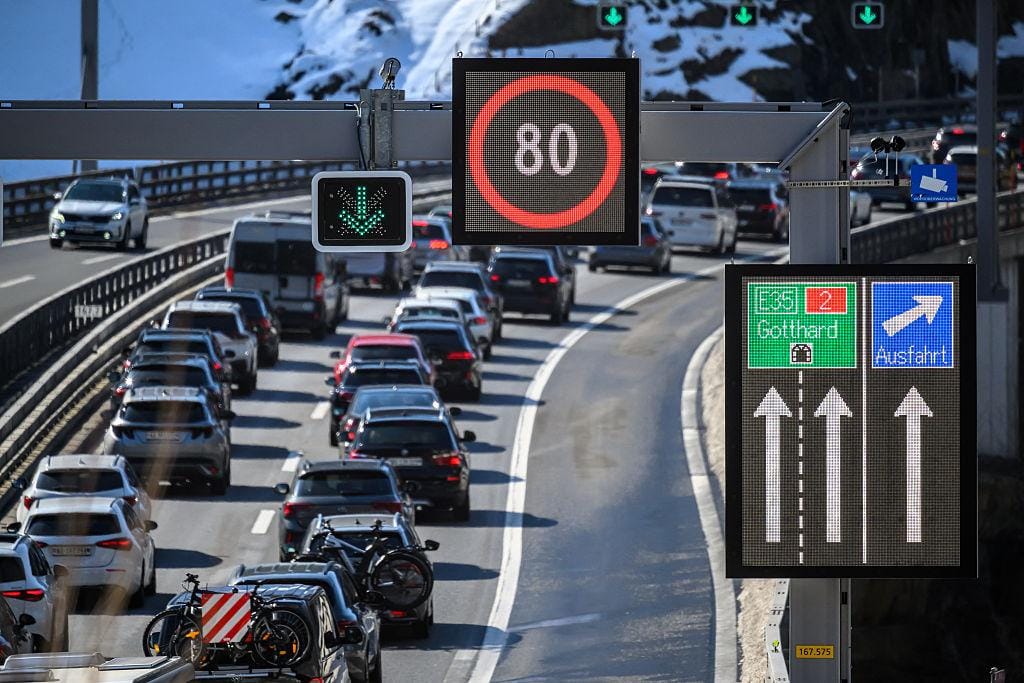
Traffic delays were particularly severe near the Gotthard tunnel in Gotthard Tunnel, where northbound return traffic built up to around three kilometres during the afternoon. Motorists experienced waiting times of up to 30 minutes, while southbound traffic also faced minor delays of around one kilometre.

Air travel was equally busy, with Swiss airports reporting high passenger volumes throughout the long Whitsun weekend.

EuroAirport Basel-Mulhouse-Freiburg handled approximately 84,300 passengers over the weekend, with an additional 34,000 travellers expected on Whit Monday alone, according to airport estimates.

Meanwhile, Geneva Airport projected a total of around 210,000 passengers across the entire holiday period, reflecting strong seasonal travel demand.

Authorities and airport operators noted that the surge in traffic is typical during extended holiday weekends, especially when travellers return simultaneously from various European destinations.

The combination of road congestion and high airport passenger flow highlights the continued pressure on Switzerland’s transport infrastructure during peak travel periods.
SWISS to Cut Administrative Staff by 10% in Cost-Saving Drive

Swiss International Air Lines (SWISS) has announced plans to reduce its administrative workforce by around 10% as part of expanded cost-saving measures.

SWISS Chief Executive Officer Jens Fehlinger confirmed the decision in an interview published by the Swiss newspaper NZZ am Sonntag.

According to Fehlinger, the airline aims to lower administrative staffing levels without implementing forced redundancies.

Instead, SWISS plans to achieve the reduction through voluntary departures and incentive-based programmes designed to encourage employees to temporarily or permanently leave their positions.

The airline is reportedly offering financial incentives similar to measures previously introduced for cabin crew members.

Under the new programme, administrative staff who choose unpaid leave could receive compensation worth up to 20% of the base salary savings generated by their absence.

The move comes as airlines across Europe continue adjusting operational costs amid changing travel demand, rising competition, and economic pressures within the aviation sector.

SWISS has already introduced several efficiency measures in recent months to strengthen long-term financial stability while maintaining flight operations and customer services.

Industry analysts say many airlines are increasingly focusing on reducing back-office expenses and streamlining administration rather than cutting frontline operational staff.

Despite the planned reduction, SWISS stated that it remains committed to avoiding compulsory job cuts and maintaining a stable working environment for employees.

The airline continues to play a major role in Switzerland’s aviation industry and international connectivity.

Middle East War Expected to Affect Swiss Tourism Industry.

The ongoing conflict in the Middle East is expected to negatively impact the tourism sector in Switzerland, according to Switzerland Tourism.

Tourism officials warned that the war could lead to a moderate decline in overnight hotel stays this year, although demand during the summer season is expected to remain relatively stable.

The Swiss hotel industry recorded a noticeable slowdown in March, with overnight stays falling by 5.2% compared to the same period last year. However, Switzerland Tourism explained that the decline was not caused solely by the conflict but also by calendar-related factors.

One major reason was the timing of school winter holidays. In 2026, winter vacations in many European regions ended in February, while several major markets, including Germany, had holidays extending into March during the previous year.

Despite the uncertainty, many tourism operators remain optimistic about the upcoming summer season. Industry experts expect stable demand from domestic travelers and visitors from neighboring European countries.

The trend toward “nearshoring” — where tourists prefer destinations closer to home — is continuing to support Switzerland’s tourism sector amid global instability.

Interestingly, Switzerland also recorded a surprising rebound in visitors from Gulf countries, with arrivals increasing by 7.9%. Tourism officials noted that this was partly due to the timing of Ramadan, which fell in March 2025 and traditionally reduces travel activity.

Looking ahead to 2026, Switzerland Tourism predicts a 2–3% decline in overnight stays linked to geopolitical tensions in the Middle East.

However, officials stressed that the current situation is far less severe than the tourism collapse experienced during the COVID-19 pandemic. They described the present slowdown as a market adjustment affecting only certain travel segments.

Tourism experts added that hotels heavily dependent on travelers from affected regions may feel stronger economic pressure, while the broader Swiss tourism industry is expected to remain stable overall.