AI Helps Understand Pet Communication.

Artificial intelligence technology continues to expand into everyday life, and now it is entering the world of pet communication.

A Chinese technology company called Meng Xiaoyi has introduced a new AI-powered smart collar designed to help pet owners understand the sounds and emotions of their pets.

The device, named PettiChat, uses advanced AI models developed through Alibaba Cloud’s Qwen AI technology. The system was trained using more than 1.5 million real-world pet sound samples and over 3,200 hours of annotated pet video data collected with the support of veterinarians and volunteers.

When attached to a dog or cat’s collar, the device analyzes sounds, emotional signals, and behavior patterns with AI assistance. It then converts the interpreted meaning into text and sends it directly to a connected smartphone application.

For example, if a cat looks upward and meows repeatedly, the AI system may translate the behavior as “I want to play.”

The smart collar weighs only 27.2 grams and also includes GPS tracking features, allowing owners to monitor their pets’ locations in real time.

According to the company, a single one-hour charge can support more than 1,000 “sentence translations,” making the device practical for daily use.

The company announced that the product will officially launch on May 30. Reports indicate that more than 10,000 customers have already pre-ordered the device ahead of release.

The AI collar is priced at 799 yuan, approximately ₹11,000 in Indian currency. While many technology enthusiasts are excited about the innovation, social media users continue debating how accurate the translations will be in real-world situations.

AI Helps Decode Ancient Cuneiform Tablets.

Researchers in Germany have developed an advanced artificial intelligence system capable of helping historians decode thousands of ancient clay tablets that remained difficult to study for decades.

Many of these historical tablets were discovered broken, damaged, or faded and had been stored in museums and research centers around the world for years. Even experienced experts often struggled to read or reconnect the fragmented writings.

A new AI tool called “Palaeographicum,” developed by researchers from University of Würzburg and the Mainz Academy of Sciences and Literature, is now transforming the study of ancient texts.

The AI system identifies tiny handwriting differences found in cuneiform inscriptions, one of the world’s oldest writing systems. Tasks that previously required several days of expert analysis can now be completed within minutes.

Cuneiform writing was widely used around 3,500 years ago by the Hittite civilization to record laws, trade agreements, royal communications, and political records.

Because many tablets were broken and scattered across different museums globally, reconstructing and connecting related pieces became a major historical challenge.

The new AI technology analyzed nearly 70,000 photographs containing approximately five million cuneiform symbols. By studying writing patterns, the system can identify the handwriting style of individual ancient scribes and determine which tablets were likely created in the same location.

Researchers say the technology can also estimate the historical period of undated tablets by examining writing styles. This allows historians and archaeologists to uncover historical connections much faster than before.

Although human expertise remains essential, researchers believe AI significantly improves both speed and accuracy in ancient text analysis. The breakthrough could reveal thousands of hidden stories buried for centuries within ancient civilizations.

AI Triggers 96,000 Tech Layoffs in 2026.

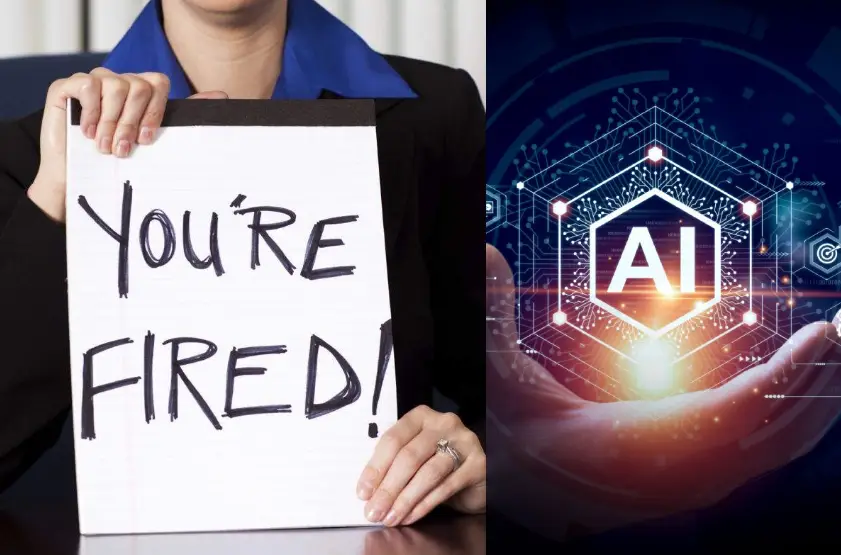
The rapid expansion of Artificial Intelligence is transforming the global technology industry, with nearly 96,000 employees reportedly losing their jobs in 2026 alone.

Technology companies across the world are increasingly replacing traditional workforce structures with AI-powered systems to improve efficiency, reduce operational costs, and automate tasks previously handled by humans.

Industry reports indicate that many startup IT firms can now perform work previously managed by 250 employees using only around 50 staff members supported by advanced AI tools.

Major technology companies have also accelerated restructuring efforts as artificial intelligence becomes more deeply integrated into business operations.

Meta recently announced plans to reduce approximately 10% of its workforce, affecting nearly 8,000 employees.

The company reportedly confirmed that the layoffs would begin from May 20 and stated that it currently has no plans to refill around 6,000 vacant positions.

Meanwhile, Amazon has reportedly cut nearly 30,000 jobs since October as part of broader operational restructuring and automation strategies.

Experts say companies are increasingly relying on AI systems for coding, customer support, data analysis, marketing automation, and content generation.

The growing adoption of AI technologies has sparked debate across the global workforce, with many professionals expressing concern about job security and the future of traditional employment.

At the same time, technology leaders argue that AI will also create new opportunities in fields such as machine learning, cybersecurity, robotics, and AI system management.

Economists believe the global labour market is entering a major transition period where companies will prioritize digital automation and AI-driven productivity.

As competition intensifies in the tech industry, businesses are expected to continue investing heavily in artificial intelligence to remain competitive in the rapidly evolving digital economy.

Swiss Foreign Minister Urges OSCE to Coordinate on Emerging Technologies.

Swiss Foreign Minister Ignazio Cassis has called on member states of the Organization for Security and Co-operation in Europe to develop a common and proactive approach toward emerging technologies.

Speaking at a two-day OSCE conference in Geneva, Cassis emphasized the importance of anticipating scientific and technological developments before they create political, social, or security challenges.

“If no one controls them, they will control us,” Cassis warned while referring to rapidly advancing technologies such as artificial intelligence and quantum computing.

The Swiss foreign minister stressed that the greatest danger today is not technological innovation itself, but political delays in responding to technological change.

According to Cassis, if regulations fail to keep pace with innovation, societies may face mistrust, instability, misjudgements, and rising tensions.

He noted that new technologies already influence all major dimensions of the OSCE, including military security, economic competition, civil liberties, and social cohesion.

Conference participants discussed how artificial intelligence, quantum computers, and advanced digital systems could reshape security and cooperation across Europe.

Delegates also explored how technology could help countries manage scarce resources more effectively and support international collaboration.

Switzerland is seeking to strengthen international cooperation on technology governance following initiatives introduced at the United Nations Security Council during Switzerland’s chairmanship in 2024.

Cassis also highlighted the role of a Geneva-based foundation that has worked for years on identifying technological risks and opportunities before they create wider social problems.

He clarified that the goal is not to regulate every technological development, but rather to focus on the most urgent and high-impact challenges facing societies today.

The conference reflects growing international concern over the global impact of artificial intelligence, cyber threats, digital warfare, and emerging technologies on democracy and security.

Roche Acquires AI Specialist PathAI in Major Healthcare Deal.

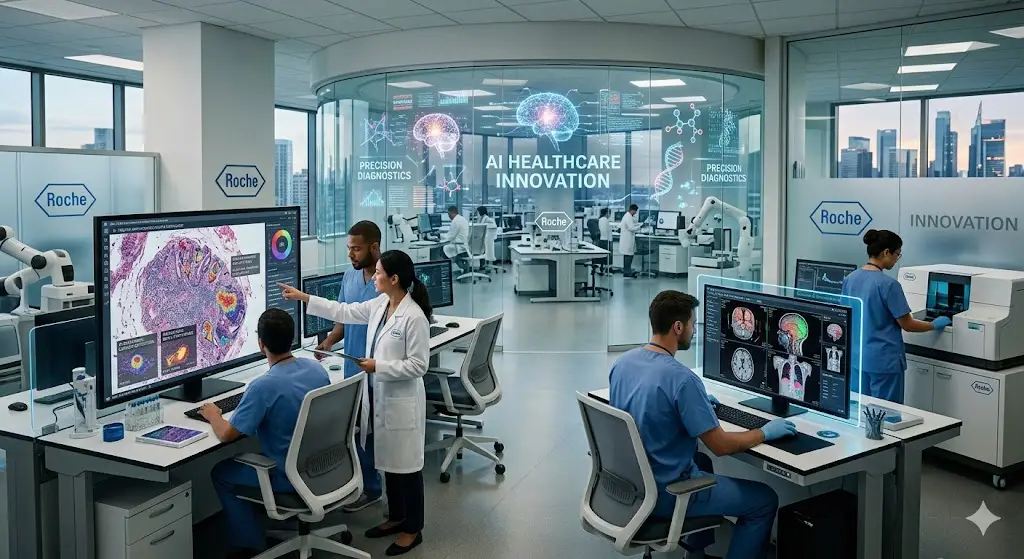
Swiss pharmaceutical giant Roche has announced the acquisition of American artificial intelligence company PathAI as part of its strategy to strengthen AI-powered healthcare and digital pathology solutions.

The deal is valued at $750 million, with additional milestone payments that could increase the total value by up to $300 million.

Through the acquisition, Roche aims to expand its leadership in AI-based diagnostic technologies and accelerate the development of personalized medicine.

PathAI specializes in artificial intelligence systems used in pathology and medical diagnostics. Its AI-powered Image Management System (IMS) helps laboratories improve efficiency, analyze medical images faster, and support clinical decision-making.

Roche stated that combining PathAI’s technology with Roche’s diagnostic expertise will help speed up the development of new therapies, improve laboratory operations, and support the discovery of new biomarkers and advanced diagnostic tools.

The two companies already began collaborating in 2021, with the partnership expanding further in 2024 before the acquisition announcement.

Roche expects the transaction to be finalized during the second half of 2026, pending approval from regulatory and competition authorities.

After completion, PathAI will be integrated into Roche’s diagnostics division, strengthening the company’s position in the growing field of AI-driven healthcare innovation.

The move highlights the increasing importance of artificial intelligence in global healthcare, where pharmaceutical companies are investing heavily in digital diagnostics, precision medicine, and automated laboratory technologies.

Swiss Media Industry Adopts AI Code of Conduct.

The Switzerland media industry has officially adopted a new code of conduct for the responsible use of artificial intelligence in journalism and publishing.

The initiative aims to strengthen public trust in AI technologies while ensuring ethical standards remain central to modern media practices.

According to industry representatives, the framework is based on principles outlined in a Council of Europe convention and is designed to guide media companies in using AI responsibly and transparently.

Andrea Masüger, President of the German-language publishers’ association Schweizer Medien, emphasized the importance of public confidence in journalism.

“Trust is the media’s most precious asset,” Masüger stated while discussing the need for clear ethical standards around AI-generated content and automated technologies.

The new guidelines are expected to address issues such as transparency, accountability, editorial oversight, misinformation risks, and the protection of journalistic integrity.

Media organizations across Europe are increasingly introducing AI policies as artificial intelligence tools become more common in news production, content generation, translation, and audience engagement.

Swiss publishers hope the new code will encourage responsible innovation while maintaining high standards of accuracy, independence, and credibility in the digital media landscape.

The move reflects growing international concern about the impact of AI on journalism, democracy, and public trust in information.