


‘King of Switzerland’ Wins Partial Victory in Armoured Vehicle Case

Self-proclaimed “King of Switzerland,” Jonas Lauwiner, has secured a partial legal victory in a dispute over his armoured vehicle in Switzerland.

The Bern Administrative Court ruled that authorities must reassess their decision to revoke the licence and number plates of Lauwiner’s vehicle. The court found that the withdrawal was ordered without a sufficiently detailed evaluation of roadworthiness and operational safety.

The ruling partially overturned a previous decision by the cantonal safety directorate. Judges stated that officials should have conducted a comprehensive technical review before taking action.

This decision means the case is not fully resolved, but it strengthens Lauwiner’s legal position. The case revolves around a decommissioned BRDM-2, which Lauwiner imported from Germany.

  • Initially registered in the canton of Zug
  • Later moved to the canton of Bern
  • Licence revoked due to safety concerns

Authorities cited issues such as sharp edges and potential risks to road users. Lauwiner argued that the vehicle had already passed inspections and met Swiss legal standards when it was first registered. He claimed that Bern authorities relied on assumptions rather than verified technical assessments. The Road Traffic Office must now re-evaluate the case based on proper safety analysis. The final outcome will depend on whether the vehicle meets all regulatory requirements.
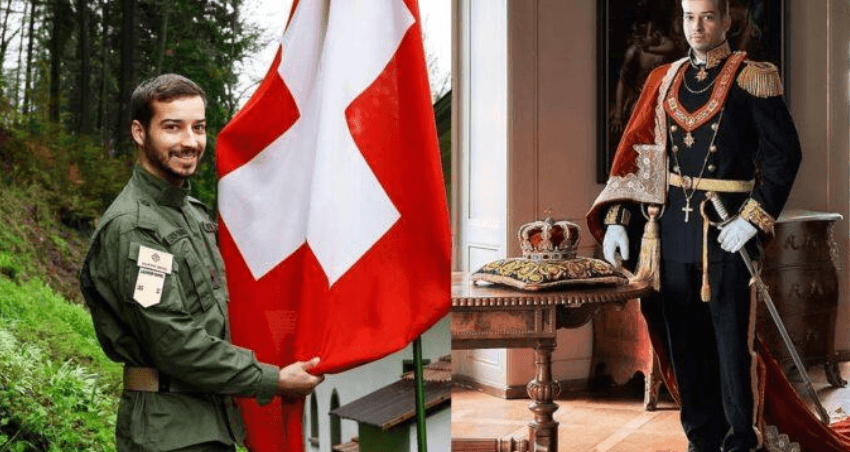

King of Switzerland’ Claim Sparks Political Controversy

A 31-year-old man, Jonas Lauwiner, has triggered widespread political and legal debate in Switzerland after declaring himself the country’s “king” and claiming ownership of multiple unregistered land plots.

According to reports, Lauwiner has asserted control over 148 land parcels, covering approximately 117,000 square meters. His claims reportedly include 83 road sections, some of which are currently used by the public.

Legal Loophole Raises Concerns

Lauwiner is believed to have used a provision in Swiss law that allows individuals to claim ownership of land classified as “ownerless” by submitting a formal request to local authorities—often without payment.

Critics argue that exploiting this legal loophole for personal gain could set a dangerous precedent, especially if public-use areas fall under private control.

Political Backlash Intensifies

The move has sparked strong reactions from politicians and local communities. Lawmakers warn that such actions could undermine public access to shared infrastructure and open the door for similar claims by others.

Several cantons are now considering tightening regulations to prevent misuse of land ownership laws and to safeguard public property.


Public Access at Risk?

The controversy highlights broader concerns about balancing individual property rights with public interest. If such claims go unchecked, roads and commonly used areas could potentially become privately controlled spaces.

This unusual case has exposed gaps in Swiss land ownership regulations and triggered urgent discussions on legal reforms. Authorities are now under pressure to act quickly to prevent further exploitation.

Man Declares Himself King of Switzerland, Sparks Political Outrage

A man has declared himself the “King” of Switzerland, claiming authority over a private land area measuring approximately 117,000 square meters. The unusual announcement has quickly drawn attention across the country and triggered strong reactions from political leaders.

The individual reportedly marked his privately owned land as an independent kingdom. He claimed sovereign status and attempted to establish symbolic control over the area. While the land legally belongs to him, Swiss law does not recognize any form of monarchy or self-declared sovereignty.

Swiss politicians have openly criticized the move. Officials described the declaration as misleading and potentially harmful to public understanding of national laws. They emphasized that Switzerland operates under a federal democratic system, where no individual can claim royal authority.

Authorities are now reviewing whether the man’s actions violate any legal frameworks. Experts highlight that declaring a kingdom within Switzerland has no legal standing and may lead to consequences if it causes public confusion or administrative issues.

The incident has sparked widespread discussion online and in media circles. Some view the act as symbolic or attention-seeking, while others see it as a serious misuse of legal boundaries. The situation continues to attract public curiosity and debate.

This unusual case highlights the limits of private ownership and the importance of legal structures in modern democracies. Swiss authorities continue to monitor the situation closely as discussions around sovereignty and law gain momentum.