
Hantavirus Case Confirmed in Switzerland After Luxury Cruise Outbreak

Hantavirus infection has now been confirmed in Switzerland after a Swiss passenger who travelled on the luxury cruise ship MV Hondius tested positive for the virus.

The passenger had been travelling on the expedition cruise from Argentina toward Cape Verde when several passengers and crew members reportedly became infected.

Authorities confirmed that three people connected to the outbreak have already died, raising international concern over the rare virus outbreak aboard the vessel.

After returning to Switzerland, the Swiss passenger developed symptoms and later tested positive for hantavirus following medical examinations.

The patient is currently receiving treatment at University Hospital Zurich, where he was immediately isolated as a precautionary measure.

Officials also confirmed that the patient’s wife has voluntarily entered self-isolation, although she has not shown symptoms of the virus.According to Swiss health authorities, the current risk to the public remains low, and there is no immediate danger to the Swiss population.

Health experts explained that hantavirus infections are relatively rare in Switzerland and are most commonly linked to exposure abroad.

The outbreak aboard the MV Hondius has attracted international attention after multiple passengers from different countries became infected during the long expedition cruise.

Authorities continue to monitor the situation closely while investigations into the spread of the virus remain ongoing.
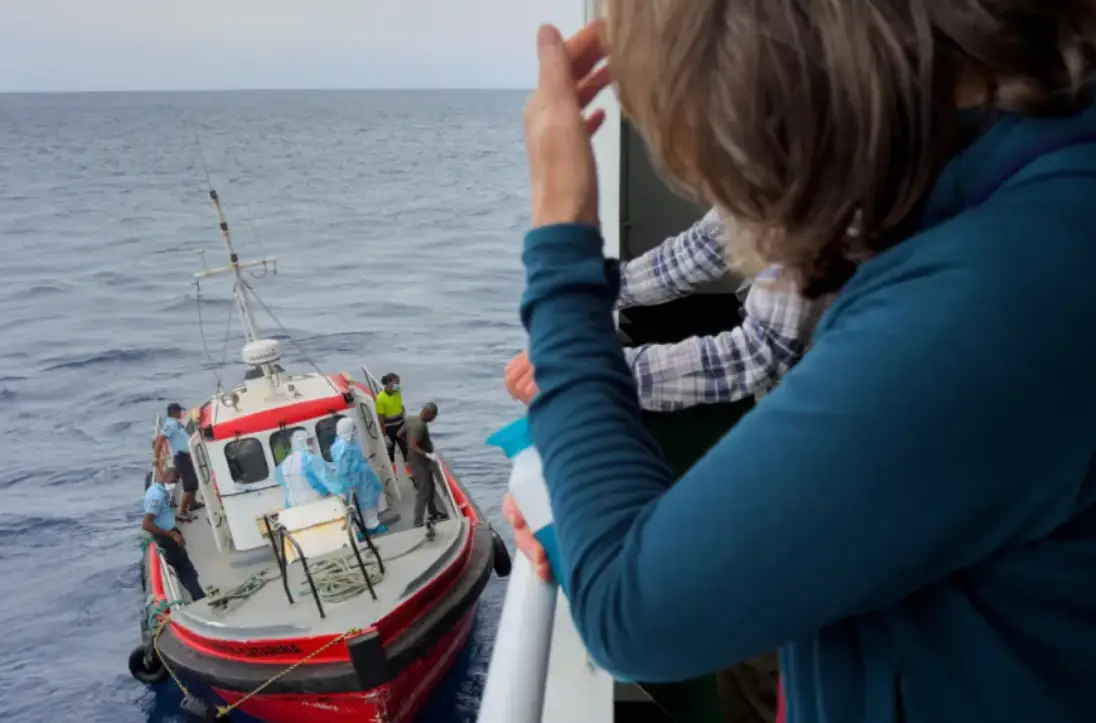

Swiss Crew Member Identified on Hantavirus-Hit Cruise Ship

A Swiss national has been identified among the crew members aboard the MV Hondius, which recently experienced a hantavirus outbreak during an expedition voyage.

According to Anne Lévy, the Swiss crew member had contact with infected individuals but is currently not showing any symptoms.

Speaking to Swiss public broadcaster SRF, Lévy confirmed that the man remains onboard the ship and is being monitored as a precautionary contact case.

The outbreak aboard the Hondius has already resulted in multiple confirmed hantavirus infections and several deaths, attracting international health attention.

The World Health Organization has now taken responsibility for coordinating the public health response connected to the ship.

Officials stated that once the vessel arrives in Tenerife, WHO experts will decide on further medical procedures and patient management.

Cruise operator Oceanwide Expeditions said that no passengers or crew members are currently displaying symptoms onboard the ship.

According to the company, the MV Hondius is expected to arrive at the port of Granadilla in Tenerife on Sunday morning.

Swiss authorities continue to monitor the situation closely while maintaining that the public health risk in Switzerland remains low.

Health experts say hantavirus infections are rare and are usually linked to contact with infected rodents, although limited human-to-human transmission has been reported in certain virus variants.

International health agencies are continuing contact tracing and precautionary monitoring efforts following the outbreak.

WHO Reassures Public Over Hantavirus Cases Linked to Cruise Ship Outbreak

The World Health Organization has moved to calm growing public concern over recent hantavirus infections linked to a cruise ship outbreak, stressing that the situation is not developing into an epidemic or pandemic.

Health officials confirmed that eight hantavirus cases have been identified so far, including five laboratory-confirmed infections. Three people — a Dutch couple and a German national — have died following the outbreak connected to the MV Hondius expedition cruise.

Speaking at a press conference in Geneva, WHO officials emphasized that the virus behaves very differently from COVID-19 and currently presents a low public health risk.

Maria Van Kerkhove, WHO Director for Epidemic and Pandemic Management, stated that hantavirus is far less contagious than coronavirus and insisted that the current situation should not be compared to the global pandemic experienced in 2020.

WHO Director-General Tedros Adhanom Ghebreyesus also confirmed that health authorities are closely monitoring people who had contact with infected individuals and are showing symptoms.

Experts believe the outbreak may remain limited if countries continue applying strict public health measures and maintain international cooperation.

Hantavirus is typically transmitted through infected rodents and their excretions. However, certain variants, including the Andes virus, can occasionally spread through close human contact in rare situations.

WHO officials warned that additional infections could still emerge because the incubation period can last up to six weeks.

Authorities in several countries are continuing retrospective contact tracing efforts to identify and monitor individuals who may have been exposed during the cruise.

In Switzerland, contact tracing measures were launched after an infected patient was admitted to Zurich University Hospital.

Despite international attention surrounding the outbreak, WHO continues to classify the overall risk to the general public as low.

Health experts are encouraging people to remain informed while avoiding unnecessary panic, noting that hantavirus outbreaks remain rare and typically limited in scale.

Switzerland Imports Record Number of Donor Organs.

Switzerland recorded a record number of imported donor organs in 2025, helping more patients receive life-saving transplants, according to the latest annual report from Swisstransplant.

Last year, 185 deceased individuals donated organs in Switzerland, only slightly below the country’s previous record. However, the number of living kidney and liver donations declined significantly by 16.5%, dropping to 96 cases.

Despite the decrease in donors, Switzerland carried out 643 organ transplants in 2025 — the second-highest number ever recorded in the country and a slight increase compared to the previous year.

Health officials reported notable increases in heart and pancreas transplants during the year.

A major factor behind the rise in transplant procedures was the growing international exchange of donor organs. Switzerland imported a record 69 organs from abroad, meaning nearly one in every eight transplanted organs came from another country.

Lungs were the most commonly imported organs, while Switzerland also exported 25 organs internationally as part of cross-border medical cooperation.

Hantavirus Case Treated at Zurich University Hospital.

A man infected with hantavirus is currently receiving treatment at the Zurich University Hospital, according to the Swiss government. Authorities emphasized that there is no danger to the general population.

The patient was previously a passenger aboard the cruise ship MV Hondius, where several hantavirus cases were reported during a voyage in the Atlantic Ocean.

According to the Federal Office of Public Health, the man returned to Switzerland at the end of April after traveling in South America with his wife. He later developed symptoms and was immediately isolated upon arrival at Zurich University Hospital.

Laboratory testing conducted at the reference facility at Geneva University Hospital confirmed infection with the virus. His wife has not shown symptoms but has entered precautionary self-isolation.

Health authorities are currently investigating whether the patient had contact with other individuals after returning to Switzerland.

Officials stated that the risk to the Swiss population remains low. The European variant of hantavirus is typically transmitted through contact with infected rodents, while human-to-human transmission is extremely rare and mainly associated with the Andes virus strain.

The FOPH noted that hantavirus infections are uncommon in Switzerland, with only zero to six cases reported annually in recent years, most of which are linked to infections acquired abroad.

Meanwhile, the MV Hondius cruise ship, operated as part of luxury expedition voyages, has been linked to a wider outbreak affecting nearly 150 passengers and crew from multiple countries. Several deaths have been reported, and some patients are receiving intensive care treatment internationally.

The outbreak developed during a long expedition route from South America toward Antarctica and across the South Atlantic, raising concerns among global health authorities, including the World Health Organization, which continues to assess the situation.

Mental Health Costs Rise Sharply in Switzerland.

Mental health treatment costs are continuing to rise across Switzerland, with new data highlighting growing pressure on the healthcare system. A recent report by the Swiss Health Observatory shows a significant increase in spending during 2024.

According to the report, mental healthcare costs increased by 6.1% in 2024 compared to 2023, reflecting a steady upward trend in demand for services. Despite rising costs, around 72% of the population reported feeling happy most or all of the time, indicating stable overall well-being.

The data reveals notable differences among age groups and genders. In outpatient care, treatment costs for boys under 18 rose by 8.9%, surpassing the 4.9% increase for girls for the first time. However, over the longer term between 2012 and 2023, the average annual cost increase for girls was nearly double that of boys.

In inpatient care, gender disparities remain significant. The hospitalization rate for girls in psychiatric clinics was approximately twice as high as for boys, indicating a higher level of severe mental health challenges among young females.

Experts continue to identify girls and young women as a high-risk group, calling for targeted interventions and stronger mental health support systems. The findings underline the importance of early prevention, accessible care, and increased awareness to address the growing mental health burden.

Geneva Launches Campaign to Reduce Smoking in Outdoor Cafés.

Authorities in Geneva have launched a new public awareness campaign aimed at reducing secondhand smoke exposure in outdoor areas of cafés and restaurants. The initiative focuses on encouraging responsible behavior rather than imposing strict legal bans.

Under the new campaign, smokers are advised to ask for consent from nearby individuals before lighting a cigarette in shared outdoor spaces. To reinforce this message, reminders will soon be displayed on tables across cafés and restaurants throughout the city.

The initiative has received mixed reactions from the public and business owners. Some restaurant operators believe the approach may be difficult to enforce in real-world situations. Others worry that this soft approach could eventually lead to stricter regulations or even a complete ban on smoking in outdoor dining areas.

At the same time, authorities are reportedly considering a proposal that would fully prohibit smoking during mealtimes. This reflects growing concern over the health risks associated with secondhand smoke and the need to protect public health.

The campaign represents a gradual policy approach, prioritizing awareness and social responsibility. Officials have confirmed that the effectiveness of the initiative will be evaluated in 2027. Based on the results, stricter measures could be introduced if necessary.

This move highlights Switzerland’s ongoing efforts to balance individual freedom with public health concerns, particularly in shared social spaces like cafés and restaurants.