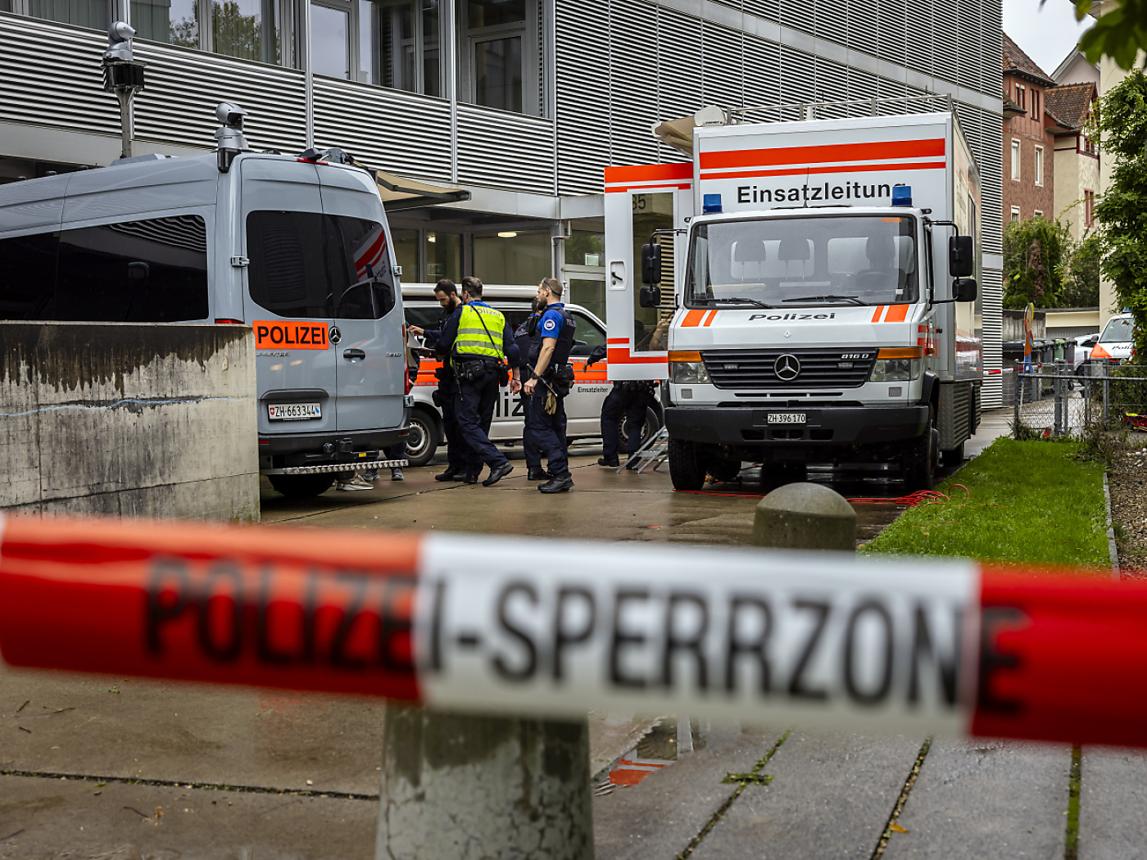
Swiss Teen to Face Trial Over Knife Attack in Zurich

A Swiss teenager is set to stand trial in Zurich over a serious stabbing incident that took place in March 2024, in which an Orthodox Jewish man was severely injured. The case has raised widespread concern across Switzerland and sparked strong political reactions.

The trial will begin on July 1 at the Dielsdorf District Court and is expected to last one day. The court has already scheduled the verdict, which is expected to be announced on July 7. Due to the defendant being a minor, the proceedings will not be open to the general public.

According to the youth prosecution service, the then 15-year-old Swiss national with Tunisian roots allegedly carried out a knife attack on an Orthodox Jewish man on a street in Zurich, causing life-threatening injuries. The victim survived but required urgent medical attention.

Investigators also allege that the teenager had been radicalised online prior to the attack and had expressed allegiance to Islamic State. Authorities further claim he attempted to target Jewish individuals and had tried to break into a synagogue before the stabbing incident.

The charges against the accused include multiple counts of attempted murder, alleged support of a criminal organisation, and incitement to hatred and discrimination. Prosecutors argue that the actions were part of a broader pattern of extremist intent.

The incident triggered strong political reactions in Switzerland. Zurich’s security director, Mario Fehr, publicly called for stricter measures and even suggested the possibility of deportation in response to the severity of the attack.

The case has reignited debate in Switzerland about youth radicalisation, online extremism, and the challenges of preventing hate-motivated violence. Authorities continue to stress the importance of monitoring online activity and strengthening prevention programs to address radicalisation at an early stage.

As the trial approaches, the case remains one of the most closely watched criminal proceedings involving a juvenile in recent Swiss legal history.


Winterthur Stabbing Case: Swiss Probe Digital Evidence.

The Swiss Attorney General’s Office is currently unable to access the electronic devices of a 31-year-old Turkish-Swiss man accused of a knife attack that injured three people in Winterthur, as legal proceedings over data access continue.

Federal prosecutor Stefan Blättler confirmed that the suspect has objected to the search of his laptop and mobile phone. As a result, authorities have submitted an application to the coercive measures court requesting permission to unlock and examine the devices. A decision is still pending.

Blättler explained that investigators are currently unable to review critical digital evidence, including communication records and messages that could reveal the suspect’s contacts before the attack. He emphasized that such information is essential for understanding potential links to other individuals or networks.

According to the prosecutor, electronic devices have become one of the most important sources of evidence in modern criminal investigations. However, legal protections around data “sealing” can delay access. This procedure was originally designed to protect sensitive or unrelated personal data, such as privileged legal correspondence or private information not relevant to investigations.

Blättler noted that while sealing was appropriate in an earlier legal era dominated by paper documents, it has become increasingly challenging in the digital age. He warned that prolonged delays in accessing data could hinder investigations, particularly in urgent cases involving public safety risks.

The federal prosecutor suggested that reforms may be needed to balance privacy protections with investigative urgency. He indicated that authorities may need faster access to seized data in certain cases, while still protecting legally privileged or irrelevant information.

The suspect is currently in pre-trial detention. He is accused of carrying out a violent attack at Winterthur station on May 28, where three men were injured, one seriously. The day before the incident, he had reportedly been in a psychiatric facility.

Swiss authorities have opened a criminal investigation for attempted multiple murder and alleged involvement in or support of a terrorist organization. The case remains under active judicial review as investigators await access to key digital evidence.

NZZ Fights Swissmedic Over Drug Advertising Claims.

One of Switzerland’s leading newspapers, Neue Zürcher Zeitung (NZZ), is taking legal action against Swissmedic after the regulator ordered the removal of several editorial publications that it classified as unauthorized advertising for prescription-only medicines.

According to reports, two separate cases are currently before Swiss courts. The dispute centers on whether journalistic content discussing medical treatments can be considered independent reporting or promotional material for pharmaceutical products.

In one case, Swissmedic challenged a first-person article written by a journalist about living with migraines. The Federal Administrative Court ruled in favor of Swissmedic in May 2025, stating that the article created a promotional impression and presented information in a one-sided manner. NZZ has appealed that decision to the Federal Supreme Court, seeking a final ruling on the matter.

The controversy extends beyond migraine reporting. Swissmedic also instructed NZZ to remove several publications related to weight-loss injections. These reportedly include a video feature, a personal weight-loss experiment series, and multiple journalistic articles discussing the treatments.

NZZ argues that the publications fall within the scope of legitimate journalism and public-interest reporting. The newspaper is challenging Swissmedic’s orders before the Federal Administrative Court, raising broader questions about media freedom, editorial independence, and health communication in Switzerland.

The legal battle highlights the growing tension between media organizations and regulatory authorities over the reporting of medical treatments and healthcare innovations. As prescription medicines become more widely discussed in the public sphere, courts may play a crucial role in defining the boundaries between journalism and advertising.

The outcome of these cases could have significant implications for Swiss media outlets, healthcare reporting, and the future regulation of medical content in Switzerland.

Swiss Mental Hospital Escapee Case Goes to Court.

A Swiss court is currently examining a serious case involving a psychiatric patient who escaped from a mental health facility in 2018 and went on to attack several people with a hatchet, leaving four individuals seriously injured.

The incident took place after the patient fled from the Préfargier psychiatric hospital. Following the escape, the individual carried out a violent attack, raising major questions about the responsibilities of medical staff and the safety protocols in place at the facility.

During the court proceedings, prosecutors argued that hospital staff failed to properly assess and monitor the patient’s condition. They also claimed that there was a delay in informing authorities after the escape, which may have contributed to the severity of the incident.

The medical team, however, strongly rejected the allegations. Their defense stated that psychiatric professionals followed standard medical procedures and that it is not always possible to predict sudden acts of extreme violence, even in monitored patients.

Experts in forensic psychiatry often emphasize that while risk assessments are an important part of mental health care, predicting rare violent behavior with complete accuracy remains extremely difficult.

Following the attack, the individual later died by suicide while in prison, adding further complexity to the case and its legal interpretation.

The court is now expected to deliver its verdict by the end of the year. The outcome is likely to have implications for how psychiatric risk assessment and patient supervision are handled in Switzerland’s mental health system.

The case has also reignited public debate about the balance between patient rights, medical responsibility, and public safety in psychiatric care institutions.