Former Raiffeisen CEO Faces CHF1 Million Tax Penalty.

Former Raiffeisen Switzerland CEO Pierin Vincenz has reportedly been ordered to pay nearly CHF1 million in fines linked to tax evasion, according to reports published by Swiss newspaper SonntagsZeitung.

The report states that the Swiss Federal Supreme Court confirmed the sentence in a judgment that recently became legally binding. Swiss tax-related court proceedings are generally not public, which is why the case had remained largely unknown until now.

Authorities allege that Vincenz failed to declare approximately CHF3.4 million in taxable income. In addition to the financial penalty, he could also be required to pay significant backdated taxes.

During the proceedings, Vincenz denied the allegations against him.

The investigation reportedly began after tax authorities in Appenzell Ausserrhoden reviewed a criminal indictment connected to an ongoing case in Zurich and identified suspicious financial transactions.

In 2022, Vincenz and several associates were found guilty of fraud and embezzlement in a separate criminal case involving acquisitions made during his leadership at Raiffeisen. However, appeals against those convictions are still ongoing.

A February 2025 ruling by Switzerland’s highest court reportedly upheld parts of the earlier legal findings, making the latest tax penalty enforceable.

Vincenz continues to face legal scrutiny over accusations that he personally benefited from business deals conducted while serving as chief executive of Raiffeisen. Another appeal hearing in the broader case is expected to take place in August.

The case remains one of the most closely followed financial and corporate governance scandals in modern Swiss banking history.

Swiss Banking Fraud Cases Increase in 2025, Ombudsman Reports.

Financial fraud cases have increased in Switzerland in 2025, according to the Swiss Banking Ombudsman, with online banking and card payment scams driving most complaints.

The Swiss Banking Ombudsman handled 2,575 cases last year, marking a 4% increase compared with the previous year, as reported by Ombudsman Andreas Barfuss during a press conference.

Fraud-related complaints rose significantly to 316 cases in 2025, up from 270 in 2024. Officials said phishing attacks and digital payment fraud remain the most common issues affecting customers.

Regionally, 55% of complaints came from German-speaking Switzerland, while 23% originated from abroad. French-speaking Switzerland accounted for 19%, and Italian-speaking regions remained stable at 3%.

The report noted that in 90% of cases, the disputed amount was below CHF 100,000, indicating that most incidents involve relatively moderate financial losses.

Authorities emphasized that banks are not generally legally required to reimburse victims of such fraud cases. However, each complaint is assessed individually based on the circumstances and evidence provided.

Experts warn that the rise in digital fraud reflects growing cybersecurity risks as more banking services move online, highlighting the importance of stronger user awareness and preventive security measures.

Swiss Crowdfunding Market Grows for First Time Since 2021 Driven by Crowdlending Surge

Switzerland’s crowdfunding sector has returned to growth in 2025 after three consecutive years of decline, signaling renewed investor confidence in digital financing platforms. According to the latest “Crowdfunding Monitor Switzerland” report by Lucerne University of Applied Sciences and Arts (HSLU), the total volume of funds raised through online platforms increased by 14% to CHF629 million (around $800 million).

The market had previously peaked at nearly CHF792 million in 2021 before experiencing a steady decline. The recent recovery is mainly driven by strong performance in the crowdlending segment, which now accounts for approximately 75% of the total crowdfunding volume in Switzerland.

CHF 629 million = 629000000 CHFCHF\ 629\ million\ =\ 629\,000\,000\ CHFCHF 629 million = 629000000 CHF

Experts explain that stricter banking regulations introduced in 2025 played a key role in boosting alternative financing channels. Swiss banks are now required to hold more capital against riskier property loans, making traditional lending more expensive and less flexible. As a result, businesses and individuals are increasingly turning to crowdlending platforms for faster and more accessible financing options.

The report also highlights a broader recovery across other crowdfunding segments. Crowdsupporting and crowddonating platforms recorded growth for the first time since 2020. Crowddonating, which supports charitable, cultural, and social initiatives, and crowdsupporting, where contributors receive rewards such as products or services, together increased significantly in 2025.

Sports and health-related projects were among the most successful categories, contributing to a total combined volume increase of 30% to CHF35 million. Meanwhile, real estate crowdlending showed particularly strong expansion, rising by 38% to CHF275 million, making it one of the most important growth drivers in the sector.

Researchers from HSLU noted that the annual “Crowdfunding Monitor Switzerland” plays a key role in tracking market trends and improving transparency within the financial ecosystem. The study helps identify emerging investment behaviors and highlights how regulatory changes continue to shape Switzerland’s digital finance landscape.

Swiss Economy Records Strong Growth in Early 2026 Despite Global Challenges

Switzerland’s economy showed stronger-than-expected growth during the first quarter of 2026 despite rising oil prices and ongoing global trade uncertainties. According to the latest flash estimate released by the Swiss State Secretariat for Economic Affairs (SECO), the country’s real seasonally adjusted gross domestic product (GDP) increased by 0.5% compared to the previous quarter.

The positive economic performance came from growth in both the industrial and service sectors. Economists had predicted a lower increase of between 0.3% and 0.4%, making the latest figures a positive surprise for the Swiss economy. During the final quarter of 2025, Switzerland’s GDP had grown by only 0.2%, while the previous quarter experienced a 0.5% decline due to international tariff disputes and trade tensions.

GDP Growth=0.5%GDP\ Growth = 0.5\%GDP Growth=0.5%

SECO economic expert Felicitas Kemeny explained that confidence in the economy has improved in recent months. She stated that reduced tariffs and slight economic recovery in Germany helped support Swiss economic activity. Several economic indicators also pointed toward stronger business confidence and stable consumer activity across Switzerland.

Although oil prices increased significantly during March, analysts noted that confidence indicators remained relatively stable. This has created optimism that Switzerland may maintain positive economic momentum in the short term. However, uncertainty still exists because global energy prices and international trade conditions continue to affect economic forecasts worldwide.

The Swiss government currently expects economic growth of around 1.0% for 2026 under its main scenario. If oil prices remain elevated for a longer period, experts believe growth could slow slightly to around 0.8%. SECO will release the detailed GDP report on June 1, which will provide more information about the performance of individual sectors within the Swiss economy.

Switzerland continues to demonstrate resilience despite global economic pressure, inflation concerns, and international market instability. Economists believe the country’s diversified economy, stable financial system, and strong industrial base continue to support steady economic growth during uncertain times.

Swiss Economy Grows 0.5% Despite Oil Price Shock

The Swiss economy recorded stronger-than-expected growth in early 2026 despite global pressure from rising oil prices and ongoing trade uncertainties.

According to a flash estimate released by the State Secretariat for Economic Affairs (SECO), Switzerland’s gross domestic product (GDP) increased by 0.5% in the first quarter of 2026 compared to the previous quarter.

Both the industrial and service sectors contributed to this positive performance, showing resilience even amid external economic shocks.

The growth rate exceeded analysts’ expectations, which had predicted expansion between 0.3% and 0.4%, according to market surveys.

In the previous quarters, the Swiss economy showed mixed performance, including a 0.2% growth at the end of 2025 and a 0.5% contraction earlier due to tariff-related tensions.

SECO officials noted that improved business confidence played a key role in the recovery, along with easing tariff pressures and modest positive spillover effects from Germany’s economy.

However, economists remain cautious about the outlook. Rising oil prices, which increased significantly in March, could still affect economic momentum in the coming months.

Despite this, confidence indicators have remained relatively stable, suggesting that short-term growth may continue.

The Swiss government currently projects annual growth of around 1.0%, though this could be revised down to 0.8% if high energy prices persist.

A detailed GDP breakdown is expected in the upcoming full report scheduled for June 1, which will provide deeper insight into sector-specific performance.

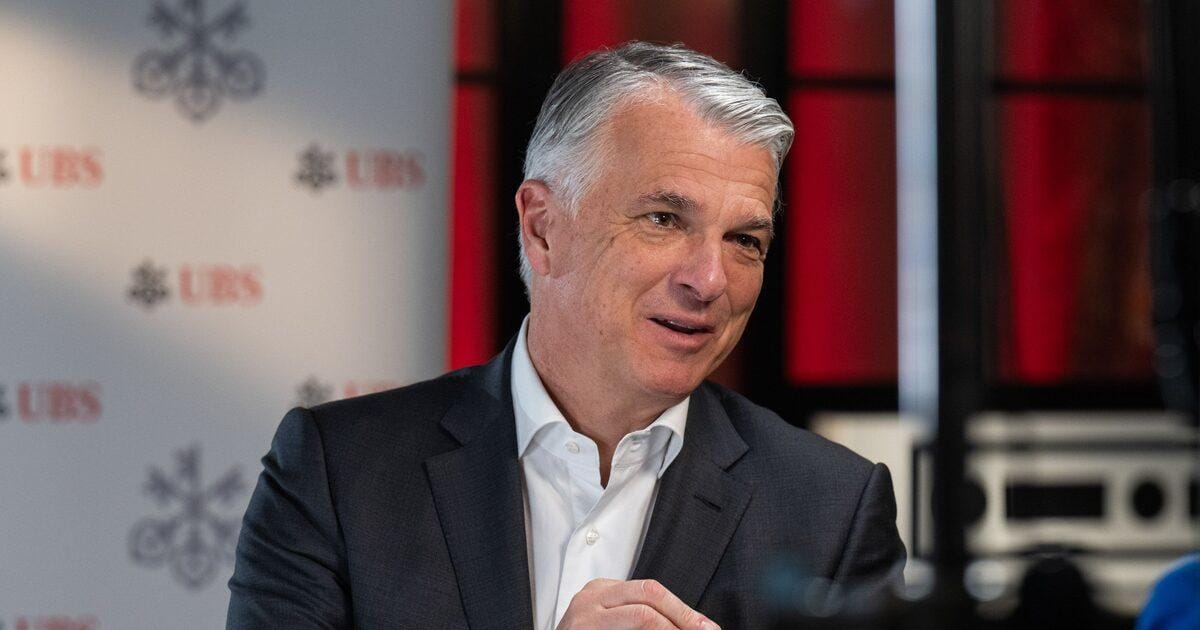
UBS Cleared in Archegos Case

The United States Federal Reserve has officially lifted the enforcement measures imposed against UBS and the former Credit Suisse over the collapse of the Archegos hedge fund scandal.

According to the Federal Reserve, the restrictions introduced in 2023 were related to serious organisational and risk-management failures discovered within Credit Suisse during the collapse of Archegos Capital Management in 2021. The incident became one of the biggest financial disasters in the bank’s history.

In 2023, the Federal Reserve fined Credit Suisse and UBS a combined $268.5 million after identifying weaknesses in supervision, liquidity management, internal controls, and data management systems. Regulators also demanded major improvements to the banks’ compliance and oversight structures.

The enforcement action was coordinated with international financial regulators. Britain’s Prudential Regulation Authority imposed an additional £87 million fine, while Switzerland’s financial regulator FINMA ordered corrective measures after uncovering serious operational failures within Credit Suisse.

The collapse of Archegos Capital Management in March 2021 had a devastating impact on several international financial institutions. However, Credit Suisse suffered the largest losses among all affected banks. The scandal reportedly cost the Swiss bank nearly CHF5 billion and severely damaged investor confidence.

Archegos was managed by investor Bill Hwang, whose highly leveraged investment strategy triggered massive losses across global markets after the hedge fund collapsed.

Financial analysts widely view the Archegos crisis as one of the key events that accelerated the downfall of Credit Suisse before its emergency takeover by UBS in 2023. Since then, UBS has continued integrating Credit Suisse operations while working closely with global regulators to strengthen compliance systems.

The Federal Reserve’s decision to remove the measures suggests regulators are satisfied with the corrective actions taken by UBS following the acquisition and restructuring process.

Switzerland Banking Safety: Which Bank is Best for Savings?

Choosing a safe and reliable bank for savings in Switzerland is an important financial decision, especially for residents and expats looking for long-term security. Swiss banking is globally known for stability, strong regulation, and high trust levels, but some banks are considered safer and more practical for savings than others.

Among all banking options, Cantonal Banks are widely regarded as the most secure choice. These banks are backed by the individual cantons (regional governments), which adds an extra layer of financial protection beyond the standard Swiss deposit insurance system. In Switzerland, deposits are generally protected up to CHF 100,000 under the esisuisse guarantee scheme.

One of the strongest examples is the Zürcher Kantonalbank. It is considered one of the safest banks in the country because it has full backing from the Zurich canton government. This strong government guarantee, combined with high financial ratings, makes it a preferred option for conservative savers.

Another popular choice is Raiffeisen Switzerland. It is known for its community-based banking model and stable operations across the country. Many users choose Raiffeisen for its balance between safety and competitive savings interest rates.

The global banking giant UBS is also widely used in Switzerland. While it offers strong international services and wealth management solutions, its deposit protection follows the standard Swiss system without additional cantonal guarantees.

Additionally, PostFinance is considered a conservative option with government-linked trust perception, making it a popular choice for everyday savings and transactions.

Financial experts in Switzerland often recommend diversifying savings across multiple banks if deposits exceed CHF 100,000. This is because spreading funds reduces risk exposure and ensures full protection under Swiss deposit insurance rules. A common strategy includes splitting funds between Zürcher Kantonalbank, Raiffeisen, and investment platforms.

For residents in Zurich, Zürcher Kantonalbank is often seen as the most practical and secure choice due to its strong government backing, lower fees, and stable reputation in the Swiss financial system.

Switzerland Avoids Recession Despite Oil Crisis, Study Finds.

A new economic study suggests that Switzerland is unlikely to fall into recession despite rising global oil prices and ongoing energy market tensions linked to the Middle East situation.

According to economists at Raiffeisen Group, Switzerland’s economy is expected to continue growing in 2026, with projected GDP growth between 0.5% and 1%, depending on different economic scenarios.

Chief economist Fredy Hasenmaile stated that although the current energy crisis resembles past oil shocks, Switzerland is in a much stronger position today compared to the 1970s. During the 1973 oil crisis, the Swiss economy suffered a sharp downturn, with GDP falling significantly and inflation rising sharply.

However, the study highlights that Switzerland has become far less dependent on oil over the decades. Oil now accounts for a smaller share of total energy consumption, while energy efficiency across industries has improved significantly. This structural change has reduced the economic impact of oil price increases.

Economists estimate that a 10% rise in oil prices now reduces Swiss economic growth by only around 0.05%, compared to a much stronger impact in past decades.

Despite this resilience, the report warns that risks remain. Switzerland still imports a large share of its energy, and transportation remains heavily dependent on fossil fuels. Additionally, Switzerland’s export-driven economy is closely linked to global markets, making it sensitive to international economic fluctuations.

Overall, analysts conclude that Switzerland’s improved energy efficiency, diversified economy, and strong institutional stability help protect it from recession, even during global energy shocks.

Financial Pressure Growing Among Switzerland’s Middle Class.

Financial pressure is increasing for many middle-class families in Switzerland, according to new data released by the Federal Statistical Office.

Although the majority of people in Switzerland are classified as middle income, many households are struggling with financial insecurity and rising living costs.

The Federal Statistical Office reported that around one in four people in the lower middle class would be unable to cover an unexpected expense of CHF 2,500 (approximately $3,200).

The findings are based on Switzerland’s household budget survey and research into income and living conditions.

According to the FSO, approximately 4.9 million people in Switzerland belonged to the middle-income category in 2024.

The classification includes single adults earning between CHF 4,228 and CHF 9,061 per month, as well as couples with two children earning a combined gross monthly income between CHF 8,800 and CHF 19,028.

However, the data show that financial difficulties are especially severe among the lower middle class, which represents roughly 2.3 million residents.

This category includes single individuals earning below CHF 6,041 monthly and families with two young children earning less than CHF 12,685 combined income.

Experts say rising housing costs, healthcare expenses, inflation, and everyday living costs continue to place increasing pressure on middle-income households across Switzerland.

The report highlights growing concerns over financial vulnerability even among people traditionally considered economically stable.

Economists warn that continued increases in living expenses could further weaken household purchasing power and long-term financial security for many Swiss residents.

EU Jobless Reform Could Cost Switzerland Up to CHF 900 Million

A proposed reform by the European Union on unemployment insurance rules for cross-border workers could significantly increase costs for Switzerland, according to estimates from the State Secretariat for Economic Affairs.

The Swiss government agency warned that the planned changes could result in additional annual expenses ranging between CHF 600 million and CHF 900 million (approximately $771 million to CHF 1.1 billion).

The reform, currently being discussed within the European Union, aims to change the system for paying unemployment benefits for cross-border workers.

Under the new proposal, responsibility for unemployment payments would shift from the worker’s country of residence to the country where the individual last worked before becoming unemployed.

SECO published the cost estimates on its official website, following earlier reporting by the Swiss newspaper Neue Zürcher Zeitung.

However, Swiss authorities stressed that the figures remain highly uncertain due to limited data on unemployed cross-border workers.

Officials stated that a more accurate financial assessment will only be possible once the final version of the EU regulation is approved.

Before implementation, the proposal must be accepted by both the EU Council and the European Parliament. An EU diplomat reportedly expressed confidence that the reform is likely to pass.

The issue is particularly important for Switzerland due to its large number of cross-border workers from neighboring EU countries, especially in regions such as Geneva, Basel, and Ticino.

Experts warn that any change in benefit responsibility could place additional pressure on Switzerland’s unemployment insurance system and federal budget.