Switzerland Signs Gaza Humanitarian Declaration

Switzerland has joined 19 other countries in signing a joint declaration expressing serious concern over the worsening humanitarian situation in the Gaza Strip. The Swiss foreign ministry described the situation as dramatic and highly unstable, emphasizing the urgent need for improved access to essential services and humanitarian assistance.

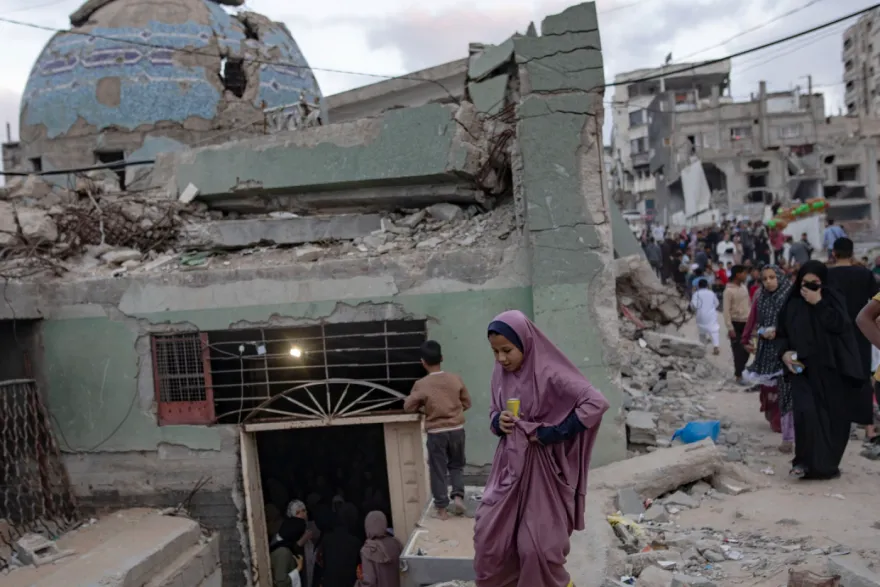
According to the Federal Department of Foreign Affairs, access to basic services in Gaza remains severely restricted. The United Nations reports that the healthcare system is under extreme pressure, with none of the 36 hospitals in the region fully functional and only about half operating partially.

The humanitarian crisis has also led to widespread displacement, with approximately 1.7 million people forced to leave their homes. Overcrowded living conditions, combined with inadequate waste management, have increased the spread of diseases such as skin infections among displaced populations.

In the joint declaration, Switzerland and its international partners called on Israeli authorities not to implement a new registration system for international non-governmental organisations in its current form. The statement also reaffirmed obligations under international humanitarian law, stressing the need to ensure safe, rapid, and unrestricted delivery of aid to civilians.

The declaration was signed alongside countries including Austria, Belgium, Denmark, Finland, France, Germany, Ireland, Japan, the Netherlands, Norway, Spain, Sweden, the United Kingdom, and others, as well as the European Commission.

Switzerland also highlighted its ongoing financial support for the Palestinian population. Since November 2023, the country has provided approximately CHF 174 million in assistance, including CHF 150 million dedicated specifically to humanitarian aid. Additional funding of around CHF 31 million has been allocated for the current year.

Officials in Bern reiterated Switzerland’s commitment to humanitarian principles and international cooperation, stating that continued support for civilians affected by conflict remains a key priority in its foreign policy approach.
Switzerland Expands Domestic Violence Awareness Campaign.

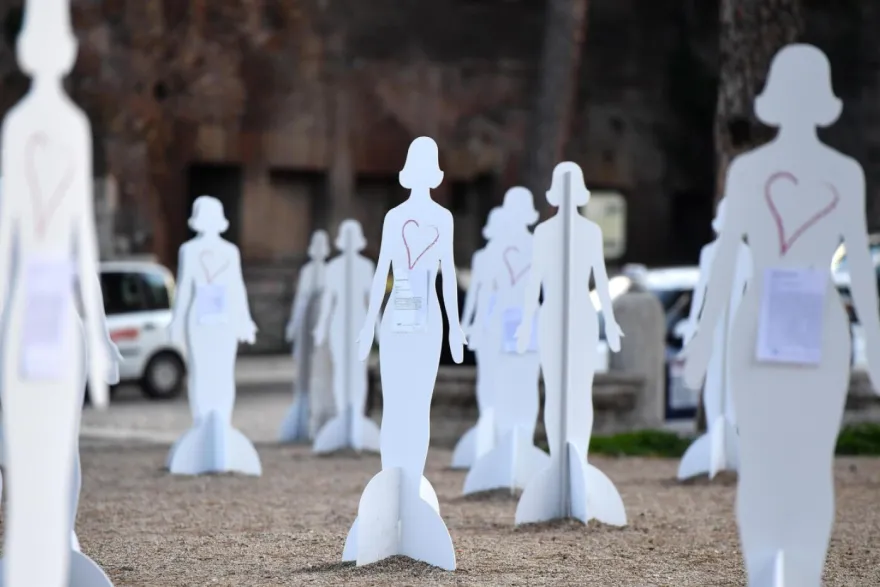
The Swiss government has officially launched the second phase of its national campaign against domestic, sexual, and gender-based violence. The new stage focuses on increasing public awareness of available support services, particularly the nationwide victim support hotline, 142, which has been available 24 hours a day, seven days a week since May 2026.

The campaign is led by Interior Minister Elisabeth Baume-Schneider and builds upon the first phase introduced in late 2025. According to the Federal Office for Gender Equality (FOGE), the objective is to ensure that prevention messages and support resources reach as many people as possible across Switzerland.

A significant expansion of the campaign has been made possible through additional funding approved by Parliament. The initiative is supported by the federal government, cantonal authorities, municipalities, and numerous civil society organizations.

Two important new topics have been added to the campaign. One focuses on children who are exposed to domestic violence within their homes, while the other highlights the growing issue of digital surveillance and online control within abusive relationships. These themes will be promoted through a nationwide poster campaign and informational materials available in 13 languages.

Domestic violence remains a serious concern in Switzerland. Police recorded approximately 22,000 domestic violence-related offences during 2025. Authorities also reported 34 domestic violence-related homicides during the same year. Among those victims, 21 people lost their lives in the context of a current or former intimate relationship, including 19 women and two men.

Swiss authorities hope the expanded campaign will encourage more victims and witnesses to seek help, raise awareness of available support services, and contribute to reducing violence across the country.

Pollution Delays Swiss Munitions Dump Cleanup.

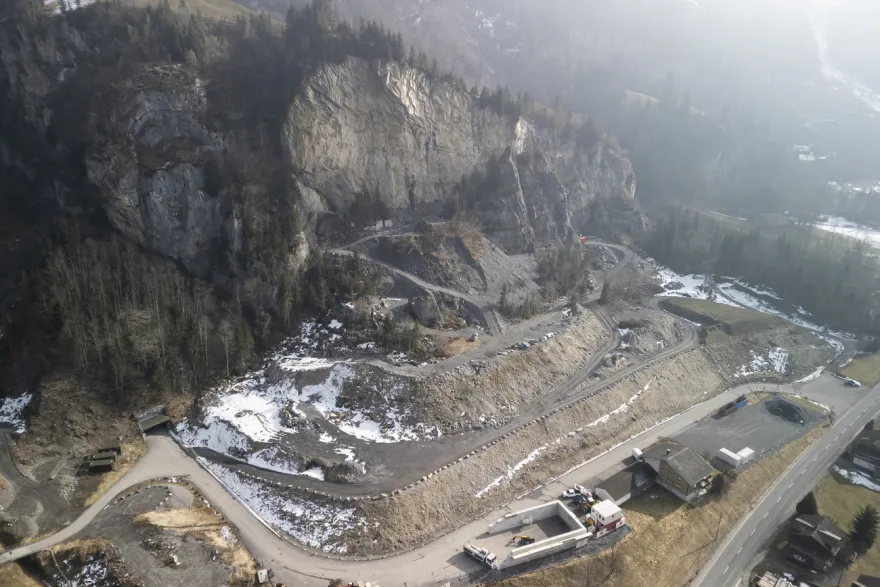
Switzerland has delayed the cleanup of the historic Mitholz munitions depot after investigators discovered far more contaminated material than expected. The revised timeline now extends the massive environmental and safety project until 2047, two years later than previously planned.

The ammunition depot, located in the Bernese Oberland region, became the site of a deadly disaster on December 19, 1947, when part of the 7,000 tonnes of stored munitions and explosives exploded. The blast killed nine people and scattered hazardous material across the surrounding area. For decades, authorities believed the site posed little danger until a reassessment in 2018 prompted the federal government to launch a full-scale cleanup operation.

Engineers and environmental specialists have since uncovered significant levels of contamination throughout the area. Investigations revealed that large amounts of polluted material remain buried beneath mudslide deposits and avalanche protection structures. Experts estimate that around 350,000 cubic metres of heavily contaminated debris are located within the affected zone.

The scale of the contamination has increased the complexity of the project. Some excavated material can be reused, but heavily polluted waste requires specialized treatment and disposal. Authorities also warn that hidden contaminants may still exist beneath rock crevices and deep underground fissures near the former ammunition depot.

Residents living near Mitholz will be required to temporarily leave their homes by the end of 2032. The evacuation is expected to last approximately ten years while cleanup and safety operations continue. Despite the contamination, officials report that no pollutants have been detected in local water sources. Agricultural land and grazing areas outside the affected zones remain safe for continued use.

Project leaders have also reported a positive development. New assessments indicate that the risk of a major explosion is lower than previously estimated. As a result, Switzerland’s defence authorities can reduce the scale of planned protective infrastructure near a railway line, saving approximately CHF8 million. However, the overall cleanup project remains one of Switzerland’s most expensive environmental and safety operations, with total costs estimated at around CHF2.5 billion.

The Mitholz cleanup highlights Switzerland’s commitment to addressing historical environmental hazards while protecting local communities and preserving public safety for future generations.

Swiss March 8 Vote Campaigns Cost CHF11 Million.

Political campaigns linked to Switzerland’s March 8 national votes cost a total of CHF10.7 million, according to final figures released by the Swiss Federal Audit Office.

The published data revealed that actual campaign spending exceeded the budgets initially announced before the vote by around 22%, reflecting stronger political mobilisation and advertising efforts during the campaign period.

The largest share of spending focused on the SBC initiative concerning Switzerland’s radio and television licence fee. Campaigns related to this proposal alone accounted for approximately CHF7.5 million.

Opponents of the initiative declared spending around CHF5.7 million, while supporters reported approximately CHF1.8 million in campaign costs. The proposal was ultimately rejected by voters.

The SBC initiative aimed to reduce the national radio and television licence fee to CHF200 and eliminate mandatory corporate contributions. Supporters argued the changes would reduce financial pressure on households and businesses, while opponents warned the cuts could weaken public broadcasting services in Switzerland.

Switzerland’s system of direct democracy often involves intensive public campaigns ahead of nationwide votes, with political groups, organisations, and industry associations investing heavily in advertising and outreach efforts.

The latest figures highlight the growing financial scale of political campaigning in Switzerland, particularly for issues related to media, public services, and national policy reforms.

Switzerland Plans Health Insurance Franchise Increase.

Switzerland is currently discussing a new proposal to increase the minimum health insurance franchise amount from CHF 300 to CHF 400.

The proposed change has sparked nationwide attention as healthcare costs continue to rise across the country.

In Switzerland, the franchise system requires individuals to pay a fixed amount of their medical expenses each year before health insurance coverage begins.

At present, the minimum franchise stands at CHF 300. Under the new proposal, the minimum contribution could increase to CHF 400.

Swiss authorities say the planned change aims to encourage people to reduce unnecessary medical visits and healthcare expenses.

Officials believe the increase may help lower pressure on the national healthcare system and reduce overall insurance costs in the long term.

However, the proposal has also raised concerns among residents, especially middle-income families and elderly citizens who already face rising living expenses.

Critics argue that increasing the franchise amount could create additional financial pressure for people who regularly require medical treatment.

Government discussions and public consultations regarding the proposed law are currently ongoing. According to reports, the final decision is expected later this year depending on public response and political support.

The healthcare insurance system remains one of the most important economic and social topics in Switzerland, with many residents closely following any possible changes that may affect their monthly expenses and medical access.