

Samsung Chip Workers Set for £310K AI Bonuses.

Samsung Electronics has agreed to a major profit-sharing deal that will give memory chip workers average bonuses of around £310,000. The agreement comes as the global AI boom sharply increases demand for semiconductor chips.

The company will allocate 10.5% of operating profits from its semiconductor division directly to employee bonuses. Workers voted in favor of the deal, helping avoid a planned strike involving more than 62,000 employees.

Samsung’s chip division plays a critical role in global supply chains and accounts for a large share of South Korea’s exports. The agreement prevents possible disruptions that could have affected worldwide chip availability.

The AI industry has significantly increased demand for memory chips used in data centers. As a result, companies like Samsung, SK Hynix, and Micron have seen strong profit growth, pushing them into the $1 trillion market valuation club.

However, internal tensions may rise within Samsung, as employees in other divisions receive much smaller bonuses compared to semiconductor staff. Legal and shareholder challenges are also being considered.

Industry experts say the deal reflects a broader shift in the “AI trade,” where memory chips are becoming just as important as processors in powering artificial intelligence systems.
Apple and Intel Sign Major Semiconductor Deal as Shares Surge.

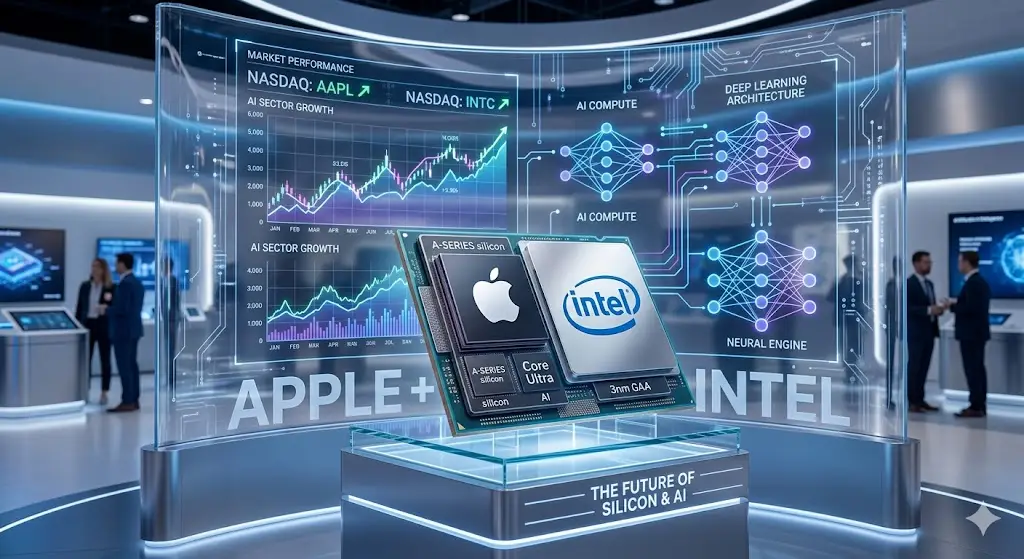
Apple Inc. and Intel Corporation have reportedly signed a major preliminary agreement that could reshape the global semiconductor industry.

According to reports from The Wall Street Journal, discussions between the two technology giants had continued for more than a year before both sides finalized a structured framework agreement.

The exact Intel technologies and semiconductor products that will be integrated into future Apple devices remain confidential. However, industry analysts believe the partnership could significantly influence future chip manufacturing strategies and hardware development.

The agreement has already triggered strong reactions in the financial markets. Investors responded positively to the news, driving a sharp increase in stock prices for both companies.

Intel shares surged by 18.26%, reaching approximately $129.64, while Apple shares rose by 1.59% to around $292.00.

The deal also signals a strategic shift for Apple, which has previously maintained semiconductor partnerships with companies including Samsung.

Market experts say the new collaboration may help Intel strengthen its position in the global semiconductor market while allowing Apple to diversify its supply chain and chip development capabilities.

The semiconductor industry continues to play a critical role in artificial intelligence, mobile devices, cloud computing, and advanced consumer electronics, making partnerships between major technology firms increasingly important.

Investors and analysts are now closely watching future announcements to determine how the partnership will impact upcoming Apple products and the broader global chip industry.

Intel Reclaims $14.2B Ireland Chip Plant Stake.

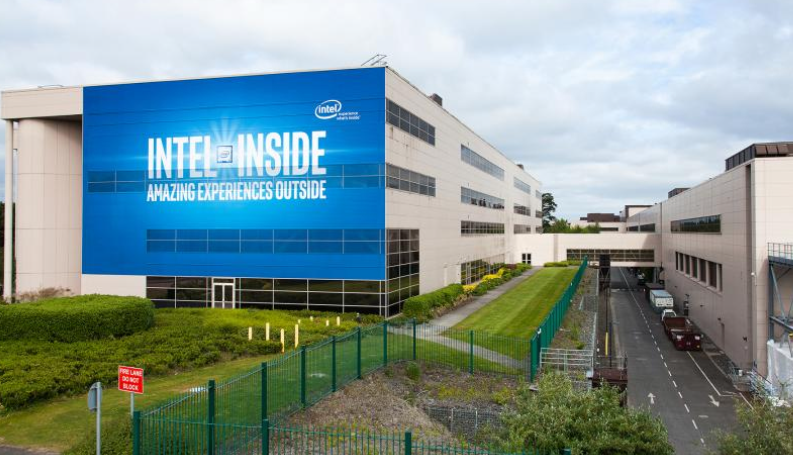
A major strategic step has been taken by Intel to strengthen its position in the global semiconductor industry, as a 49% stake in its advanced chip manufacturing facility located in Leixlip has been planned to be repurchased for $14.2 billion from Apollo Global Management.

The stake had originally been sold in 2024 for $11.2 billion during a period of financial pressure faced by Intel, when additional capital had been required to support large-scale manufacturing expansion projects across Europe and the United States. The transaction had allowed operational continuity to be maintained while financial flexibility was improved.

Now, the full ownership of the strategically important Fab 34 semiconductor facility is expected to be restored as Intel’s financial stability has been significantly strengthened through restructuring initiatives implemented under CEO Lip-Bu Tan. Increased efficiency measures and renewed investor confidence have been reported as key contributors to the recovery.

The decision has also been influenced by rapidly rising global demand for processors used in artificial intelligence applications and modern data-center infrastructure. As AI-driven computing adoption continues to expand worldwide, stronger control over advanced manufacturing assets has been considered essential for long-term competitiveness.

It has further been announced that the repurchase will be financed through a combination of existing company cash reserves and approximately $6.5 billion in new debt, ensuring that operational investment momentum will be maintained while ownership control is strengthened.

Through this move, Intel’s manufacturing independence in Europe is expected to be reinforced, while future profitability and processor supply capabilities for next-generation AI technologies are anticipated to improve significantly over the coming years.