

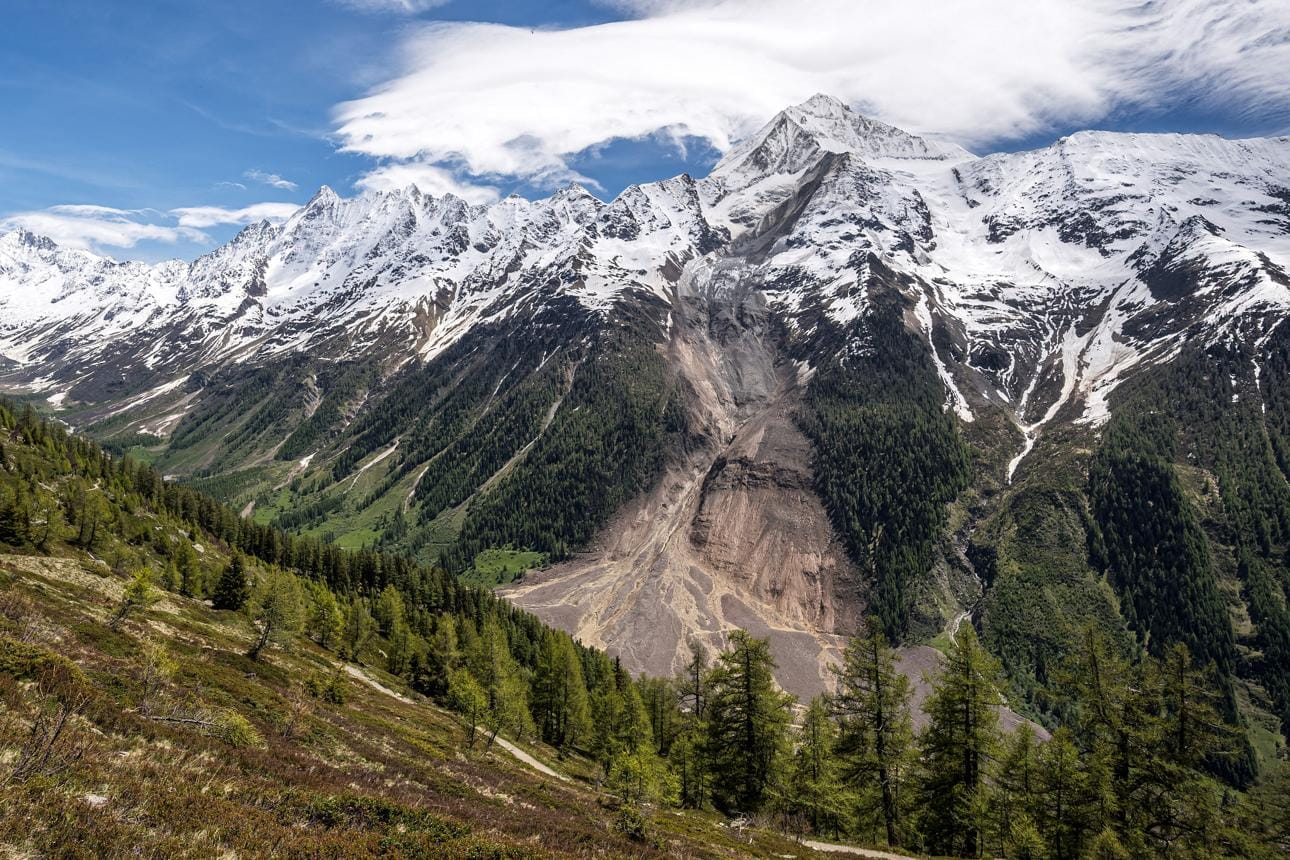

Blatten Landslide Damage Reaches CHF255 Million.
A devastating landslide in Blatten has caused insured damages estimated at CHF255 million, making it one of the most expensive natural disasters in recent Swiss history. The disaster struck on May 28, 2025, after a collapsing glacier buried large sections of the village located in the Lötschental valley of Valais.
According to financial statements released by Switzerland’s natural hazard insurance pool, around CHF240 million of the losses fall under the country’s natural hazard compensation system. Swiss insurers are now dealing with significant claims related to destroyed homes, damaged infrastructure, and business losses caused by the catastrophic glacier collapse.
Insurance authorities reported that approximately CHF210 million in losses came from damage to buildings and property structures. Another CHF30 million involved household contents, furniture, and movable belongings destroyed by the landslide. In addition, around CHF15 million in damages occurred outside the insurance loss pool, including vehicle damage and business interruption costs.
The natural hazard pool in Switzerland helps private insurers share financial risks linked to natural disasters such as landslides, floods, avalanches, and storms. The organisation also purchases international reinsurance protection to support member companies during large-scale catastrophes.
The Blatten disaster shocked residents across Switzerland and raised new concerns about climate change, glacier instability, and increasing natural hazard risks in Alpine regions. Experts continue monitoring mountain areas where melting glaciers and unstable rock formations may create future dangers for nearby communities.
Swiss authorities and emergency services acted quickly during the disaster response, but the landslide still caused massive destruction across the village. Recovery and rebuilding efforts are expected to continue for several years as affected families and businesses attempt to recover from the disaster.
The incident remains one of the most discussed environmental and insurance-related events in Switzerland during 2025 and continues to attract national and international attention.