

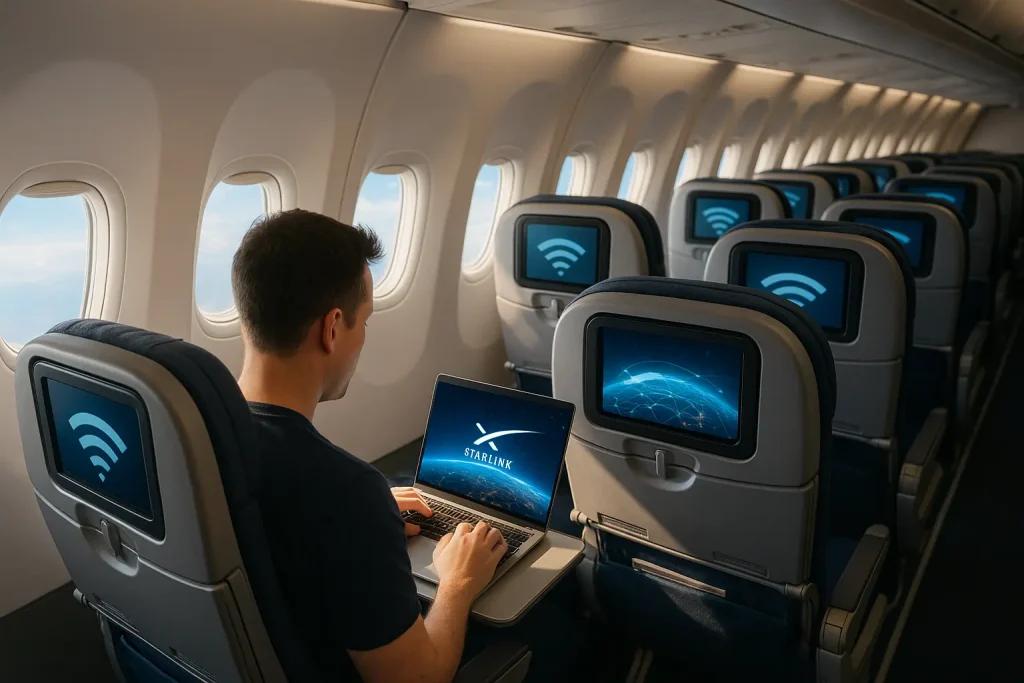

Starlink Leads Global Race in In-Flight Wi-Fi Market
Global airlines are increasingly prioritising high-speed in-flight internet, turning satellite connectivity into a key competitive feature for passenger experience. This shift has intensified competition between Elon Musk’s Starlink and Jeff Bezos’ Amazon Leo project.
Starlink has emerged as the current leader in the aviation connectivity market, operating a large share of active satellite networks and rapidly expanding airline partnerships. In 2026 alone, multiple airlines have adopted Starlink for onboard Wi-Fi services due to its faster speeds, simpler installation process, and wider coverage.
Major carriers such as American Airlines and Southwest Airlines have already moved toward Starlink integration, citing improved performance and passenger satisfaction. Industry reports suggest that installation costs remain high, with large fleets requiring investments worth hundreds of millions of dollars. However, airlines see strong long-term value in offering reliable high-speed internet as a premium service.
Amazon Leo, meanwhile, is preparing to enter the market with agreements involving airlines such as Delta and JetBlue. The company plans to begin large-scale deployment by 2028, aiming to install connectivity systems across hundreds of aircraft. Despite its ambitious roadmap, recent delays and rocket-related setbacks have created challenges for its timeline.
While some low-cost carriers have opted out of Starlink due to operational costs and fuel efficiency concerns, most major airlines continue to adopt advanced satellite Wi-Fi systems as part of their digital transformation strategy.
Starlink’s growing presence across thousands of aircraft positions it as the current leader in the in-flight connectivity race. However, Amazon is expected to compete strongly by integrating its cloud and retail ecosystem into aviation services, potentially reshaping the future of onboard digital experiences.