Will AI Cause a Global Water Crisis? Shocking New UN Warning.

A new report has raised serious concerns about the environmental impact of rapidly expanding artificial intelligence infrastructure, warning that AI data centres could place extreme pressure on global water and energy resources.

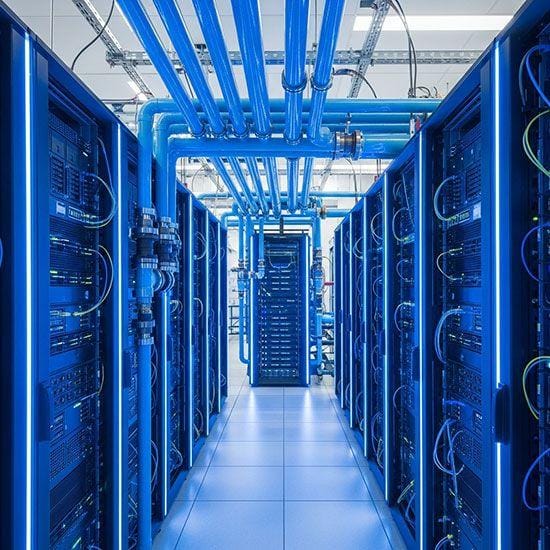
According to the United Nations University Institute for Water, Environment and Health (UNU-INWEH), the growth of AI technologies is driving massive investments in data centres worldwide. These facilities, which power large-scale AI systems, require vast amounts of electricity and water for cooling operations.

The report warns that by 2030, water consumption from AI-related data centres could reach approximately 9.3 trillion litres annually. This amount is comparable to the minimum yearly household water needs of around 1.3 billion people living in sub-Saharan Africa.

AI data centres rely heavily on water-based cooling systems, particularly in warmer regions, where continuous heat management is essential to maintain server performance. As a result, their environmental footprint is expanding alongside global demand for AI services.

In addition to water usage, the report highlights a sharp rise in electricity consumption. Global data centres are estimated to have used around 448 terawatt-hours (TWh) of electricity in 2025 alone. By 2030, this figure could rise to 945 TWh, nearly three times the combined annual electricity consumption of countries such as Pakistan, Bangladesh, and Nigeria.

The UNU-INWEH report also warns that AI infrastructure may contribute to local temperature increases. Data centres can raise surrounding land temperatures by an average of 2°C, creating so-called “heat island” effects that impact nearby communities. In extreme cases, temperature increases of up to 9°C have been recorded, affecting areas within several kilometres of large facilities.

Experts caution that while AI is transforming industries and economies, its rapid expansion could intensify environmental stress unless more sustainable energy and cooling solutions are developed.

The findings highlight the growing need for governments and technology companies to balance innovation with environmental responsibility as AI infrastructure continues to scale globally.

Unreleased Google Pixel Watch 5 Discovered in Caribbean Sea.

An unusual and surprising discovery has brought the yet-to-be-released Google Pixel Watch 5 into the spotlight after it was reportedly found underwater in the Caribbean Sea.

According to reports, a scuba diver exploring near St. Martin Island came across the smartwatch submerged beneath the sea. The device is believed to be the upcoming Google Pixel Watch 5, which has not yet been officially announced by the company. The incident has raised widespread curiosity in the global technology community.

The discovery was later shared on X (formerly Twitter) by user Randy Pitchford (@DuvalMagic), showing images of the smartwatch recovered from the seabed. While the device’s battery was completely drained, it reportedly still displayed the correct time briefly due to residual power.

Google is expected to launch the Pixel Watch 5 alongside the Pixel 11 series in August. However, this unexpected leak has given the public an early glimpse of its design, which appears similar to the Pixel Watch 4 but may include several internal upgrades.

Industry sources suggest that the Pixel Watch 5 will likely feature improvements in health tracking, artificial intelligence integration, and battery efficiency. Although no official specifications have been confirmed, expectations are high for a more advanced wearable experience.

The incident has sparked major discussion in the tech world, as it is highly unusual for an unreleased consumer device to surface in such a condition. Whether this was a prototype loss or an accidental drop remains unclear, but the story has already generated significant attention ahead of the official launch.

Google Engineer Charged Over Polymarket Bets.

US federal prosecutors have charged a Google software engineer with allegedly using confidential company data to make more than $1.2 million through prediction market bets on Polymarket.

According to the US Department of Justice, Michele Spagnuolo allegedly accessed internal Google search trend information before it became public and used the data to place profitable bets under the online alias “AlphaRaccoon.”

Prosecutors say Spagnuolo used insider knowledge connected to Google’s annual “Year in Search” rankings. Authorities claim he placed high-risk bets on unexpected names, including musician D4vd and rapper Kendrick Lamar, before official search trend results were released.

The US Department of Justice charged him with commodities fraud, wire fraud, and money laundering. Officials say insider trading threatens the integrity of emerging prediction markets and financial systems.

The case highlights growing concerns surrounding the rapid expansion of prediction market platforms like Polymarket. Regulators increasingly worry that confidential information could be exploited for gambling-style financial gains.

Google confirmed that using confidential internal data for betting violates company policy and stated that the employee has been placed on leave while investigations continue.

The complaint also states that Spagnuolo currently resides in Switzerland, adding international attention to the case. Federal prosecutors in New York say they will continue targeting corporate insiders who misuse sensitive information for personal profit.

Google Launches Gemini Omni AI for Video Creation

Google has officially introduced its new multimodal AI system, Gemini Omni AI, designed to transform how users create and edit videos using artificial intelligence.

The new system, part of the latest Google Gemini ecosystem, is capable of processing multiple types of input including images, audio, video, and text. This allows users to generate high-quality video content with advanced realism and contextual understanding.

One of the key features of Gemini Omni AI is natural language-based video editing. Users can simply describe changes in text or voice, such as adding characters, modifying scenes, or changing visual styles, and the AI automatically updates the video accordingly.

The model is built using Google’s advanced world knowledge and physics-based understanding, enabling it to generate more realistic motion and environments. It can simulate real-world behavior such as fluid dynamics and physical interactions to improve video authenticity.

Google has also introduced the first version, Gemini Omni Flash, which is now available in the Gemini App, Google Flow, and YouTube Shorts.

The company plans to expand access to developers and enterprises through API integration in the near future, allowing broader use of AI-powered video generation tools.

Users will also be able to create personalized digital avatars with their own voice and appearance, enabling highly customized video content creation. All outputs generated by Gemini Omni will include SynthID watermarking to ensure transparency and traceability of AI-generated media.

Google stated that safety remains a key priority, and the system has been designed with strict policies to ensure responsible and secure AI usage.

Android Show 2026: Android 17, Gemini & Googlebook Launch

Google has unveiled a major wave of updates during The Android Show 2026 — I/O Edition, introducing the next generation of Android, new AI capabilities, and a surprise platform expansion.

The highlight of the event was the introduction of Android 17, the latest version of the Android ecosystem. Google showcased improved performance, deeper AI integration, and smarter system-level automation designed to enhance user experience across mobile devices.

A major focus of the announcement was Gemini Intelligence, an advanced AI system built to bring more context-aware assistance across Android devices. The system is designed to integrate deeply into apps, system settings, and daily workflows, making AI interactions more natural and useful for users.

One of the biggest surprises of the event was the reveal of Googlebook, a new hybrid platform that combines elements of Android and ChromeOS. This new ecosystem is designed for future laptops and aims to unify mobile and desktop experiences under a single Google-driven system.

According to early details shared during the presentation, Googlebook will support a wide range of applications while offering seamless synchronization with Android devices and cloud services.

The Android team also highlighted improvements in security, battery optimization, and cross-device connectivity, suggesting a stronger push toward an AI-first ecosystem.

Industry observers say these announcements mark one of the most significant shifts in Google’s software strategy in recent years, as the company moves toward tighter integration between operating systems and artificial intelligence.

With Android 17 and Gemini Intelligence, Google appears to be positioning its ecosystem as a central hub for AI-powered computing across smartphones, tablets, and laptops.

Google Reduces Free Storage for New Users Without Phone Verification.

Google has announced a major change to its free cloud storage policy, reducing the default free storage allocation for new users from 15GB to 5GB unless they complete phone number verification.

Previously, Google offered 15GB of free storage shared across Gmail, Google Drive, and Google Photos for all users. Under the new policy, new accounts will initially receive only 5GB of free storage space.

According to Google, users can unlock the full 15GB storage limit by verifying their account with a mobile phone number. The company says the decision is aimed at reducing fake accounts, spam activity, and automated bot registrations.

Google explained that stronger verification systems are becoming increasingly necessary as online platforms face rising abuse from fake profiles and malicious automated systems.

However, the update has triggered privacy concerns among some users and digital rights advocates. Critics argue that mandatory phone verification could increase data tracking and raise concerns about personal information security.

Some users have also questioned whether linking mobile numbers to online accounts could lead to greater data collection or targeted advertising practices.

Google clarified that existing accounts will not be affected by the change. The new policy currently applies mainly to newly created Google accounts, which will start with 5GB and later gain access to the remaining storage after completing verification.

The announcement comes as cloud storage demand continues to grow globally, driven by increasing usage of email services, online backups, smartphones, and AI-powered digital tools.

Industry analysts say many major technology companies are tightening account verification policies in order to strengthen security systems and reduce misuse of free online services.

Google Introduces “Googlebook” AI-Powered Laptop with Gemini Intelligence

Google has announced a new generation of AI-powered laptops called Googlebook, marking a major evolution beyond the Chromebook lineup. The devices are built using Gemini Intelligence and integrate both Android and ChromeOS technologies into a single unified ecosystem.

The new Googlebook laptops are designed to provide advanced artificial intelligence assistance for everyday computing tasks. A key feature called Magic Pointer allows users to interact more intelligently with content. For example, clicking a date inside an email automatically creates a calendar event, while selecting images enables instant visual organization and display.

Googlebook also introduces a feature called Create Your Widget, which allows users to build personalized dashboards by combining apps such as Gmail, Calendar, and other Google services. This enables users to manage travel plans, family events, hotel bookings, countdowns, and more from a single interface.

The devices operate fully within the Android ecosystem, allowing seamless integration between mobile phones and laptops. Users can access mobile applications directly from the laptop, such as ordering food or completing learning apps like Duolingo without switching devices.

Another feature, Quick Access, enables users to view and manage mobile files directly within the laptop’s file system, improving cross-device productivity.

Ask.com Officially Shuts Down: A Former Google Rival Ends Its Journey.

The once-popular search engine Ask.com has officially been shut down, marking the end of a platform that once competed with Google in the early days of the internet. Launched in 1997, Ask.com—originally known as Ask Jeeves—was created by Garrett Gruener and David Warthen. It became famous for allowing users to type full questions in natural language, introducing the concept of “conversational search.”

Ask Jeeves was one of the first platforms to understand user queries in a more human-like way. This approach helped it gain global attention during the early internet era. In 2005, the company was acquired by IAC, which later removed the “Jeeves” branding and rebranded the service as Ask.com.

By 2010, the rise of Google’s advanced search algorithms significantly reduced Ask.com’s market share. As a result, the platform shifted away from core search services and focused more on a question-and-answer model.

Eventually, IAC announced the closure of the search division, stating that it was refocusing its business strategy.Ask.com was also known as the official search tool for NASCAR at one point. However, over time, it became more of a nostalgic symbol of the early internet era rather than a competitive search engine.Despite its closure, Ask.com is remembered as a pioneer of conversational search technology. Its approach laid the foundation for modern AI-driven search and virtual assistants. Today, it remains an important part of internet history.