RUAG Pays Ransom After Cyberattack.

Swiss defence company RUAG has confirmed that it paid a ransom to hackers following a cyberattack on its US subsidiary. The incident has sparked debate about cybersecurity strategies and the risks of negotiating with cybercriminals.

According to RUAG Board Chairman Jürg Rötheli, the company paid what he described as a “small amount” after the hacker group Akira infiltrated systems at the company’s US subsidiary in late 2025. The hackers reportedly stole sensitive data and threatened to publish it unless their demands were met.

Rötheli stated that the payment enabled the company to recover all of the stolen data. However, he declined to reveal the exact amount that was transferred to the cybercriminals.

The decision has attracted attention because it goes against the recommendations of Switzerland’s Federal Office for Cybersecurity (FOCBS). The agency generally advises organizations not to pay ransom demands, arguing that such payments can encourage further cyberattacks and help finance criminal operations.

Cybersecurity experts frequently warn that paying hackers does not guarantee long-term protection and may make organizations more attractive targets in the future. Nevertheless, some companies choose to pay when they believe critical business operations or sensitive information are at risk.

The attack on RUAG highlights the growing threat posed by ransomware groups, which increasingly target government agencies, defence contractors, and major corporations worldwide. These cybercriminal networks often use stolen data as leverage to pressure victims into making payments.

As cyber threats continue to evolve, the case is expected to fuel discussions in Switzerland about cybersecurity preparedness, risk management, and the appropriate response to ransomware attacks. The incident also underscores the importance of strengthening digital defences across critical industries and national security sectors.


Switzerland Rejects EU Copernicus Program Until 2034

The Swiss government has confirmed that Switzerland will not participate in the European Union’s Copernicus Earth observation programme between 2028 and 2034, citing financial limitations and budget pressures. The decision marks a significant policy shift and contrasts with parliament’s earlier support for joining the initiative.

The Federal Council announced that the country’s current financial situation makes participation in Copernicus impossible during the upcoming funding period. While no detailed financial breakdown was provided, officials stated that Switzerland could reconsider joining the programme in 2032 if economic conditions improve.

Copernicus is one of Europe’s most important Earth observation and environmental monitoring systems. Established in cooperation between the European Union and the European Space Agency (ESA), the programme uses satellites and advanced technologies to collect data on climate change, environmental conditions, natural disasters, land use, and atmospheric developments. Governments, researchers, and businesses across Europe rely on Copernicus data for planning, scientific research, and environmental protection.

The decision has attracted attention because the Swiss parliament approved a motion supporting participation more than four years ago. Lawmakers viewed membership as a strategic investment in scientific research, climate monitoring, and technological innovation. However, despite parliament’s approval, the Federal Council has repeatedly postponed implementation and has now officially decided against participation for the next funding cycle.

Experts note that access to Earth observation data plays an increasingly important role as countries respond to climate change, extreme weather events, and environmental challenges. Copernicus has become a key platform for monitoring global warming, glacier changes, drought conditions, flooding risks, and ecosystem health across Europe.

Although Switzerland will remain outside the programme for the foreseeable future, the government has left the door open for future participation. Officials indicated that a reassessment could take place in 2032, depending on the country’s financial position and strategic priorities.

The announcement is expected to generate debate among policymakers, researchers, and environmental organizations, many of whom believe that international scientific cooperation will become increasingly important in addressing climate and environmental challenges in the years ahead.

Swiss Research Calls for Strong Action on AI and Digital Transformation Across Society

Swiss researchers are urging policymakers, businesses, and society to work together to manage the rapid rise of digital technologies and artificial intelligence (AI), according to findings from a major national research programme.

Digital Transformation Requires Coordination

The Swiss National Science Foundation (SNSF) emphasizes that Switzerland can only fully benefit from digital transformation if all sectors—government, industry, and society—coordinate their efforts. Without collaboration, both opportunities and risks linked to AI could increase significantly.

Large-Scale National Research Programme

The findings come from the National Research Programme “Digital Transformation” (NRP 77), which was commissioned by the Swiss government. Over five years, researchers completed 46 separate projects with a total budget of CHF 30 million.

Key Finding: Technology Alone Is Not the Deciding Factor

Researchers concluded that the impact of AI and digital tools is not determined by the technology itself, but by how people choose to use it. This highlights the importance of policy, education, and training in shaping outcomes.

Challenges in Education

One of the major findings shows that digital tools are often underused in Swiss schools. The main reasons include a lack of structured implementation strategies and insufficient training for teachers.

Labour Market Skills Gap

The report also warns that companies must invest more consistently in employee digital skills. Without continuous upskilling, workers may struggle to adapt to AI-driven changes in the labour market.

Media and Democracy Concerns

Researchers further stress the importance of maintaining a strong and independent media landscape. They argue that digital transformation can only support democracy if reliable information systems are protected.

Conclusion

The study highlights that AI and digital transformation are not just technological issues but societal challenges. Switzerland is encouraged to strengthen education, workforce training, and media independence to fully benefit from the digital future.

Switzerland Surpasses 18,000 Public EV Charging Points

Switzerland continues to strengthen its electric vehicle infrastructure, with more than 18,000 publicly accessible charging points now available across the country.

According to the Swiss Federal Office of Energy, there were 18,284 charging points operating at 8,535 locations nationwide as of April 2026. On average, each charging location offers just over two charging points.

Canton of Zurich leads the country in total charging infrastructure, with 2,692 public charging points. It is followed by Canton of Bern with 1,891 charging points and Canton of Vaud with 1,590.

Smaller cantons reported significantly fewer public charging facilities. Appenzell Innerrhoden recorded only 31 charging points, while Appenzell Ausserrhoden had 77 and Obwalden had 109.

The report also highlighted major differences in charging point usage across Switzerland. Canton of Zug showed the highest concentration of battery electric vehicles (BEVs) per charging point, with 53 EVs sharing each public charger.

Canton of Thurgau followed with 27 BEVs per charging point, while Appenzell Ausserrhoden recorded 24.

In contrast, Graubünden had the lowest pressure on infrastructure, with only six battery electric vehicles sharing each public charging station.

The expansion of Switzerland’s charging network reflects the country’s growing shift toward sustainable mobility and cleaner transportation technologies, although regional disparities in infrastructure remain a challenge.

Driverless Delivery Van Accident Kills Pensioner in Zurich.

A tragic accident in Zurich has claimed the life of a pensioner after she was struck by a driverless delivery van on a sidewalk in the city’s Höngg district.

According to Zurich city police, the elderly woman suffered life-threatening injuries after being hit on Thursday afternoon. She later died in hospital on the same evening despite medical efforts to save her.

Preliminary investigations suggest that a parked delivery van began moving unexpectedly around 1pm near the intersection of Michelstrasse and Engadinerweg. The vehicle reportedly rolled several metres onto the pavement before striking the pedestrian.

Authorities said the exact reason why the van started moving remains unclear and is currently under investigation. Police are examining whether a technical fault, mechanical failure, or other external factor may have caused the incident.

The accident has raised serious concerns about the safety of autonomous and semi-autonomous delivery systems being tested and used in urban environments across Switzerland and Europe.

Officials in Zurich have launched a full investigation to determine how the vehicle became uncontrolled and whether additional safety measures are required to prevent similar incidents in the future.

Urban mobility experts say such cases highlight the growing challenges of integrating automated delivery vehicles into busy pedestrian areas, where even minor technical errors can have severe consequences.

Petition Filed Against Starlink Antennas in Switzerland.

Opponents of the planned Starlink antenna project in Leuk have submitted a petition with 14,550 signatures to Swiss authorities, calling for the cancellation of the project.

The petition was delivered in Bern and addressed to Swiss Defence Minister Martin Pfister. Campaign groups argue that the proposed installation of 40 satellite antennas could create long-term geopolitical and technological dependence.

The organisations behind the petition include Campax and a regional group known as “Protection against satellite radiation in the Leuk region.” Both groups raised concerns over national security, technological sovereignty, and possible environmental and health impacts linked to satellite communication infrastructure.

Critics claim the project could increase Switzerland’s dependence on foreign-controlled technology networks at a time when geopolitical tensions and digital security concerns are growing globally.

The proposed Starlink facility in Valais is part of broader efforts to expand satellite internet infrastructure across Europe. Supporters of such projects often highlight benefits including improved connectivity, faster communications, and advanced technological development for remote regions.

However, local resistance has increased in recent months as residents and activists question the long-term implications of large-scale satellite installations.

Swiss authorities have not yet announced any final decision regarding the future of the project. The petition now adds political pressure to ongoing discussions surrounding technology infrastructure, national independence, and environmental concerns in Switzerland.

Scientists Warn Human Y Chromosome Could Slowly Disappear in the Future

Scientists have raised fresh discussions about the future of the human Y chromosome after research suggested it may continue shrinking over millions of years. The Y chromosome plays a major role in determining male biological sex in humans, while the X chromosome is present in both males and females.

Australian genetic researcher Jennifer Graves, a professor associated with La Trobe University, previously published research examining the long-term evolution of sex chromosomes in mammals.

According to her findings, the human Y chromosome has gradually lost a large number of genes over millions of years. Early in mammalian evolution, X and Y chromosomes were believed to be similar in size and genetic structure. However, scientific comparisons with ancient mammals such as the platypus suggested that the human Y chromosome has continued shrinking over evolutionary time.

Professor Graves estimated that the Y chromosome may have lost around 1,400 genes throughout evolution. Based on earlier calculations, some researchers suggested that if this gradual decline continued at the same rate, the Y chromosome could theoretically disappear millions of years in the future.

However, many modern scientists emphasize that this does not mean men will disappear anytime soon. Researchers say evolution is extremely complex, and some species have already developed alternative biological systems for sex determination even without a traditional Y chromosome.

Genetics experts also note that current studies continue to debate whether the human Y chromosome is still shrinking or has now stabilized over time. The topic remains an important area of research in evolutionary biology and human genetics.

Scientists stress that the possible disappearance of the Y chromosome, if it ever happens, would occur over millions of years and would not affect present or future generations anytime soon.

Scientists Trigger Controlled Quakes Beneath the Swiss Alps

Researchers in Switzerland have successfully triggered thousands of tiny controlled earthquakes beneath the Swiss Alps as part of a groundbreaking scientific experiment aimed at improving earthquake research and reducing future seismic risks.

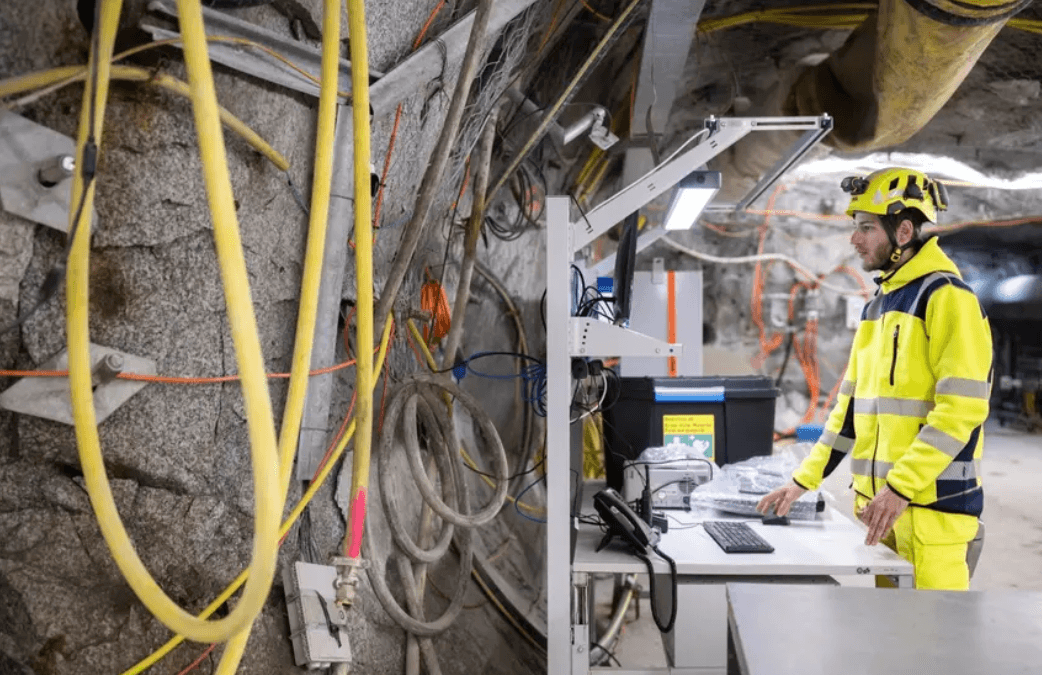
The project took place deep underground inside the ETH Zurich research facility known as BedrettoLab. Scientists conducted the experiment inside a 5.2-kilometre ventilation tunnel connected to the Furka railway tunnel in southern Switzerland.

Leading geologist Domenico Giardini described the experiment as a major success. Researchers intentionally created controlled seismic activity to better understand how the Earth behaves deep below the surface when tectonic movement occurs.

According to scientists, the experiment generated thousands of very small earthquakes in a fully monitored environment. Advanced sensors and monitoring systems allowed researchers to study underground rock movements, pressure changes, and seismic reactions in real time.

Experts believe the findings could help improve earthquake prediction models, underground construction safety, geothermal energy projects, and seismic risk management in the future.

The BedrettoLab research centre has become one of Europe’s leading underground laboratories for studying seismic activity and Earth science technology. Scientists say controlled experiments like this could provide valuable information about natural earthquakes and help protect communities in earthquake-prone regions.