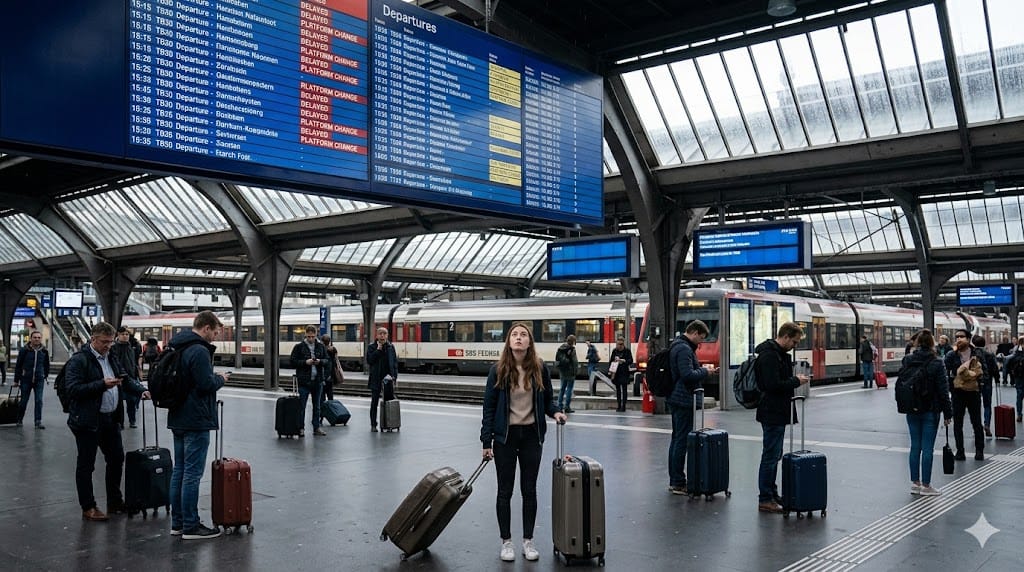
Swiss Airports Face Longer Waits Under New EU System.

Air travelers arriving in Switzerland from countries outside the Schengen area, such as the United States and the United Kingdom, are experiencing longer waiting times at airports due to the rollout of a new European border control system.

The system, known as the Entry/Exit System (EES), records all entries and exits of non-EU, non-Schengen travelers within the Schengen zone. It applies to passengers who do not hold passports from EU countries or associated states such as Norway, Iceland, Liechtenstein, or Switzerland.

The EES has been gradually introduced and has been fully operational across the Schengen area since April 10. According to EU officials, the system has already registered around 90 million travelers, with approximately two million new registrations processed each week. The system is designed to strengthen border security, track travel movements, and identify security risks more efficiently.

However, the new process has also led to delays at several airports, including those in Switzerland. At Zurich Airport, the system was introduced in November 2025, while Geneva Airport began using it in October 2025. Authorities confirm that first-time registrations require detailed data collection, including personal information, travel document details, and biometric data such as fingerprints and facial images.

Because of these additional requirements, border processing times have increased, especially when multiple long-haul flights arrive at the same time. In some cases, passengers have reported waiting times of up to one to two hours before completing entry procedures.

Airport officials say the system is generally stable and reliable, but they acknowledge that longer queues can occur during peak travel periods. They expect processing times to improve as border staff gain more experience with the new system.

Geneva Airport also experienced significant delays during the winter ski season, when daily passenger numbers exceeded 70,000. On the busiest days, waiting times reached up to two and a half hours, according to airport authorities.

While responsibility for border checks differs between airports, with Zurich managed by cantonal police and Geneva overseen by the Federal Office for Customs and Border Security, both authorities confirm that the Entry/Exit System is functioning as intended but requires additional processing time.

Officials emphasize that the system plays an important role in improving security across the Schengen area, even as efforts continue to streamline procedures and reduce waiting times for international travelers.

Swiss Hotels Struggle as Online Booking Platforms Undercut Prices.

Hotels across Switzerland are facing increasing pressure from online booking platforms that often list rooms at lower prices than hotels’ own direct offers, according to a new industry study.

The report, published by Hotelleriesuisse, found that around half of 171 surveyed hotels experienced undercutting in 2025, up from 40% the previous year. In 83% of these cases, hotels said they had not authorized the discounted prices.

Industry representatives warn that such pricing practices force hotels to reduce their own direct rates in order to stay competitive, creating a downward pricing cycle that weakens profitability across the sector.

Hotelleriesuisse director Christian Hürlimann said hotels risk losing control over their pricing and distribution strategies as online travel agencies continue to dominate the market.

Despite direct bookings still accounting for 59% of reservations, platforms such as Booking.com and Expedia remain highly influential in shaping consumer choices and visibility. Booking.com alone handles more than 70% of online hotel bookings, while Expedia accounts for around 15%.

Although price parity rules have been banned, hotels report that online travel agencies still influence pricing indirectly through ranking systems, promotional tools, and discount programs. Nearly 29% of hotels also report direct pricing interventions.

The study further highlights the growing use of “multi-sourcing,” where hotel rooms are resold by third-party platforms, affecting more than half of hotels and further complicating pricing control.

Experts warn that these trends could reduce transparency and profitability in Switzerland’s tourism industry unless stronger regulatory safeguards or industry agreements are introduced.

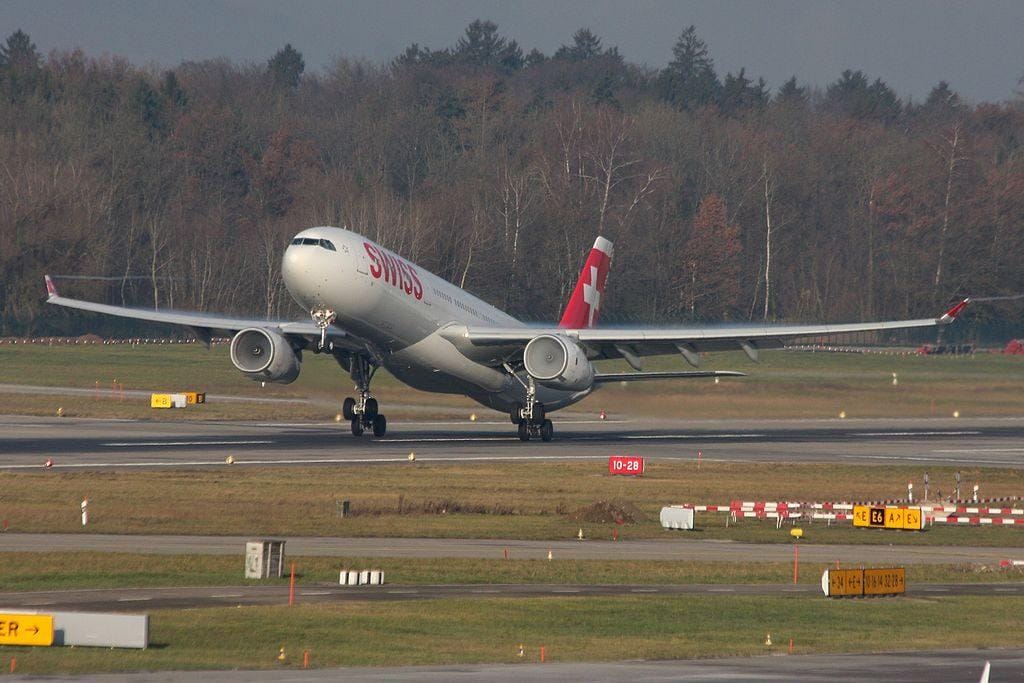
SWISS Airline to Resume Tel Aviv Flights in July After Suspension

SWISS International Air Lines has announced that it will resume flights between Switzerland and Tel Aviv in July, following a suspension that began in March due to the ongoing conflict in the Middle East.

The airline stated that it is currently carrying out operational preparations to restart the route, including crew scheduling, aircraft allocation, and coordination with internal and external partners. SWISS also confirmed that it is engaging in discussions with its social partners to ensure a smooth restart of operations.

Several airlines within the Lufthansa Group have already planned to resume Tel Aviv services from June, but SWISS has chosen a later restart date in July to ensure full operational readiness.

The suspension of flights was originally introduced in response to security concerns linked to the war in the Middle East. SWISS said passenger safety remains its top priority when adjusting flight schedules.

In addition to the Tel Aviv update, the airline confirmed extended suspensions on other routes. Flights to Dubai will remain suspended until September 13, 2026, while services to Beirut will stay suspended until October 24, 2026.

SWISS continues to adjust its international network based on geopolitical developments and operational feasibility. The airline said it will continue to monitor the situation closely and update schedules if conditions change.

The decision reflects the ongoing impact of regional instability on global aviation routes, particularly in the Middle East, where several airlines have modified or temporarily suspended operations.

Swiss Travel Safety Concerns Rise in 2026

A new survey reveals that people in Switzerland are becoming increasingly concerned about safety when travelling abroad, even as demand for holidays remains strong.

Despite growing concerns, travel demand continues to recover. The proportion of people reducing or avoiding travel has dropped from 61% last year to 49%, indicating that a majority of Swiss residents still plan to travel abroad.

The survey highlights that political instability and global conflicts are the main factors influencing travel decisions. Around two-thirds of respondents cited these risks, leading to a noticeable shift toward European destinations, while interest in North America has declined.

Travel habits are also evolving. The preference for private cars has decreased significantly—from 67% two years ago to 51% today. Cars are now almost equally preferred alongside airplanes (51%) and trains (50%), reflecting a more balanced approach to transportation.

The study was conducted between February and March, covering more than 1,000 participants across Switzerland’s German-, French-, and Italian-speaking regions, along with additional TCS members.

Switzerland Weekly News Roundup: Citizenship, Jobs, Immigration & Rising Costs

Over the past week, Switzerland has witnessed major developments across politics, economy, and society. From stricter citizenship rules to rising job cuts, immigration debates, and increasing travel costs, several key issues have captured public attention.

Citizenship Rules Remain Strict

The Swiss National Council rejected the “Democracy Initiative,” which aimed to reduce the residency requirement for non-EU nationals from 10 years to 5 years for Swiss citizenship.

Lawmakers argued that easing the rules could weaken existing standards. As a result, Switzerland’s strict naturalization process will remain unchanged for now.

Job Cuts Increase Across Companies

Several companies announced layoffs, reflecting growing economic pressure:

  • Andritz Beutler AG – 50 job cuts
  • Serge Ferrari Tersuisse SA – 62 job cuts
  • Swisscard – 40 job reductions in Zurich

These decisions are largely influenced by parent company strategies in countries like Germany and France. The trend highlights cost-cutting measures across industries.

Immigration Helps Balance Aging Population

According to the Federal Statistical Office, immigration plays a vital role in stabilizing Switzerland’s aging population.

  • Average age of Swiss citizens: 44.5 years
  • Average age of foreign residents: 37.5 years

Most immigrants are of working age, contributing positively to the labor market and economic growth.

Flight Prices Surge Sharply

A study by Comparis revealed that airline ticket prices have increased by up to 77% over the past five years.

Due to rising fuel costs, airlines are reducing routes:

  • Edelweiss Air has suspended flights from Zurich to Denver and Seattle
  • Flights to Las Vegas are also being reduced

Travel during summer 2026 is expected to become significantly more expensive.

Immigration Debate Intensifies

The Swiss People’s Party is pushing a new immigration control proposal ahead of the June 14 national vote.

Recent polls suggest 52% public support, raising the possibility of a major policy shift, although similar proposals have failed in the past.

Warning Over Online Shopping Risks

Swiss consumers spend around CHF 15 billion annually on foreign e-commerce platforms. However, authorities warn that some imported products may not meet safety standards.

Politician Benjamin Roduit has proposed restricting access to non-compliant foreign websites. Officials, however, say monitoring all imports remains a major challenge.

This week’s developments highlight the key challenges facing Switzerland today—strict immigration policies, economic pressure, rising living costs, and consumer safety concerns.

As debates continue, issues like immigration, employment, and affordability are expected to remain central to Switzerland’s future.