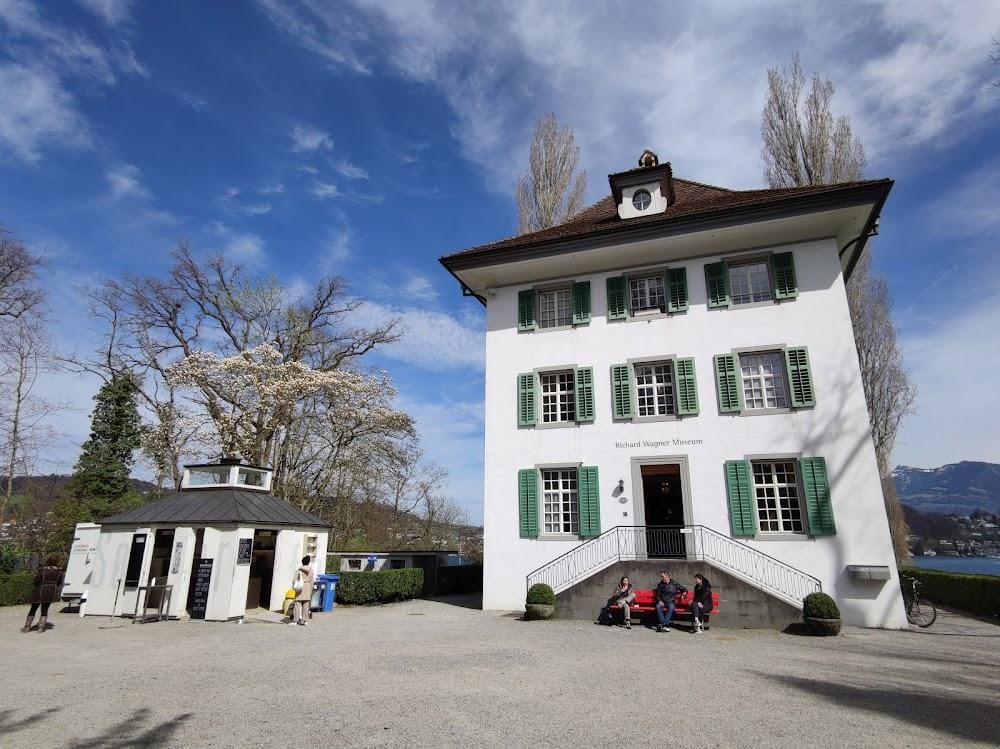

New Report Highlights Anti-Semitic History Linked to Richard Wagner in Lucerne
Lucerne has released a new historical report examining the anti-Semitic views of Richard Wagner and the origins of the Richard Wagner Museum. The 58-page investigation concludes that Wagner’s anti-Semitism was “very clear and unmistakable.”
The city of Lucerne and the museum commissioned the research after political parties in the city parliament called for a critical review of the museum’s permanent exhibition in 2023. The study was conducted by the Swiss Society for History with oversight from an independent scientific advisory board.
Wagner lived on the Tribschen peninsula in Lucerne between 1866 and 1872. During this period, he completed major operas including Die Meistersinger von Nürnberg and Siegfried, while also working on Götterdämmerung and composing the Siegfried Idyll.
According to historian Patrik Süess, Wagner strengthened his radical nationalist and anti-Semitic ideology during his years in Lucerne. The report also identified historical links between individuals involved in establishing the museum and Nazi-affiliated circles during the 1930s and 1940s.
In response, Lucerne city officials stated that anti-Semitism is completely incompatible with the city’s values. Authorities emphasized that the Richard Wagner Museum now addresses Wagner’s anti-Semitic statements openly and critically rather than ignoring or minimizing them.
The city announced that the findings will be integrated into future museum projects, including a special exhibition, educational programmes for schools, guided tours, and a revised museum publication beginning in 2027.
The report has reopened discussions across Switzerland and Europe about how cultural institutions should present the legacy of influential historical figures whose works are connected to discriminatory ideologies.