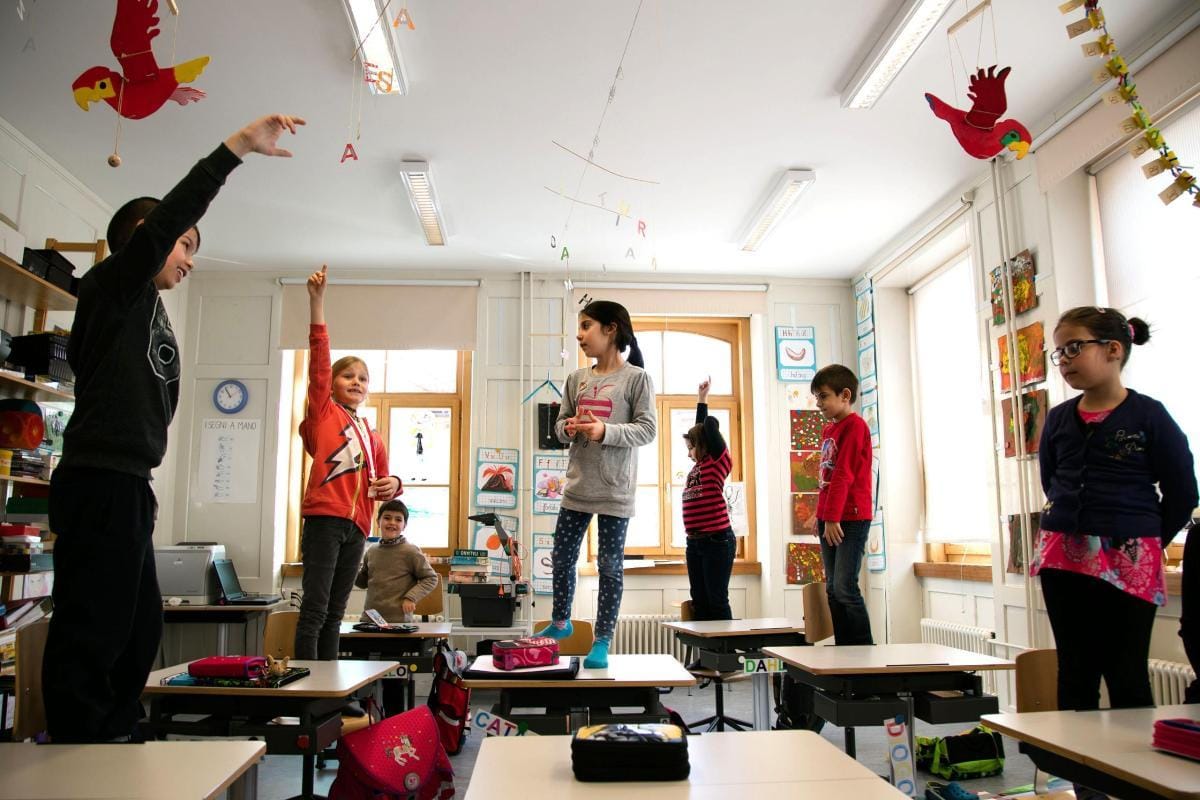
Overweight Rates Among Swiss Schoolchildren Fall to 20-Year Low.

The rate of overweight and obese schoolchildren in Switzerland has dropped to its lowest level in two decades, according to a new report published by Health Promotion Switzerland.

The share of pupils classified as overweight or obese has declined from around 20% in 2005 to 15.5% today, marking the lowest level since national BMI monitoring began in the country.

Despite this positive trend, authorities warn that overweight remains a public health concern, with approximately one in six schoolchildren still affected.

Health Promotion Switzerland has tracked children’s body weight since the 2005/06 school year in collaboration with school health services in Basel, Bern, and Zurich. The long-term monitoring program provides data on health trends among children and adolescents in compulsory education.

Experts say the decline reflects improved awareness of nutrition, increased physical activity, and public health initiatives targeting childhood obesity over the past 20 years.

However, health officials emphasize that continued efforts are needed to maintain and further improve these results, particularly as lifestyle habits and dietary patterns continue to evolve.

Global Cyberattack Disrupts Universities and Schools Using Canvas System

A major international cyberattack has disrupted universities and schools across the United States, Canada, and Australia, causing widespread academic chaos during a critical end-of-year examination period.

The hacking group ShinyHunters has claimed responsibility for the attack, which targeted the widely used learning platform Canvas.

The cyber incident caused temporary outages across thousands of educational institutions, affecting an estimated 9,000 schools and universities worldwide.

The company behind the platform, Instructure, confirmed that Canvas was restored for most users by late Thursday. However, several universities continued to report technical issues and disruptions into Friday.

The attack caused significant academic disruption, forcing some institutions to postpone exams and delay coursework submissions.

Mississippi State University announced that it had postponed final examinations to allow students time to recover lost work and adjust to system outages.

Students described sudden system failures during critical assessments, with one student reporting that a ransom message appeared on-screen while completing a major exam essay.

The message reportedly read: “ShinyHunters has breached Instructure (again),” highlighting the group’s previous cyber activity targeting educational platforms.

Cybersecurity experts warn that attacks on educational infrastructure are increasing, particularly during high-pressure academic periods when system downtime can have serious consequences for students.

Authorities and affected institutions are now working with cybersecurity teams to investigate the breach and strengthen digital defenses.

The incident highlights growing vulnerabilities in global education systems as reliance on digital learning platforms continues to increase.

Swiss Schools Debate Phone Bans

A growing number of Swiss cantons are introducing smartphone bans in schools, aiming to improve students’ concentration and social interaction. However, many teachers across Switzerland remain unconvinced that strict, blanket bans are the best solution.

In Switzerland, children begin school at the age of six. Studies show that by this age, around one in five already owns a mobile phone. By the end of primary school, this figure rises to four in five, and at lower secondary level, nearly 99% of students have access to a smartphone.

These statistics highlight how deeply mobile phones are integrated into the daily lives of children and teenagers in Switzerland. The debate now centers on whether these devices should be allowed within school environments.

While most schools already enforce internal rules on smartphone usage, Switzerland does not have a national law regulating phones in education. Instead, the system is governed at cantonal level, meaning each region and school can set its own policy.

As a result, the Swiss education system shows a fragmented approach, with different rules across municipalities and schools. Despite this, a clear trend is emerging: more schools are moving toward restricting or fully banning smartphones on school premises.

Teachers, however, argue that bans alone may not solve the underlying issues. Many believe that digital literacy education and responsible usage training may be more effective than strict prohibition.