Hitachi Energy to Build New Swiss Headquarters Near Zurich

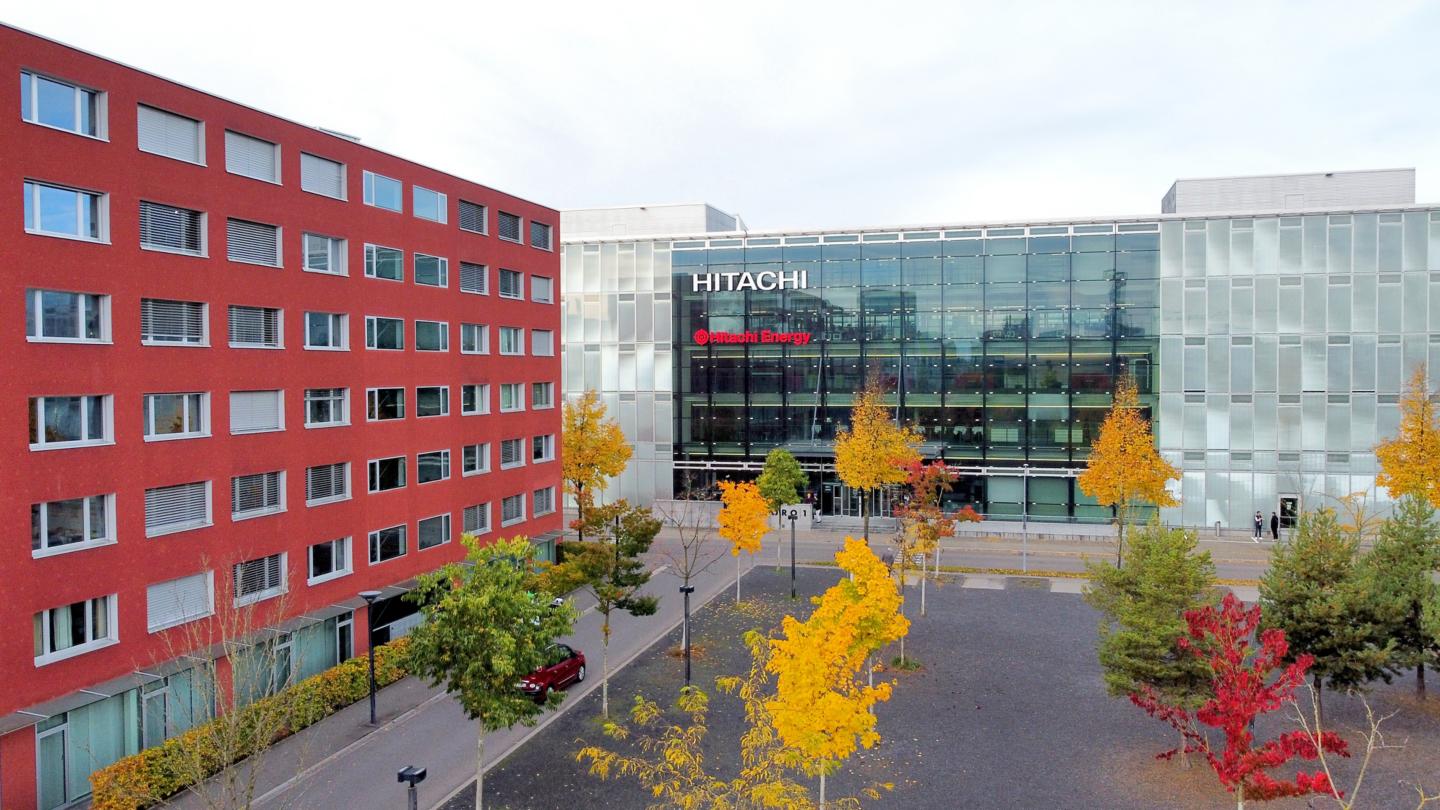
The technology group Hitachi Energy is set to establish its new Swiss headquarters in Otelfingen, located in the canton of Zurich, marking a significant investment in Switzerland’s industrial and technology sector.

According to a statement from the Otelfingen municipal council, the decision has been warmly welcomed locally, as the project is expected to bring substantial economic benefits to the region.

The new headquarters will be developed on the site of the former Jelmoli distribution centre and surrounding areas, covering approximately 11 hectares of land. The large-scale development highlights Hitachi’s long-term commitment to expanding its operations in Switzerland.

A key feature of the project is the creation of up to 3,000 jobs, which is expected to strengthen the local labor market and attract skilled professionals to the region. This development is seen as a major boost for the Zurich metropolitan area.

The municipality of Wettingen in the canton of Aargau had also competed for the project, hoping to secure the investment and associated tax revenues. However, Hitachi ultimately chose Otelfingen, meaning the economic benefits will now flow into the canton of Zurich instead.

Officials view the project as a strategic win for the region, reinforcing Zurich’s position as a key hub for international technology and energy companies.

The development also reflects Switzerland’s continued attractiveness for global corporations seeking stable infrastructure, skilled labor, and strong economic conditions.


Swiss Senate Backs Mixed Funding for 13th Pension

The Swiss Senate has approved a proposal to finance the upcoming 13th payment of the AHV/AVS old-age and survivors’ pension through a combination of employee contributions and value-added tax (VAT).

Under the approved plan, employee contributions will increase by 0.2 percentage points, lower than the previously proposed 0.3 percentage points. VAT will also be raised by 0.4 percentage points, while the reduced VAT rate will remain unchanged at 2.6%.

The proposal marks a compromise between different parliamentary positions. Earlier, the House of Representatives had suggested financing the additional pension payment entirely through VAT increases until 2033. However, this approach was not adopted by the Senate.

The final decision now moves back to the House, which is scheduled to vote on the proposal on June 17. If the House rejects the plan, the 13th AHV pension payment is still expected to be introduced from December, although the funding mechanism would remain unresolved.

The 13th pension initiative was approved by Swiss voters in 2024 as a measure to support retirees facing rising living costs and inflation. The initiative, backed by trade unions and left-leaning political groups, aims to provide an additional monthly pension payment each year, similar to the widely known 13th salary in Switzerland.

Parliament has since been working to determine a sustainable financing model for the reform, balancing social welfare commitments with long-term fiscal stability.

The Senate’s decision represents a significant step forward in implementing the pension reform, but the final outcome will depend on the upcoming parliamentary vote.

Swiss Asset Management Industry Becomes Third Largest in Europe

Switzerland’s asset management industry has reached a new record high in 2025, strengthening its position as the third largest in Europe after the United Kingdom and France.

According to the Asset Management Association Switzerland (AMAS), total assets under administration rose by 8% year-on-year to CHF3.73 trillion (around $4.67 trillion). The growth highlights the continued strength and international relevance of Switzerland’s financial sector.

AMAS director Adrian Schatzmann stated that the industry remains resilient and strategically important for the Swiss financial centre. He emphasized that Switzerland continues to play a key role in global investment flows despite increasing international competition.

A recent study conducted with consulting firm Zeb identifies several key drivers behind the sector’s growth. These include the expansion of private markets, financial innovation, and improved access to international investors.

One notable trend is the increasing role of foreign clients in Switzerland’s asset management industry. According to the report, approximately one-third of all assets under management in the country originate from international investors, underlining Switzerland’s strong global appeal.

Experts suggest that continued innovation and diversification will be essential for maintaining competitiveness in the evolving European financial landscape. The rise of private markets and cross-border investment opportunities is expected to further strengthen Switzerland’s position in the coming years.

With steady growth and strong international participation, Switzerland’s asset management sector continues to solidify its reputation as a leading global financial hub.

Nespresso to Cut 178 Jobs in France.

Nespresso, the premium coffee brand owned by Swiss multinational Nestlé, has announced plans to cut up to 178 jobs in France as part of a wider global cost-reduction strategy.

The job cuts will mainly affect marketing and customer service operations in France. However, the company confirmed that its sales network and retail boutiques will not be impacted by the restructuring.

Nespresso currently employs around 1,300 people in France. As part of the reorganization, customer relations services will be consolidated at the company’s Paris headquarters, resulting in the closure of its Lyon site dedicated to this activity.

The company stated that the restructuring will be implemented through internal mobility, voluntary departures, and end-of-career schemes. Nespresso also emphasized that no forced redundancies are planned before 2027.

This move is part of a broader restructuring plan announced in October 2025 by Nestlé’s new CEO, Philipp Navratil. The global strategy aims to eliminate around 16,000 jobs worldwide and achieve more than €1 billion in cost savings by 2027.

Management explained that the changes are necessary due to rapid shifts in the global coffee market. They stated that the company must adapt its organization to remain competitive and support long-term growth.

Earlier, Nestlé also announced additional job reductions in France, including support functions at its headquarters in Issy-les-Moulineaux and research centers in Tours and Lisieux.

While the restructuring reflects significant operational changes, Nespresso confirmed that its retail boutiques and customer-facing sales teams in France will continue to operate without disruption.

Swiss Report Highlights Key Role in Commodity Trading.

A new report highlights Switzerland’s central position in global commodity trading, emphasizing both its economic importance and its environmental impact. The study suggests that Switzerland is not only a trading hub but also a key player capable of influencing how global commodity markets evolve.

The report, published by the Swiss Academy of Sciences (SCNAT), brings together experts from 11 research institutions. It concludes that modern trading companies are no longer simple intermediaries but are deeply involved in multiple stages of global supply chains.

According to the findings, trading houses now actively finance extraction projects, manage logistics such as ports and warehouses, and in some cases even operate mines. They also increasingly participate in financial markets linked to commodities, giving them significant control over entire value chains.

This expanded role has raised concerns about environmental and social impacts. The report links commodity trading activities to deforestation, high water consumption, and biodiversity loss in resource-rich regions around the world.

Despite these concerns, Switzerland remains one of the most important global centers for commodity trading. The study estimates that around 60% of copper, aluminium, and iron ore trade passes through Swiss-based traders. In addition, 53% of global coffee trade and 39% of crude oil trade are handled through Switzerland.

Researchers argue that this dominant position gives Switzerland a unique responsibility. Because of its influence in global markets, the country is in a strong position to shape more sustainable trading practices and encourage greater environmental accountability across supply chains.

The report also emphasizes that commodity trading has evolved into a highly complex system that connects financial markets, raw material extraction, and global consumption. As a result, decisions made in Switzerland can have wide-reaching effects on ecosystems and communities worldwide.

Experts from SCNAT conclude that Switzerland’s role in commodity trading is both an opportunity and a challenge. While it strengthens the country’s economy, it also places it at the center of debates on sustainability, transparency, and global responsibility in resource management.

Swiss Firms Cited in Oxfam Report on Rising Corporate Inequality

Several major Swiss multinational companies have been named in a new Oxfam report that examines how large European corporations contribute to global economic inequality. The report claims that many firms prioritize shareholder returns and executive compensation over fair wages, social equality, and environmental sustainability.

The study covers the 100 largest European companies and highlights that, between 2022 and 2024, these firms distributed around 70% of their profits to shareholders on average. In some cases, companies even paid out more to shareholders than they earned in profit, raising concerns about long-term economic balance.

Swiss companies such as Zurich Insurance, Swiss Re, and Glencore are specifically mentioned in the report. Oxfam highlights Zurich Insurance as an example, noting that the company consistently increased dividend payouts over recent years, even during periods of profit decline.

In 2022, Zurich Insurance raised its dividend per share despite an 11.5% drop in profit. In the following years, as profits recovered and grew significantly, shareholder payouts also increased steadily, reaching CHF28 per share by 2024.

Swiss Re and Glencore are also cited for maintaining strong shareholder returns even during challenging financial periods. Glencore, despite reporting a loss of $1.6 billion in 2024, still proposed dividend payments and share buyback programs. Swiss Re also continued to increase shareholder rewards despite earlier profit declines.

Oxfam has called for stricter rules to limit dividend payouts until companies ensure fair wages across their entire supply chains and adopt stronger climate strategies. The organization argues that corporate responsibility must go beyond profit distribution to include social and environmental obligations.

The report also examines gender equality in corporate leadership. It finds that women’s representation in management remains low across major companies, rising only slightly from 25% in 2022 to 27% in 2024. However, Swiss companies Roche and Zurich achieved 50% female representation at top leadership levels.

On pay equality, companies such as Nestlé and Novartis were highlighted for showing a negative gender pay gap, which suggests relatively favorable conditions for female employees compared to industry norms.

Environmental performance remains a major concern. According to Oxfam, only a small number of companies have made strong commitments to carbon neutrality. Roche is among the few firms actively engaging suppliers to reach net-zero targets.

The report also found that only Nestlé managed to reduce emissions across all major categories over the study period. However, 58% of the companies increased their emissions, while only 41% recorded reductions.

The findings have intensified debate across Europe about corporate responsibility, fair wealth distribution, and the role of multinational companies in addressing climate change and social inequality.

Swiss Companies Featured in Oxfam Report on Rising Economic Inequality.

Several leading Swiss multinational corporations have been highlighted in a new Oxfam report examining the role of Europe’s largest companies in widening economic inequality. The report argues that many major corporations continue to prioritize shareholder returns and executive rewards over employee wages, social equality, and environmental sustainability.

According to Oxfam, the 100 largest European companies distributed an average of 70% of their profits to shareholders between 2022 and 2024. The organization claims that this approach contributes to growing wealth disparities while limiting progress toward fairer wages and stronger climate action.

Among the Swiss companies mentioned are Zurich Insurance, Swiss Re, and Glencore. Oxfam notes that some companies rewarded shareholders with amounts exceeding their annual profits.

Zurich Insurance was highlighted as an example of increasing shareholder payouts despite fluctuations in profitability. The insurer raised its dividend payments over several years, even during periods when profits declined. As profitability improved, shareholder rewards continued to increase further.

Swiss Re and Glencore were also cited for providing significant shareholder returns. Oxfam noted that Glencore continued to propose dividend payments and share buyback programs despite reporting a financial loss in 2024. Similarly, Swiss Re increased shareholder rewards during a period when profits were significantly reduced.

The report calls for stricter limits on shareholder distributions until companies can ensure fair wages throughout their supply chains and implement stronger climate commitments. Oxfam argues that sustainable business growth should balance investor interests with employee welfare and environmental responsibilities.

The study also examined gender equality within corporate leadership. While female representation in management positions improved slightly across Europe, women still occupied only 27% of leadership roles in 2024. However, Swiss companies Roche and Zurich achieved gender parity at the executive level, with women representing 50% of leadership positions.

On the issue of equal pay, Oxfam highlighted Nestlé and Novartis as examples where compensation structures appear to favor female employees, resulting in a negative gender pay gap.

Environmental performance was another key focus of the report. Oxfam stated that only four of the 100 companies analyzed have established strong carbon neutrality commitments. Roche was recognized for actively involving suppliers in efforts to achieve net-zero emissions.

Nestlé received special recognition for reducing greenhouse gas emissions across all three major reporting categories during the three-year study period. Overall, however, the report found that 58% of the companies increased their emissions, while only 41% achieved reductions.

The findings have reignited debate over corporate responsibility, sustainable finance, and the role major multinational companies play in addressing social and environmental challenges across Europe.

Swiss Sustainable Investments Climb to CHF1.94 Trillion in 2025.

Switzerland’s sustainable investment market continued its impressive growth in 2025, reinforcing the country’s position as a global leader in responsible and environmentally conscious finance. Despite challenges faced by sustainable investment markets in several other countries, Switzerland maintained strong momentum throughout the year.

According to a new study published by Swiss Sustainable Finance (SSF), the total value of sustainable investments in Switzerland increased by 3% and reached an impressive CHF1.94 trillion by the end of 2025.

The report highlights a significant shift in the financial industry. Sustainability considerations are no longer limited to specialized investment products. Instead, environmental, social, and governance (ESG) principles are increasingly being integrated into standard investment and business processes, making sustainable finance a mainstream practice across the Swiss market.

Financial institutions are also paying closer attention to climate-related risks. Extreme weather events are now considered one of the most significant threats to financial performance. Investors recognize that natural disasters can affect company profits, reduce asset values, and disrupt global supply chains.

At the same time, the transition toward a greener economy is creating new opportunities. Demand for resilient infrastructure, renewable energy projects, and climate-friendly business models is attracting growing investment from both institutional and private investors.

The study also reveals a rapid increase in the use of artificial intelligence across the financial sector. Many AI-powered tools have moved beyond the testing stage and are now actively supporting investment analysis, risk assessment, portfolio management, and the development of innovative financial products.

Industry experts believe that the combination of sustainable finance and advanced technologies will play a crucial role in shaping the future of Switzerland’s financial sector. As investors increasingly seek long-term value and resilience, sustainable investments are expected to remain a key growth area in the years ahead.

The latest figures demonstrate that Switzerland continues to strengthen its reputation as a leading hub for sustainable finance, innovation, and responsible investment strategies in Europe and beyond.

Swiss Women Prioritise Financial Security Over Investment Returns, Study Finds.

A new study has revealed that women in Switzerland place a stronger emphasis on financial security than on high investment returns or wealth accumulation when managing their money.

The findings come from the “Women’s Perspectives 2026” study conducted by UBS in collaboration with the research institute gfs.bern. According to the report, an overwhelming 94% of women say that money provides them with a sense of security in daily life.

When it comes to investing, 57% of women prioritise financial stability, while only 34% focus on wealth accumulation and 21% prioritise high returns. The results highlight a clear preference for lower-risk financial decisions.

More than half of the women surveyed (56%) also reported that they occasionally worry about whether they are making enough financial provision for the future. Researchers note that financial concerns play a significant role in everyday decision-making.

Cloé Jans, Senior Project Manager at gfs.bern, explained that many women still feel they lack sufficient funds to begin investing. She noted that while financial awareness is present, active investment behaviour remains limited for many respondents.

The study also found that almost 30% of women do not actively seek information about investments. Among those who do, bank advisors are the most trusted source, cited by 40% of respondents. However, there are generational differences: older women prefer professional advisors, while younger women rely more on friends and social networks.

Despite these concerns, the majority of women (82%) rate their personal financial management as good or very good.

Healthcare costs were identified as the biggest financial burden, with 46% of respondents naming health insurance premiums among their top financial concerns. These costs ranked higher than taxes and housing expenses in household budgeting.

The study surveyed 2,037 people across Switzerland, including 1,014 women, between December 2025 and January 2026, and is considered representative of the Swiss population.

Overall, the findings highlight how financial security, rather than aggressive investment strategies, continues to shape women’s financial behaviour in Switzerland.

Bern Remains the Biggest Winner in Switzerland’s Financial Equalisation System

Switzerland’s financial equalisation system will continue to redistribute billions of francs between cantons in 2027, ensuring balanced development across the country. According to new calculations by the Federal Finance Administration, approximately CHF 4.6 billion will be transferred from wealthier cantons to those with fewer financial resources.

Although the total amount is lower than the previous year by around CHF 1.8 billion, the system remains a key pillar of Swiss federal solidarity. The mechanism aims to reduce financial disparities and help all cantons provide comparable public services.

Once again, Bern will be the largest beneficiary of the scheme. The canton is expected to receive approximately CHF 1.71 billion in net compensation payments during 2027, maintaining its position as the biggest recipient of support.

Other cantons benefiting significantly from the redistribution include Valais, which is expected to receive CHF 897 million, followed by Aargau with CHF 709 million and Fribourg with CHF 593 million. Additional beneficiaries include Neuchâtel, Jura, and Vaud.

On the contributor side, Zug and Geneva remain Switzerland’s largest financial supporters. Zug is expected to contribute approximately CHF 529 million, while Geneva will provide around CHF 497 million. Other contributing cantons include Zurich, Schwyz, Basel City, Nidwalden, Schaffhausen, and Appenzell Innerrhoden.

The Swiss equalisation system reflects the country’s commitment to economic balance and cooperation among cantons. By sharing financial resources, Switzerland seeks to maintain high-quality public services and economic stability throughout the nation, regardless of regional wealth differences.

As economic conditions evolve, the equalisation framework continues to play a vital role in strengthening national cohesion and supporting less financially advantaged regions.