

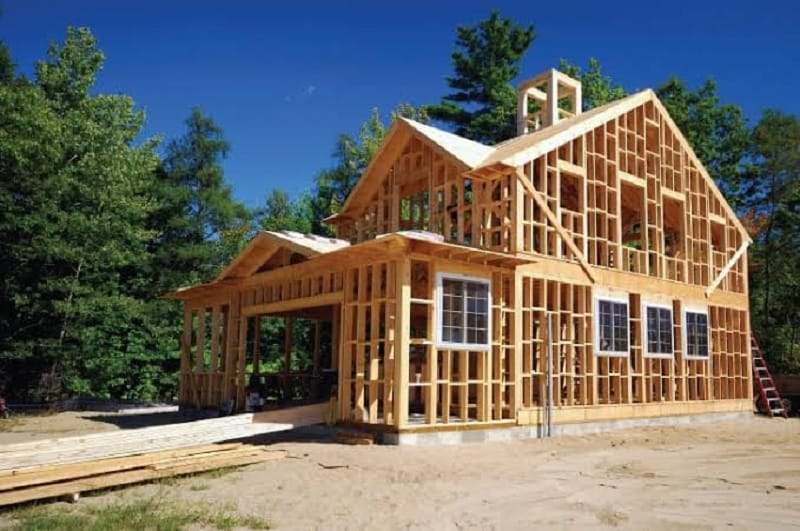
Switzerland Building Permit Approval Time Guide.

In Switzerland, obtaining a building permit (Baubewilligung) is a structured process that varies depending on location and project type. The approval time is not fixed nationwide and changes from canton to canton and municipality to municipality.

For a single-family house, authorities typically process the application within 2 to 4 months if all documents are complete and no objections arise. Smaller projects with clear planning often receive faster approvals.

For larger residential buildings or complex construction projects, the approval period usually extends to 3 to 6 months or more. These projects require deeper technical evaluation, zoning checks, and environmental assessments.

Delays often occur when neighbors file objections (opposition/appeals). In such cases, the approval process can extend by an additional 6 to 18 months, especially if legal disputes arise or revisions are required.

For example, in Zurich, standard building applications often take around 5 months to process. In some parts of Basel, authorities may complete straightforward applications within approximately 3 months if all requirements are met.

Overall, Switzerland maintains a strict but efficient planning system. Applicants who submit complete documentation and comply with zoning laws usually receive faster approval.
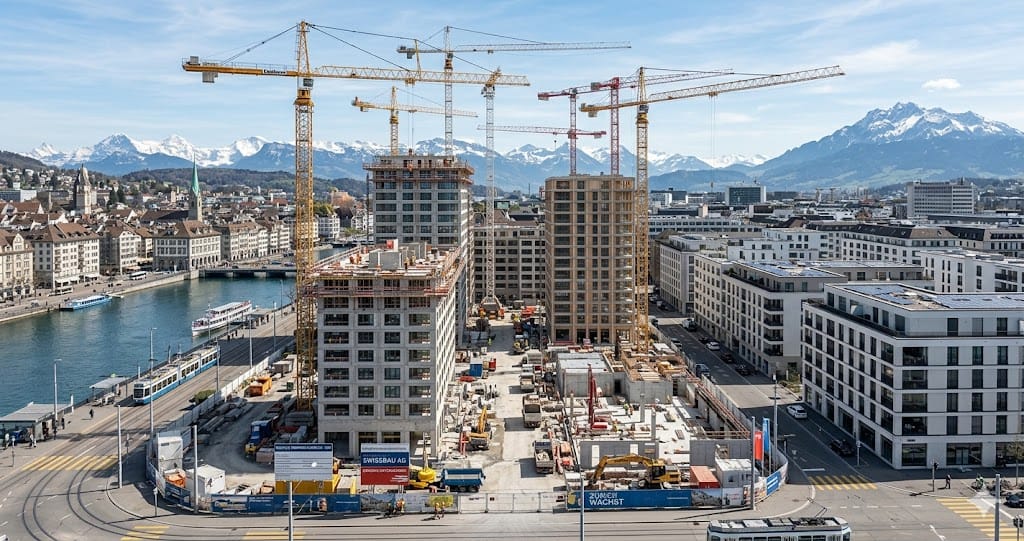
Swiss Construction Growth Driven by Housing Demand.

The Swiss construction industry started 2026 with strong growth, driven mainly by rising residential property demand across the country.

According to the Swiss Builders Association, total activity in building construction and civil engineering increased by 5.6% to CHF 4.98 billion between January and March 2026. Residential construction recorded the strongest performance, rising by 7.4% during the same period.

The growth is supported by sustained demand for new housing projects. Low interest rates and limited housing availability continue to encourage residential development across Switzerland.

However, civil engineering growth remained weak, increasing by only 0.1%. The public sector reduced investment activity, which slowed overall infrastructure development. Rising material costs, particularly bitumen prices influenced by global geopolitical tensions, also added pressure to the sector.

The Swiss Builders Association expects the second half of 2026 to grow at a slower pace. While residential construction is expected to remain stable, civil engineering may face uncertain conditions due to external economic and political factors.

Despite global challenges, supply chain conditions have improved significantly. Only 6% of construction companies currently report material shortages, compared to nearly 50% during the post-Ukraine war disruption period.

Overall, Switzerland’s construction sector remains stable, with housing demand continuing to be the key driver of growth.