Violence Erupts During Anti-G7 Protest in Geneva

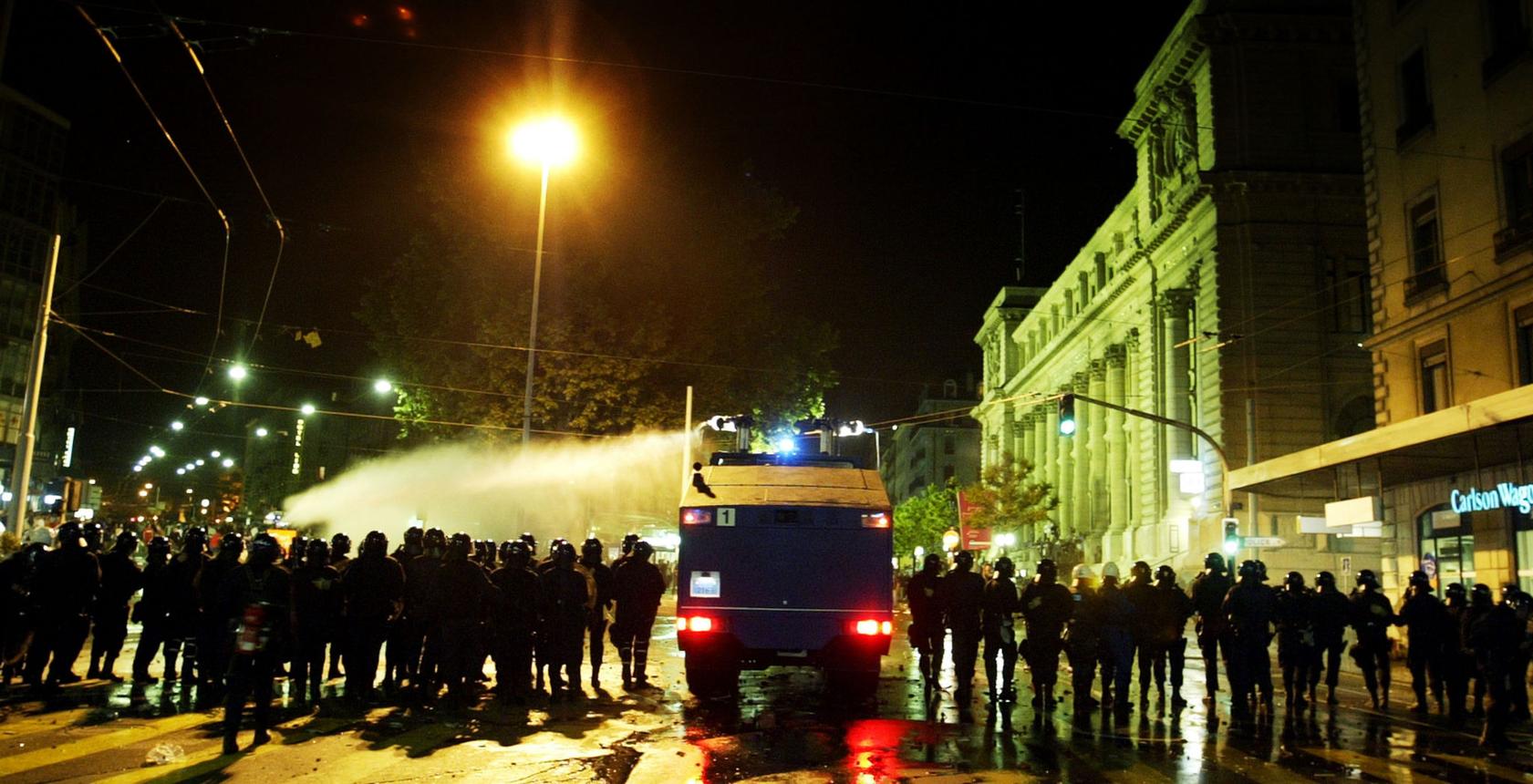
Thousands of demonstrators gathered in Geneva on Sunday for a large anti-G7 protest, with the event turning tense after clashes broke out between protesters and police. Authorities reported incidents of vandalism, including a vehicle being set on fire and damage to commercial property.

The demonstration was organised by the No-G7 coalition, a network of around 60 organisations campaigning against the policies of the Group of Seven nations. Protesters marched through Geneva carrying banners and chanting slogans against capitalism, imperialism and global inequality.

According to organisers, around 20,000 people participated in the demonstration, while police estimated attendance at approximately 7,000 people at the beginning of the march. The procession included feminist groups, trade unions, pro-Palestinian activists, Kurdish organisations and other social movements.

During the march, some individuals reportedly threw objects at police officers, including bicycles and other projectiles. Several explosions were heard, and a bank building suffered damage when windows were smashed. Emergency services and police quickly responded to contain the situation.

The five-kilometre route passed key locations in Geneva, including the area near the United Nations headquarters. Organisers and authorities had spent months negotiating the approved route to ensure public safety during the demonstration.

Security was significantly increased due to concerns over possible unrest linked to the G7 summit being held in nearby Evian, France. More than 1,000 police officers from Geneva and other Swiss cantons were deployed to maintain order and prevent major disturbances.

Protesters used the event to voice concerns about international conflicts, workers’ rights, climate policies, social justice and economic inequality. Demonstrators also criticised the policies of several world leaders and called for stronger protections for human rights and social welfare.

Despite the incidents of violence and vandalism, the majority of participants took part peacefully. Authorities continue to monitor the situation while assessing the extent of the damage caused during the protest.
Thousands Join Feminist Strikes Across Swiss Cities

Thousands of people took to the streets across Switzerland on Sunday as part of nationwide feminist strikes calling for gender equality, fair wages and stronger protections against violence and workplace harassment.

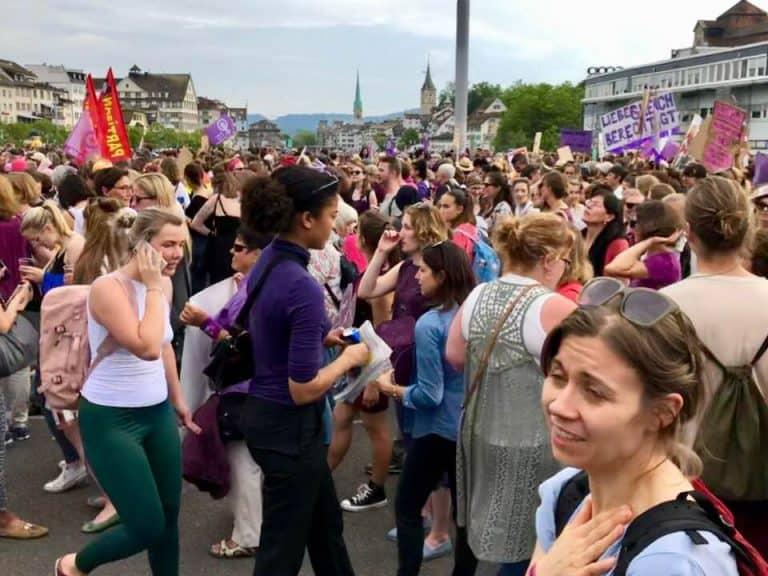
Large gatherings were reported in major Swiss cities including Bern, Zurich, Basel and Lucerne. Demonstrators carried banners, delivered speeches and participated in cultural events aimed at highlighting the ongoing challenges faced by women in society and the workplace.

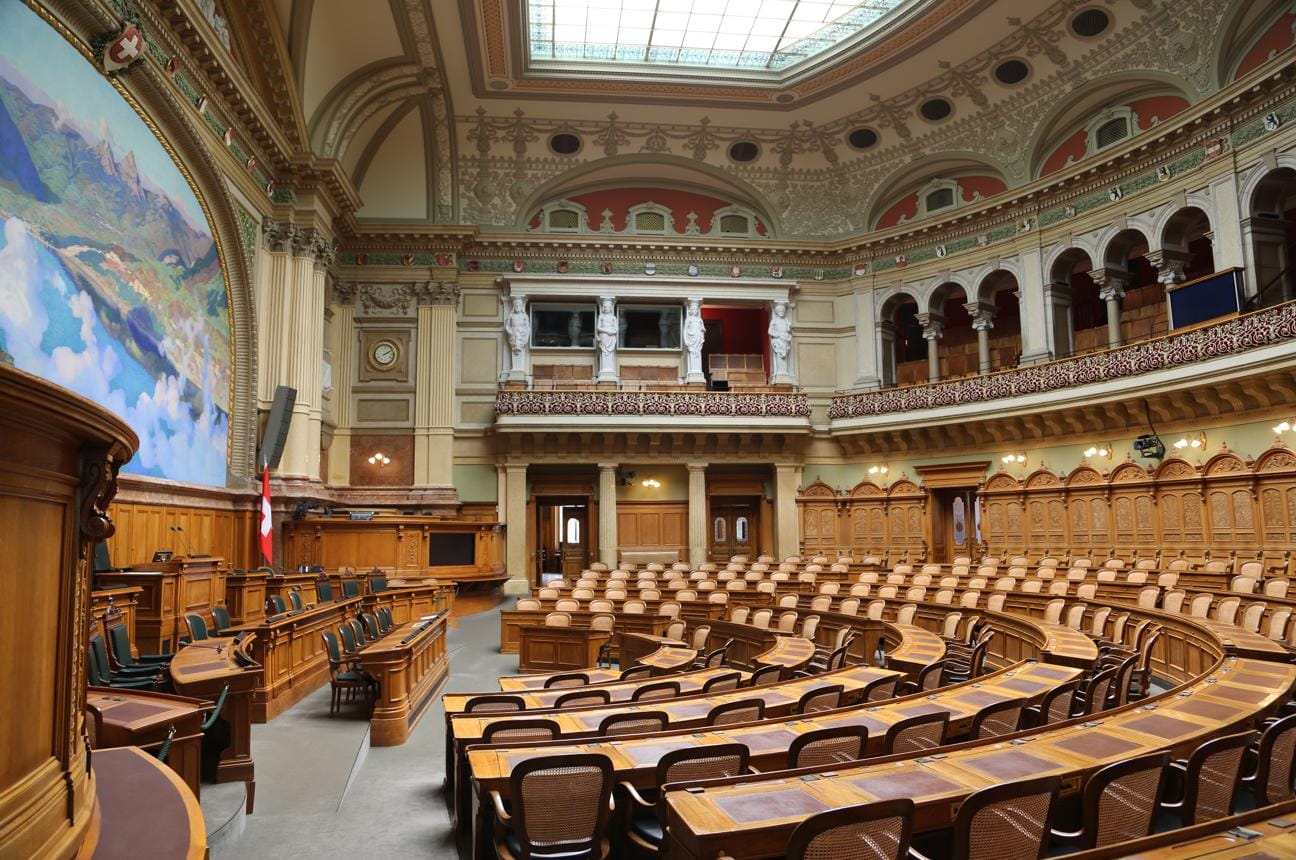
In the Swiss capital Bern, participants gathered for a series of decentralized activities before assembling outside the federal parliament building. Organizers estimated that around 5,000 people attended the main event. Protesters used music, speeches and creative demonstrations to draw attention to issues such as wage discrimination, gender-based violence and unequal opportunities.

In French-speaking Switzerland, feminist demonstrations were also held in Lausanne and Neuchâtel. Activists in Geneva joined broader protests taking place alongside the G7 summit activities occurring near the Swiss-French border region.

Many participants wore purple, a color often associated with women’s rights movements, and displayed messages calling for equal treatment, safety and respect. Demonstrators stressed the need for stronger action against workplace harassment and violence directed at women.

Organizers stated that despite progress in recent years, significant gender inequalities remain in areas such as salaries, career advancement and personal safety. They emphasized that continued public engagement is necessary to achieve lasting social change.

The nationwide demonstrations once again highlighted the importance of gender equality in Switzerland and reflected growing public support for policies that promote fairness, inclusion and protection for women across all sectors of society.

Geneva Approves Religious Symbol Ban for Lawmakers

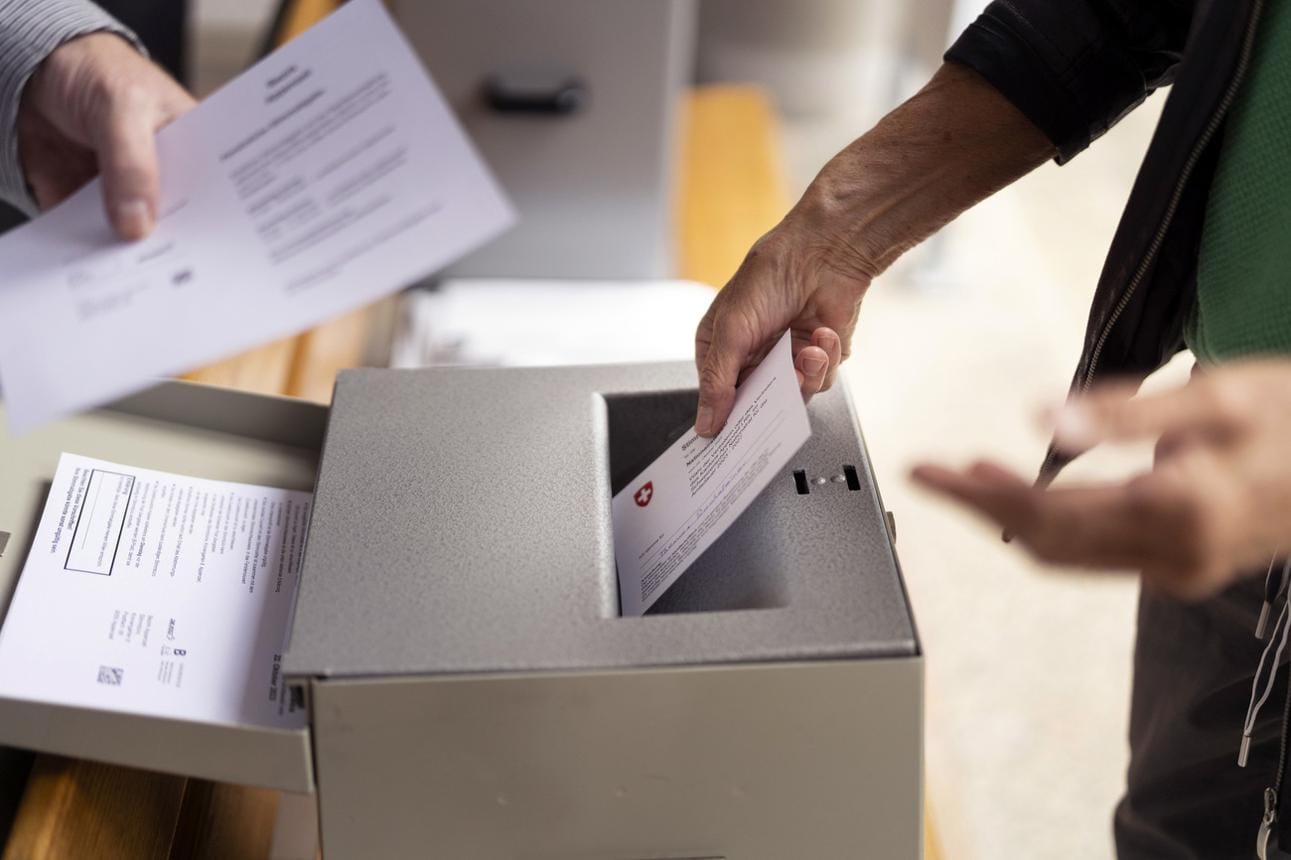
oters in Geneva have approved a constitutional amendment that prohibits cantonal and municipal lawmakers from wearing visible religious symbols during parliamentary sessions. The proposal passed with 51.37% support, while voter turnout reached 51.47%.

Supporters of the measure argued that elected representatives should uphold political neutrality and strengthen the principle of secularism within public institutions. Right-leaning political parties, including the Swiss People’s Party, Radical-Liberals, and the Centre Party, backed the proposal and promoted it as a way to reinforce the separation of religion and politics.

However, the decision has generated significant controversy across Switzerland. Left-wing parties and civil rights groups criticized the ban, claiming it restricts individual freedoms and limits political representation. Opponents argue that lawmakers represent the diversity of society and should not be prevented from expressing their religious identity.

The new rule applies to all visible religious symbols, including headscarves, kippahs, crosses, and other faith-related items. While supporters insist the law treats all religions equally, critics believe it could disproportionately affect Muslim women and other religious minorities.

Legal challenges have already been filed against the amendment. Several organizations argue that the ban conflicts with fundamental constitutional rights and may face further judicial review in the coming months.

The debate highlights Switzerland’s ongoing discussion about secularism, religious freedom, and political representation. The final impact of the new constitutional provision will depend on future court decisions and its implementation within Geneva’s political institutions.

Vaud Voters Approve Minimum Wage Principle in Constitution

Voters in the Swiss canton of Vaud have approved the principle of a minimum wage by enshrining it in the cantonal constitution, marking a significant political victory for left-wing parties and trade unions.

However, voters simultaneously rejected the proposed legislation that would have introduced a minimum wage of CHF23 per hour, creating uncertainty about how the measure will be implemented in practice.

Mixed Result in Historic Vote

The constitutional initiative received support from 49.1% of voters, while 45.8% voted against it. More than 5% submitted blank ballots.

At the same time, the legislative proposal to establish a minimum wage of CHF23 per hour failed to secure majority support.

The cantonal government’s alternative proposal, which included the same wage level but gave priority to collective labour agreements and allowed several exemptions, was also narrowly rejected.

Voter turnout reached 54%, reflecting strong public interest in the issue.

New Legal Framework Required

With both legislative options rejected, the Vaud cantonal government must now develop a new legal framework to implement the constitutional requirement.

Supporters of the initiative described the result as an important symbolic victory because the principle of a minimum wage is now officially protected within the cantonal constitution.

Trade unions and political supporters have expressed willingness to work with authorities to find common ground on issues such as transition periods, exemptions, and the role of collective labour agreements.

Government Seeks Broad Consensus

The Vaud government acknowledged the outcome and announced that it would carefully analyze the voting results before consulting employers, unions, and other social partners.

Officials stated that the goal is to create a proposal capable of achieving broad political and public support while respecting the newly adopted constitutional provision.

Impact on Swiss Labour Policy

The vote highlights the continuing debate in Switzerland over minimum wages, workers’ rights, and the balance between state regulation and collective labour agreements.

While workers have not yet secured a legally defined minimum wage, the constitutional change ensures that the issue will remain a key topic in Vaud’s political agenda in the years ahead.