
Zurich Rejects Housing and Renter-Friendly Initiatives

Voters in the canton of Zurich have rejected a series of housing initiatives aimed at increasing state involvement in the property market and strengthening renter protections. The results show strong opposition to both left-wing and centre-right proposals for stricter housing regulation.

The main housing initiative, supported by left-wing parties, called for the creation of a public housing authority that would build or manage affordable homes. It also proposed a major cantonal investment of at least CHF500 million. However, voters rejected the plan with 59.7% voting against it.

Instead, Zurich voters approved a government-backed counter-proposal with 54.3% support. This approach avoids direct rent regulation but introduces stricter obligations for landlords during renovation and redevelopment projects. Property owners must now assess whether tenants can remain in their homes during refurbishments, provide early notice of at least one year, and assist tenants in finding alternative accommodation.

A separate proposal calling for stricter rent protection measures in high-demand areas was also rejected. This initiative sought to limit rent increases after renovations and restrict the conversion of rental housing into owner-occupied units. It was defeated with 57.3% of voters opposing it.

Another initiative, promoted by homeowners’ associations and supported by right-leaning parties, was also rejected. It aimed to enforce quotas requiring equal numbers of rental and owner-occupied homes in new developments. This proposal was rejected by a large majority of 74.9%.

However, a softer counter-proposal linked to this initiative was accepted by 57.9% of voters. It enshrines the goal of ensuring sufficient housing supply in the cantonal constitution while shifting responsibility away from direct state development. The government must now review measures within three years to improve planning processes and support private housing development.

Officials stated that existing responsible landlords already follow similar practices, but warned that enforcement will be strengthened against non-compliant property owners. The outcome reflects a balanced voter approach, rejecting strict state intervention while still supporting gradual regulatory adjustments in Zurich’s housing sector.

The decisions highlight ongoing pressure in Zurich’s housing market, where rising demand and limited supply continue to shape political debate over affordability and tenant protection.
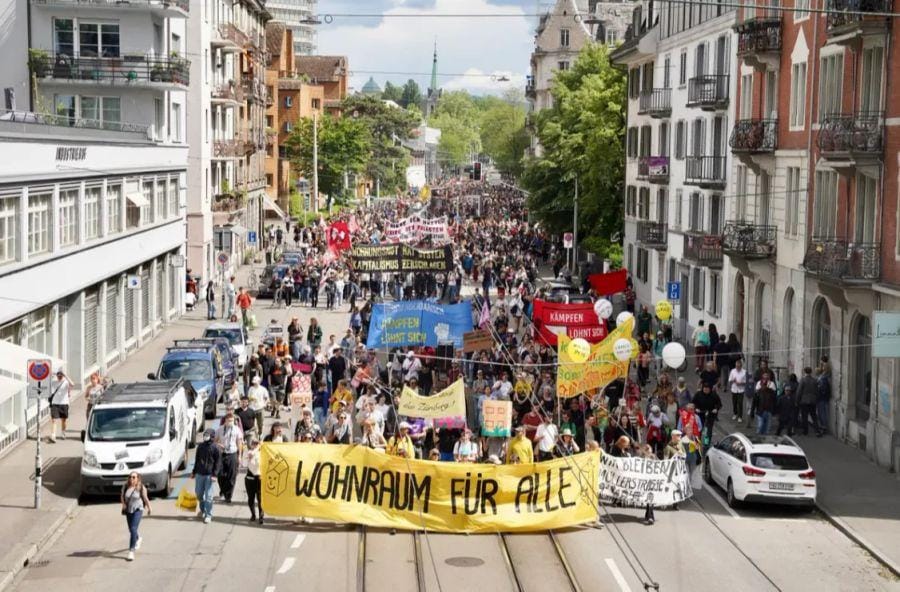
Thousands Rally Against Rising Rents in Zurich.

Thousands of people took to the streets of Zurich on Saturday to protest against rising housing costs, gentrification, and the growing shortage of affordable homes. Organisers estimated that around 2,500 demonstrators joined the authorised march, calling attention to what they described as a city increasingly becoming unaffordable for ordinary residents.

The demonstration began at Hardplatz and moved through several key areas of Zurich, including Hardbrücke, Escher-Wyss-Platz, Limmatplatz, and Langstrasse before ending at Kasernenwiese. Protesters carried banners and flags displaying messages such as “Housing is a basic right for all” and criticism of luxury real estate developments that many believe are driving up living costs.

A symbolic float featuring an “Immo-Hai” or “real-estate shark” led the march, representing concerns about property speculation and profit-driven housing policies. Throughout the demonstration, speakers highlighted the increasing rental prices in different neighbourhoods and accused landlords and investors of prioritising profits over affordable housing.

Participants also expressed concern about lease terminations and renovation projects that often result in significantly higher rents. Organisers argued that long-term residents are being forced out of their communities as neighbourhoods undergo rapid transformation and become increasingly expensive.

The protest coalition, made up of local groups, residents, and housing activists, criticised both property companies and political leaders. They claimed that despite years of public debate and promises from local authorities, affordable housing remains out of reach for many Zurich residents.

Zurich police maintained a strong presence throughout the event, while traffic disruptions affected several roads and public transport routes. Despite isolated incidents involving graffiti, pyrotechnics, and water balloons, the demonstration remained largely focused on raising awareness of the city’s housing challenges.

The protest reflects growing concerns across Switzerland’s largest city, where rising rents and limited housing availability continue to fuel public debate about the future of affordable urban living.

Swiss Home Ownership Dream Faces Housing Crisis.

The dream of owning a home in Switzerland remains difficult for many residents due to rising property prices and limited housing supply, according to a new survey published by MoneyPark and Helvetia.

The study found that nearly 70% of people aged between 25 and 40 want to own their own property, especially detached houses located in quieter rural areas. However, only 16% of current homeowners said they are considering selling their homes, creating major supply pressure in the market.

The survey also highlighted differences in housing satisfaction across Switzerland. Only one-third of tenants reported being satisfied with their current homes, compared to 54% of apartment owners and 89% of detached house owners.

According to MoneyPark CEO Lukas Vogt, many Swiss residents would prefer to live in rural environments but continue moving toward cities due to better job opportunities, infrastructure, and social connections.

This trend is contributing to continued urbanisation across the country rather than a movement back toward rural living.

Housing affordability has also become a major political issue. On June 14, voters in Zurich will vote on initiatives aimed at improving tenant protections and increasing the supply of affordable housing.

The ongoing housing shortage remains one of the biggest economic and social challenges in Switzerland, especially for younger generations trying to enter the property market.

Rents Expected to Rise Again in Switzerland Amid Housing Shortage.

Rents in Switzerland are expected to increase again after a period of slower growth, according to a new study published by Raiffeisen Switzerland. The report suggests that the country’s rental market is entering a new phase of stronger price growth due to ongoing housing shortages and rising costs.

Experts from the bank warn that the temporary stabilisation in rent prices is likely coming to an end. One key reason is that the previous dampening effect from lower interest rates is fading, while new pressures are emerging in the housing sector.

The study highlights that rising energy prices and increased construction costs are also contributing to upward pressure on rents. These cost increases are linked to broader global economic factors, including geopolitical tensions affecting energy markets.

A major concern identified in the report is Switzerland’s extremely low vacancy rate. According to the analysis, demand for rental housing continues to exceed supply, creating strong competition among tenants searching for homes.

Fredy Hasenmaile, chief economist at Raiffeisen Switzerland, stated that the current market conditions point toward significant rent increases. He explained that historically, such low vacancy levels have always led to much stronger rent growth than what has been observed recently.

The report also notes a rise in rental search subscriptions, further confirming sustained excess demand in the Swiss housing market. Experts say this imbalance between supply and demand is likely to keep pushing prices upward in the coming months.

Overall, the outlook suggests that Switzerland’s rental market may experience renewed pressure, affecting both urban and suburban tenants across the country.