


Swiss Criticize Gaza Flotilla Arrests.

The Swiss government strongly criticized the treatment of activists involved in the Gaza aid flotilla and called on Israel to fully respect international law and fundamental human rights.

In an official statement shared on social media, Switzerland’s Federal Department of Foreign Affairs (FDFA) described the reported treatment of some flotilla participants as “unacceptable.” The government said the actions appeared inconsistent with previous assurances given by Israeli authorities regarding the protection of human rights and international legal standards.

Swiss officials emphasized that all commitments related to humane detention conditions, procedural guarantees, and the right to legal defence must be respected in practice. Bern also stressed the importance of protecting humanitarian principles during sensitive international operations.

The FDFA confirmed that several Swiss nationals were believed to be among the participants in the Gaza aid flotilla. However, authorities stated they had not yet received official confirmation from Israel regarding the exact identities or number of Swiss citizens detained.

The incident has drawn international attention as humanitarian organizations continue to raise concerns about access to Gaza and the safety of aid missions in the region. Switzerland reiterated its support for international law and diplomatic dialogue while monitoring developments closely.

Political observers say the statement highlights Switzerland’s commitment to human rights and neutral diplomacy in global conflicts. The Swiss government continues to seek clarification from Israeli authorities regarding the situation involving Swiss citizens.

The Gaza flotilla issue remains a major topic in international discussions about humanitarian access, regional tensions, and the protection of civilian activists involved in aid operations.
European Court Rules Switzerland Violated Protest Organizer’s Rights.

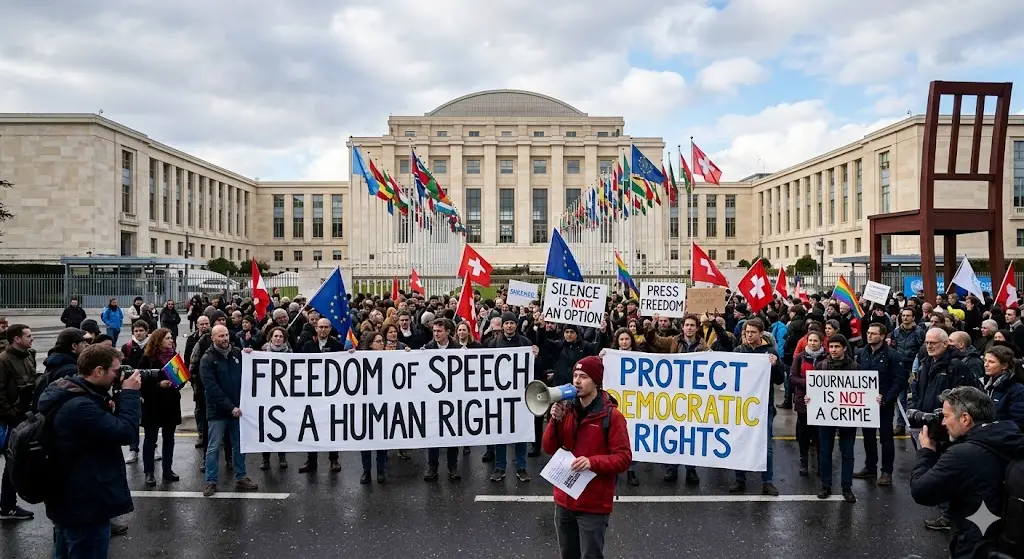
The European Court of Human Rights has ruled that Switzerland violated the rights of a protest organizer linked to a demonstration held in Geneva in 2019.

The case involved an International Women’s Day protest that had received official authorization from local authorities. Before the event, organizers were informed that they could be held personally responsible if permit conditions were violated during the demonstration.

During the protest, riots and disturbances reportedly occurred, leading Swiss authorities to accuse the organizer of failing to maintain an effective security service.

Swiss courts later convicted the organizer under criminal law and imposed a fine of CHF200.

The organizer appealed the decision to the European Court of Human Rights in Strasbourg, arguing that her fundamental rights had been violated.

In its verdict published on Thursday, the ECHR concluded that Switzerland violated several rights protected under the European Convention on Human Rights, including freedom of assembly, freedom of association, freedom of expression, and the right to a fair trial.

The ruling represents another significant judgment involving Switzerland and human rights protections under European law.

Legal experts say the decision could influence how Swiss authorities manage public demonstrations and assess the responsibilities of protest organizers in future events.

The case also highlights the ongoing balance between maintaining public order and protecting democratic rights such as peaceful protest and freedom of expression.

The ECHR has played a major role in shaping human rights standards across Europe, with its rulings often leading member states to review legal procedures and public policies.

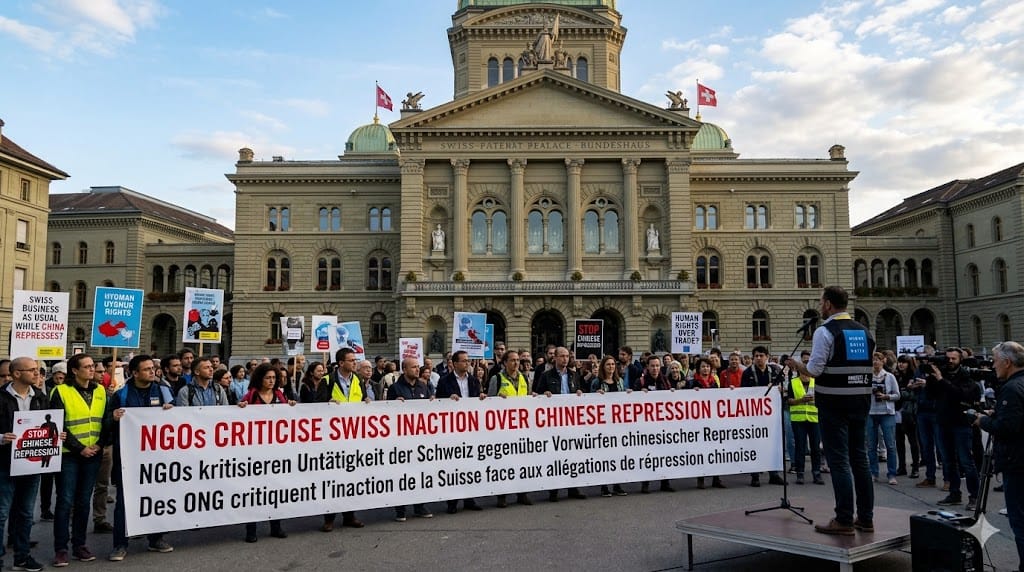
NGOs Criticise Swiss Inaction Over Chinese Repression Claims

Human rights organisations have criticised Switzerland for failing to take concrete action against alleged transnational repression targeting Tibetan and Uyghur communities.

According to NGOs, including Voices, there has been little progress since the Federal Council acknowledged last year that individuals in Switzerland were being affected by pressure and surveillance linked to Chinese authorities.

Selina Morell, programme manager at Voices, expressed disappointment, stating that expectations for stronger protection measures have not been met. She noted that victims continue to face intimidation despite official recognition of the issue.

Experts describe this phenomenon as transnational repression, where governments attempt to influence or silence critics living abroad. Such actions can include surveillance, threats, and indirect pressure through family members.

Although there are no precise figures for incidents in Switzerland, observers report that the trend is increasing. Data from Freedom House indicates that at least 1,375 serious cases of transnational repression have been documented globally since 2014. These include incidents such as abductions, arbitrary detention, and physical assaults.

However, many forms of intimidation—such as monitoring and psychological pressure—are not included in these statistics, suggesting the true scale may be significantly higher.

The issue continues to raise concerns about the protection of human rights within Switzerland and the country’s response to international political pressures.