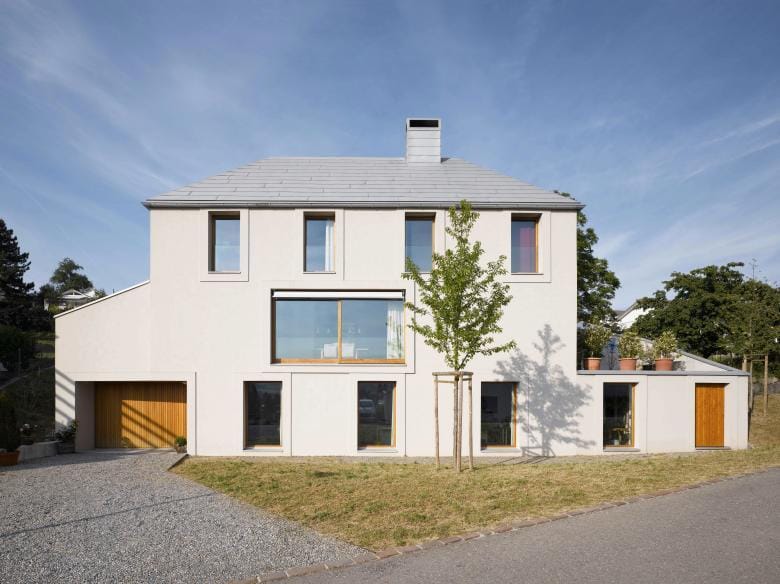
Important Guide for Buying or Building a House in Switzerland

Buying or building a home in Switzerland involves strict financial planning and several legal and banking procedures. Residents often use a combination of savings, pension funds, and bank mortgages to secure property ownership.

Pension fund usage for home purchase

In Switzerland, individuals can often use up to 10% of their pension savings (Pillar 2) for buying a home. If the remaining amount is insufficient, buyers may need to arrange additional financing through banks or private loans. Some people also use additional pension withdrawals depending on eligibility and financial structure.

Mortgage repayment and insurance options

Homebuyers in Switzerland are usually required to repay mortgage interest rather than fully paying off the loan immediately. Many borrowers also take life insurance policies and assign them to the bank as security. This can provide additional benefits such as potential tax advantages and financial protection for the family.

Buying vs building a home

Experts often suggest that buying an already constructed home is safer than building a new one. This is because construction projects can face delays, cost overruns, and regulatory challenges. Ready-built homes reduce such risks and provide faster occupancy.

Age-based mortgage planning

For individuals above 50 years of age, a 10-year mortgage contract is often considered more practical. Shorter loan terms help reduce long-term financial risk and ensure that repayment aligns better with retirement planning.

Overall, the Swiss housing system offers flexibility but requires careful financial planning. Pension funds, insurance structures, and mortgage terms all play an important role in determining affordability and long-term stability for homeowners.
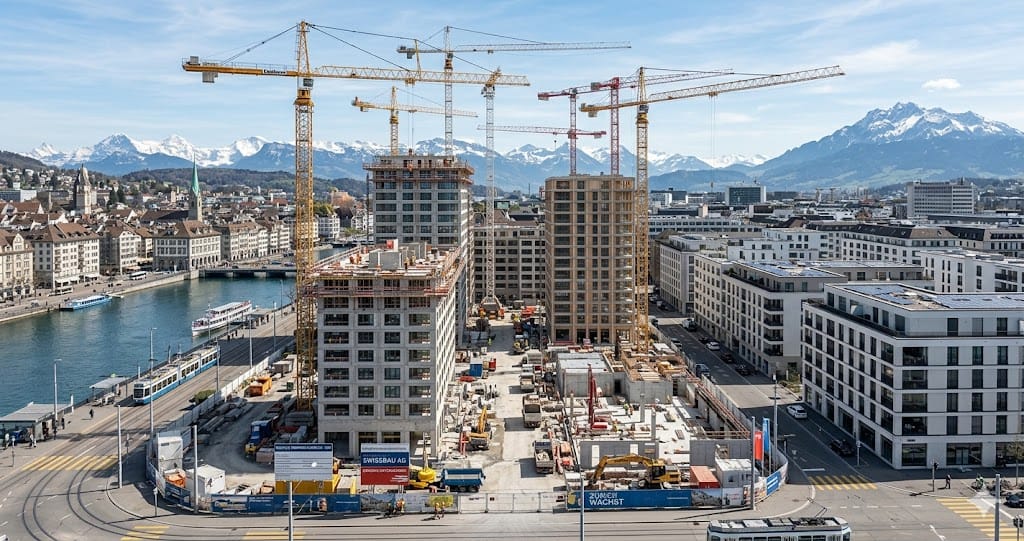

Swiss Construction Growth Driven by Housing Demand.

The Swiss construction industry started 2026 with strong growth, driven mainly by rising residential property demand across the country.

According to the Swiss Builders Association, total activity in building construction and civil engineering increased by 5.6% to CHF 4.98 billion between January and March 2026. Residential construction recorded the strongest performance, rising by 7.4% during the same period.

The growth is supported by sustained demand for new housing projects. Low interest rates and limited housing availability continue to encourage residential development across Switzerland.

However, civil engineering growth remained weak, increasing by only 0.1%. The public sector reduced investment activity, which slowed overall infrastructure development. Rising material costs, particularly bitumen prices influenced by global geopolitical tensions, also added pressure to the sector.

The Swiss Builders Association expects the second half of 2026 to grow at a slower pace. While residential construction is expected to remain stable, civil engineering may face uncertain conditions due to external economic and political factors.

Despite global challenges, supply chain conditions have improved significantly. Only 6% of construction companies currently report material shortages, compared to nearly 50% during the post-Ukraine war disruption period.

Overall, Switzerland’s construction sector remains stable, with housing demand continuing to be the key driver of growth.

Swiss Crowdfunding Market Grows for First Time Since 2021 Driven by Crowdlending Surge

Switzerland’s crowdfunding sector has returned to growth in 2025 after three consecutive years of decline, signaling renewed investor confidence in digital financing platforms. According to the latest “Crowdfunding Monitor Switzerland” report by Lucerne University of Applied Sciences and Arts (HSLU), the total volume of funds raised through online platforms increased by 14% to CHF629 million (around $800 million).

The market had previously peaked at nearly CHF792 million in 2021 before experiencing a steady decline. The recent recovery is mainly driven by strong performance in the crowdlending segment, which now accounts for approximately 75% of the total crowdfunding volume in Switzerland.

CHF 629 million = 629000000 CHFCHF\ 629\ million\ =\ 629\,000\,000\ CHFCHF 629 million = 629000000 CHF

Experts explain that stricter banking regulations introduced in 2025 played a key role in boosting alternative financing channels. Swiss banks are now required to hold more capital against riskier property loans, making traditional lending more expensive and less flexible. As a result, businesses and individuals are increasingly turning to crowdlending platforms for faster and more accessible financing options.

The report also highlights a broader recovery across other crowdfunding segments. Crowdsupporting and crowddonating platforms recorded growth for the first time since 2020. Crowddonating, which supports charitable, cultural, and social initiatives, and crowdsupporting, where contributors receive rewards such as products or services, together increased significantly in 2025.

Sports and health-related projects were among the most successful categories, contributing to a total combined volume increase of 30% to CHF35 million. Meanwhile, real estate crowdlending showed particularly strong expansion, rising by 38% to CHF275 million, making it one of the most important growth drivers in the sector.

Researchers from HSLU noted that the annual “Crowdfunding Monitor Switzerland” plays a key role in tracking market trends and improving transparency within the financial ecosystem. The study helps identify emerging investment behaviors and highlights how regulatory changes continue to shape Switzerland’s digital finance landscape.

Zurich Housing Shortage Takes Centre Stage Ahead of June 14 Vote.

The housing shortage in Canton of Zurich has become the dominant issue ahead of the upcoming June 14 vote, as voters prepare to decide on new measures aimed at improving housing availability and affordability.

Two popular initiatives are being put forward that seek to strengthen tenant protections against rising vacancies and promote the construction of more affordable housing. In response, the cantonal government and parliament have introduced a counter-proposal designed to balance housing development with regulatory oversight.

Affordable housing has become increasingly scarce across Zurich, with rising demand and limited supply driving up prices. One contributing factor highlighted in the debate is the demolition of older buildings, which are often replaced by high-cost developments that reduce the availability of affordable rental units.

A survey conducted by a tenants’ association found that 84% of renters fear termination of their lease agreements, reflecting growing uncertainty in the housing market.

The upcoming vote will determine how aggressively the canton intervenes in the housing market, with supporters of the initiatives calling for stronger protection for tenants and critics warning that excessive regulation could discourage investment and slow construction.

The issue has become one of the most closely watched regional political debates in Switzerland, as housing affordability continues to affect households across urban centres.

Swiss Rent Shock: Moving Homes Could Raise Costs by Up to 50%

A new study reveals that tenants in Switzerland could face sharp rent increases when moving to a new home, with some regions seeing hikes of up to 50%.

According to research by Wüest Partner, rents for new contracts rose by around 17% between 2016 and 2025. In contrast, existing rental agreements increased by only 5% during the same period.

This growing gap means tenants who change homes often pay significantly higher rent than those who stay. As a result, many residents hesitate to move, even when their current housing no longer meets their needs.

The study highlights major regional variations:

  • Geneva: Over 50% higher rents in new contracts
  • Zug: Around 38% increase
  • Zurich: About 20% rise

These differences show how location plays a key role in rental affordability.

Impact on Tenants and Future Risks

The trend creates financial pressure, especially for middle-income households. Many tenants now avoid moving to escape higher costs.

If this situation continues, analysts warn that the rental market could become increasingly imbalanced, making housing less accessible for many people.