

Switzerland Reacts to New US Tariff Proposal.

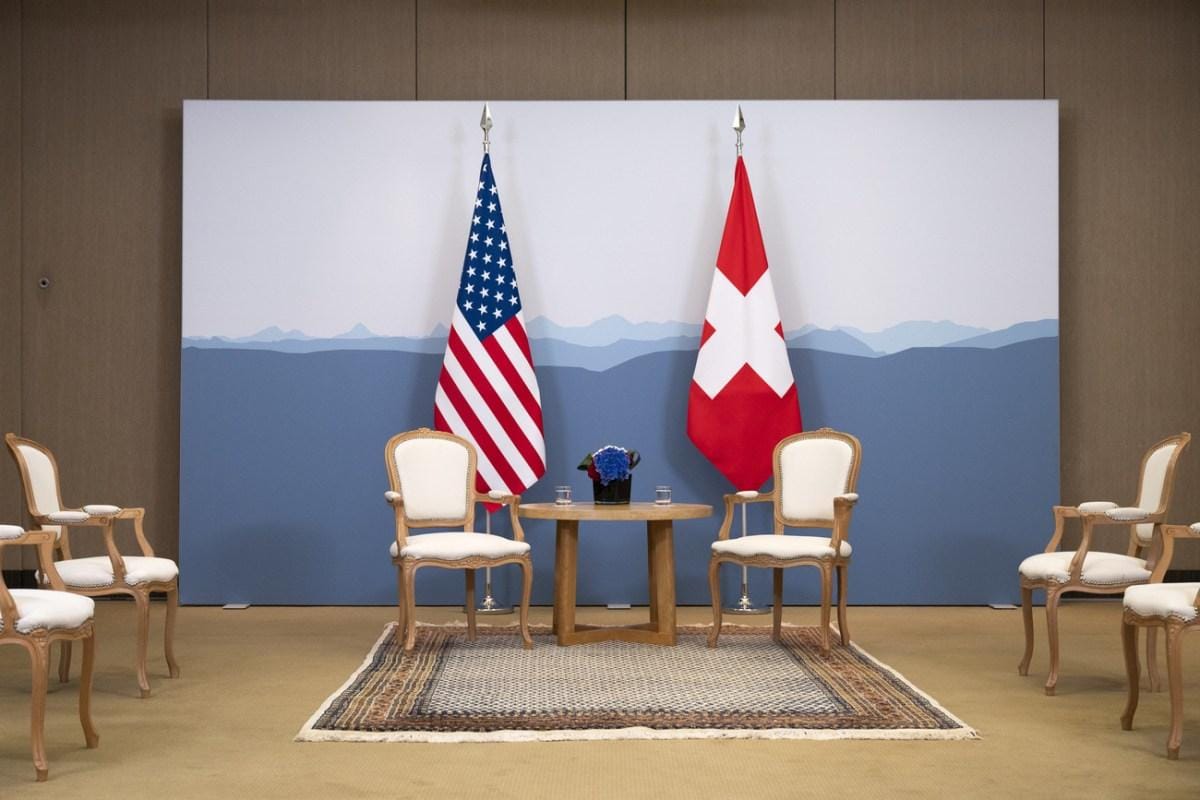
Swiss President Guy Parmelin has stated that the Swiss government was not surprised by the United States’ proposal to introduce new tariffs of 12.5% on Swiss goods. He confirmed that Switzerland is currently engaged in ongoing negotiations with Washington to reach a balanced trade agreement.

Speaking at the Swiss Economic Forum (SEF) in Interlaken, Parmelin explained that Swiss authorities were already aware of investigations under Section 301 of the US Trade Act. He noted that the government had anticipated a decision regarding potential trade measures from the United States.

Parmelin, who also serves as Switzerland’s economics minister, emphasized that the Swiss government firmly rejects the criticisms made by the US in relation to its trade practices. He added that Switzerland has already responded to these concerns in written form as part of official diplomatic communication.

Despite the proposed tariffs, Swiss officials are continuing discussions with US representatives, aiming to protect key export sectors and maintain stable economic relations between the two countries. The negotiations are expected to focus on ensuring fair trade conditions and minimizing potential impacts on Swiss industries.

The announcement comes at a sensitive time for global trade relations, as countries continue to navigate economic uncertainty and shifting tariff policies. Switzerland, a highly export-oriented economy, is closely monitoring developments to safeguard its economic interests.

Authorities have reiterated their commitment to dialogue and diplomatic engagement, signaling that discussions with the United States will continue in the coming months.
Swiss Tech Industry Recovers, But Risks Remain.

Switzerland’s technology industry has started the year with a strong rebound, showing growth in new orders, sales, and exports. However, industry leaders warn that the recovery remains fragile and exposed to global economic and political risks.

According to Swissmem, the association representing Switzerland’s machinery, electrical engineering, and metals industries, new orders increased by 10.1% in the first quarter compared to the previous year. During the same period, revenues rose by 3.4%, while exports grew by 1.1%, indicating a moderate but positive recovery trend.

Export performance varied significantly across regions. The European Union played a key role in driving growth, with exports rising by 3.9%. In contrast, demand declined in key international markets such as Asia (-4.5%) and the United States (-4.2%), highlighting uneven global recovery patterns.

Within product categories, Switzerland saw declines in exports of measuring, control, and precision instruments as well as machinery and mechanical equipment. However, strong growth in rail, road, and air vehicle exports—up by 28.4%—helped balance overall performance due to several large international contracts.

Despite improvements, the industry is still operating below optimal capacity. The average utilisation rate stood at 81.6%, below the long-term benchmark of 85.6%. Employment in the sector slightly increased to 324,200 workers, reflecting cautious stability in the labour market.

Swissmem director Stefan Brupbacher noted that while indicators such as the purchasing managers’ index show encouraging signals, the recovery is not evenly distributed. Larger firms and certain high-tech segments, including industrial electrical engineering, energy solutions, data centres, artificial intelligence, and space-related technologies, are performing better than smaller companies.

Smaller enterprises, however, reported a revenue decline of 1.8%, underlining structural imbalances within the sector. Brupbacher warned that the current growth is “a fragile balance” and could reverse quickly due to global uncertainties.

Key risks include geopolitical tensions in the Middle East, rising energy costs, supply chain disruptions, US tariffs, and EU trade restrictions. These factors, according to Swissmem, could abruptly halt the current positive trend.

The association is calling for stable and supportive policy frameworks in Switzerland, including progress on free trade agreements such as Mercosur and rejection of restrictive immigration measures that could limit workforce availability.

Overall, while Switzerland’s tech industry is showing signs of recovery, experts emphasize that long-term stability will depend on global conditions and domestic policy decisions.