Former Raiffeisen CEO Faces CHF1 Million Tax Penalty.

Former Raiffeisen Switzerland CEO Pierin Vincenz has reportedly been ordered to pay nearly CHF1 million in fines linked to tax evasion, according to reports published by Swiss newspaper SonntagsZeitung.

The report states that the Swiss Federal Supreme Court confirmed the sentence in a judgment that recently became legally binding. Swiss tax-related court proceedings are generally not public, which is why the case had remained largely unknown until now.

Authorities allege that Vincenz failed to declare approximately CHF3.4 million in taxable income. In addition to the financial penalty, he could also be required to pay significant backdated taxes.

During the proceedings, Vincenz denied the allegations against him.

The investigation reportedly began after tax authorities in Appenzell Ausserrhoden reviewed a criminal indictment connected to an ongoing case in Zurich and identified suspicious financial transactions.

In 2022, Vincenz and several associates were found guilty of fraud and embezzlement in a separate criminal case involving acquisitions made during his leadership at Raiffeisen. However, appeals against those convictions are still ongoing.

A February 2025 ruling by Switzerland’s highest court reportedly upheld parts of the earlier legal findings, making the latest tax penalty enforceable.

Vincenz continues to face legal scrutiny over accusations that he personally benefited from business deals conducted while serving as chief executive of Raiffeisen. Another appeal hearing in the broader case is expected to take place in August.

The case remains one of the most closely followed financial and corporate governance scandals in modern Swiss banking history.
Swiss Airports Record 13.3 Million Passengers in Q1 2026.

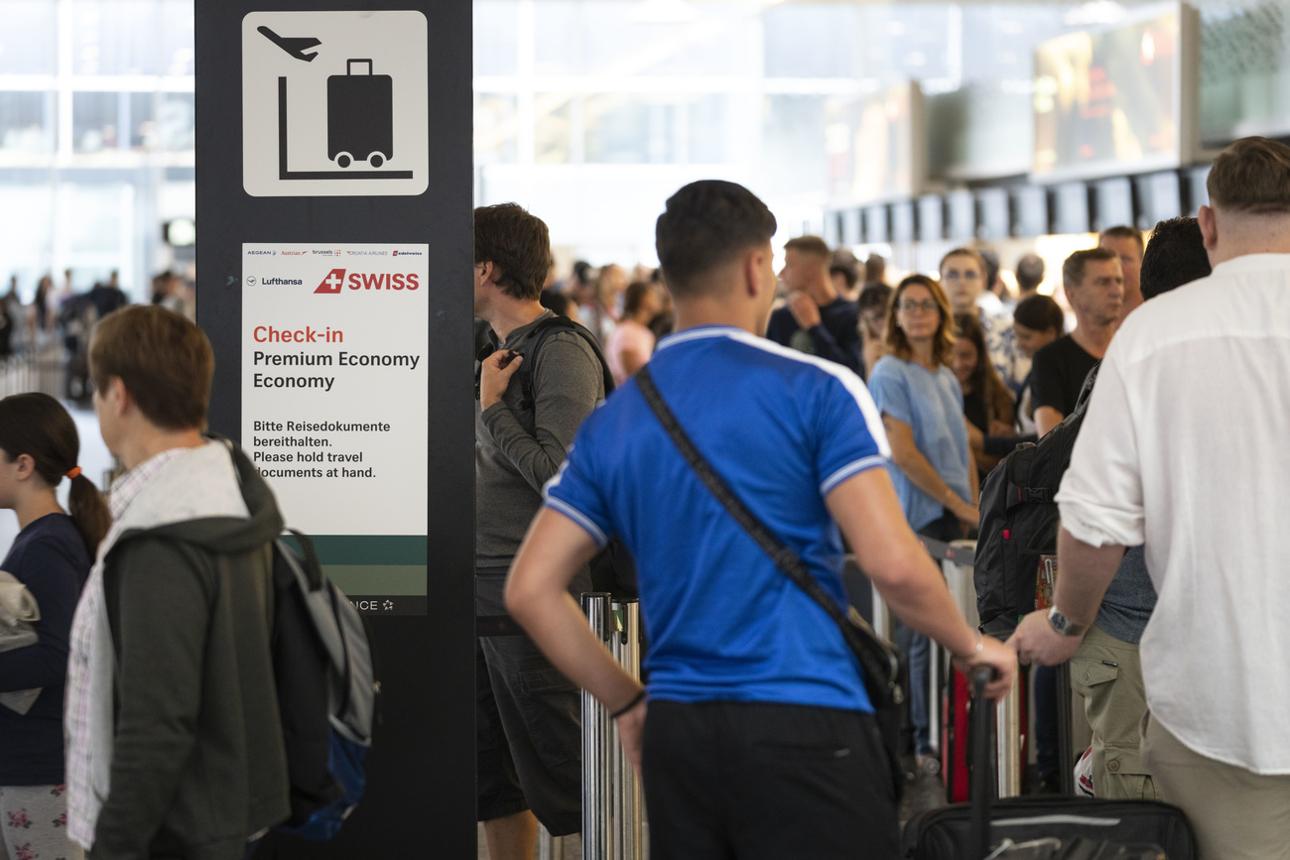
Swiss airports recorded a strong increase in passenger traffic during the first quarter of 2026, reaching a total of 13.3 million travellers on scheduled and charter flights, including transit passengers.

According to figures published by the Federal Statistical Office, this represents an increase of around 0.7 million passengers, or 5%, compared to the same period in 2025.

The growth highlights continued recovery and expansion in Switzerland’s aviation sector, supported by rising travel demand and strong international connectivity.

Among the country’s major airports, Zurich Airport recorded the highest passenger volume, handling 6.9 million travellers. This marks a 6% increase compared to the previous year.

Geneva Airport also saw steady growth, with passenger numbers rising by 3% to 4.6 million. Meanwhile, EuroAirport Basel Mulhouse Freiburg experienced the strongest percentage increase, up 7% to 1.8 million passengers.

Aviation analysts say the increase reflects stronger international travel demand, improved airline capacity, and Switzerland’s continued role as a key European travel hub.

The data suggests that despite global economic uncertainties, Swiss air travel remains resilient, with both tourism and business travel contributing to the upward trend.

Swiss Finance Minister Urges Banks to Strengthen Financial Stability.

Swiss Finance Minister Karin Keller-Sutter has called on banks operating in Switzerland to actively contribute to the country’s financial stability amid ongoing global geopolitical tensions and economic uncertainty.

Speaking at a private banking symposium in Bern organised by the Swiss Association of Private Banks and the Association of Swiss Asset Management and Institutional Banks, she stressed that Switzerland’s stability remains one of its most valuable economic assets.

She warned that institutions benefiting from this stability must also take responsibility in maintaining it. According to her remarks, any actions that could weaken the financial system in the future must be carefully managed to protect the wider economy and taxpayers.

The comments come amid ongoing discussions involving UBS Group AG, which has recently expressed concerns about proposed government plans to tighten capital requirements for systemically important banks.

Keller-Sutter acknowledged the importance of large banking institutions to Switzerland’s economy but emphasized the need to limit risks that could ultimately fall on taxpayers. She rejected the idea that the government is obstructing business growth, instead framing regulation as a safeguard for long-term stability.

She also highlighted that Switzerland continues to attract international clients seeking secure financial environments, particularly during periods of global instability. The country’s reputation for safety and trust remains a key driver of its financial sector strength.

Referring to past financial challenges, including the collapse of Credit Suisse, she reminded industry leaders that stability is essential to maintaining confidence in the banking system.

Experts note that Switzerland’s financial sector continues to play a central role in global wealth management, but regulatory debates remain crucial as authorities seek to balance competitiveness with systemic risk protection.

Rents Expected to Rise Again in Switzerland Amid Housing Shortage.

Rents in Switzerland are expected to increase again after a period of slower growth, according to a new study published by Raiffeisen Switzerland. The report suggests that the country’s rental market is entering a new phase of stronger price growth due to ongoing housing shortages and rising costs.

Experts from the bank warn that the temporary stabilisation in rent prices is likely coming to an end. One key reason is that the previous dampening effect from lower interest rates is fading, while new pressures are emerging in the housing sector.

The study highlights that rising energy prices and increased construction costs are also contributing to upward pressure on rents. These cost increases are linked to broader global economic factors, including geopolitical tensions affecting energy markets.

A major concern identified in the report is Switzerland’s extremely low vacancy rate. According to the analysis, demand for rental housing continues to exceed supply, creating strong competition among tenants searching for homes.

Fredy Hasenmaile, chief economist at Raiffeisen Switzerland, stated that the current market conditions point toward significant rent increases. He explained that historically, such low vacancy levels have always led to much stronger rent growth than what has been observed recently.

The report also notes a rise in rental search subscriptions, further confirming sustained excess demand in the Swiss housing market. Experts say this imbalance between supply and demand is likely to keep pushing prices upward in the coming months.

Overall, the outlook suggests that Switzerland’s rental market may experience renewed pressure, affecting both urban and suburban tenants across the country.

Swiss Industrial Production Falls 6.1% in First Quarter 2026.

Industrial production in Switzerland’s secondary sector recorded a significant decline in the first quarter of 2026, according to the Federal Statistical Office. Overall production in industry and construction dropped by 6.1% between January and March compared to the same period last year.

Turnover in the sector also declined by 5.8%, reflecting weaker demand and reduced output in several key industries across the Swiss economy. The data highlights continued pressure on Switzerland’s manufacturing base amid global economic uncertainty.

The industrial sector experienced the sharpest downturn, with production falling by 7.1%. The most significant declines were seen in pharmaceutical manufacturing, which dropped by 20.4%, and vehicle construction, which fell by 15.0%.

Despite the overall negative trend, some sectors showed positive performance. Production increased in metal product manufacturing by 8.8%, while data processing equipment and watch production rose by 6.6%, indicating resilience in high-value Swiss industries.

The construction sector performed comparatively better during the same period. Production increased by 0.8%, continuing a modest recovery trend seen in late 2025. Building construction grew by 2.8% and civil engineering by 3.8%, although other construction activities saw a slight decline of 0.6%.

Overall turnover in construction rose by 1.5%, suggesting steady demand in infrastructure and housing projects despite broader economic challenges.

Economists note that while Switzerland continues to maintain stability in certain high-tech and construction segments, the sharp decline in industrial output reflects ongoing global supply chain pressures and weaker international demand.

Switzerland Could Face Major Worker Shortages Under Anti-Immigration Proposal

Switzerland could face severe labour shortages if voters approve the proposed anti-immigration initiative, according to new economic and demographic studies.

Experts warn that Switzerland may experience a shortage of tens of thousands of workers in the coming years due to an aging population, low birth rates, and increasing retirements. Immigration currently plays a key role in filling positions across healthcare, construction, technology, hospitality, and manufacturing sectors.

Research estimates suggest the country could face a workforce shortage ranging between 87,000 and 245,000 employees depending on future immigration policies and economic conditions.

Swiss businesses and economic analysts say restricting immigration could place additional pressure on the labour market and slow economic growth. Many industries already struggle to recruit qualified workers, especially in highly skilled professions.

Supporters of the anti-immigration proposal argue that stricter migration controls would reduce pressure on housing, transportation, and public services. However, critics believe the measure could weaken Switzerland’s economy and create long-term workforce challenges.

Economists say foreign workers remain essential to maintaining Switzerland’s healthcare system, public infrastructure, and business operations. The debate over immigration continues to be one of the country’s most important political and economic discussions in 2026.

Axpo Proposes Gas Power Plants to Secure Switzerland Electricity Supply

Axpo, one of Switzerland’s leading electricity producers, has proposed the construction of three to four gas-fired power plants to strengthen the country’s energy security.

According to Axpo Chair Thomas Sieber, Switzerland needs a balanced energy strategy that combines hydropower, renewable energy sources, and flexible gas-fired power plants to ensure a stable electricity supply, especially during winter months.

Sieber explained that gas-fired power plants offer a major advantage because they can be built relatively quickly and provide flexibility to support the national grid during peak demand periods. However, he emphasized that legal adjustments and supportive policies will be required to enable their construction.

At the same time, Switzerland continues to rely heavily on nuclear energy as a key part of its electricity system. The continued operation of existing nuclear power plants is considered essential for maintaining supply stability.

Axpo estimates that nuclear plants in Gösgen Nuclear Power Plant and Leibstadt Nuclear Power Plant could continue operating for up to 80 years with proper maintenance and approvals.

A critical decision regarding the future of the Gösgen nuclear plant must be made by 2029. If no extension is approved, it may be disconnected from the grid as originally planned.

Energy experts say Switzerland is focusing on a long-term strategy that balances renewable energy expansion with reliable backup sources to ensure energy security in the coming decades.

Switzerland Plans Health Insurance Franchise Increase.

Switzerland is currently discussing a new proposal to increase the minimum health insurance franchise amount from CHF 300 to CHF 400.

The proposed change has sparked nationwide attention as healthcare costs continue to rise across the country.

In Switzerland, the franchise system requires individuals to pay a fixed amount of their medical expenses each year before health insurance coverage begins.

At present, the minimum franchise stands at CHF 300. Under the new proposal, the minimum contribution could increase to CHF 400.

Swiss authorities say the planned change aims to encourage people to reduce unnecessary medical visits and healthcare expenses.

Officials believe the increase may help lower pressure on the national healthcare system and reduce overall insurance costs in the long term.

However, the proposal has also raised concerns among residents, especially middle-income families and elderly citizens who already face rising living expenses.

Critics argue that increasing the franchise amount could create additional financial pressure for people who regularly require medical treatment.

Government discussions and public consultations regarding the proposed law are currently ongoing. According to reports, the final decision is expected later this year depending on public response and political support.

The healthcare insurance system remains one of the most important economic and social topics in Switzerland, with many residents closely following any possible changes that may affect their monthly expenses and medical access.

Housing Prices Continue to Rise Across Switzerland in 2026

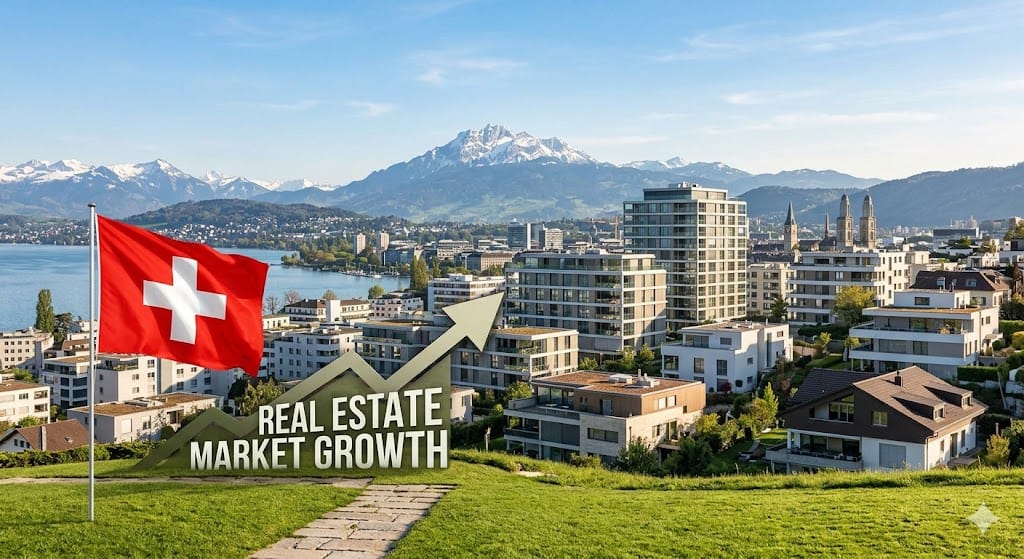
Housing prices in Switzerland continue to increase steadily in 2026, with major cities such as Zurich, Geneva, and Lausanne experiencing significant price growth in the property market.

According to recent 2026 housing market data, apartment prices across Switzerland have increased by nearly 4% annually, while prices for individual houses have risen by around 3%. Real estate experts say strong demand and limited housing supply continue to push prices higher across the country.

Property demand remains especially high in Zurich and other large urban areas. However, the pace of new housing construction has not matched the growing population and demand, creating pressure on the Swiss housing market.

Several major factors continue to drive the increase in Swiss housing prices. Rising immigration, limited construction of new homes, and low interest rates have contributed to higher demand for residential properties. Switzerland’s reputation as a safe and stable investment destination has also attracted both local and international investors.

Economic experts additionally point to Switzerland’s high salaries and strong employment opportunities as reasons why many foreign workers continue to move to the country. This growing workforce further increases demand for housing in major Swiss cities.

The continued rise in property prices has become an important topic among residents, investors, and policymakers. Many people are now concerned about long-term housing affordability, especially for middle-income families and first-time home buyers in Switzerland.