Strong Call in Switzerland to Protect Sri Lanka’s Local Farmers Through Higher Import Taxes.

A strong appeal has been made in Switzerland urging the Government of Sri Lanka to take urgent action to protect its local agricultural sector by increasing import taxes on essential food items.

During an official visit by Sri Lankan Prime Minister Harini Amarasuriya, a Sri Lankan expatriate entrepreneur presented a significant proposal focusing on strengthening domestic agriculture and reducing dependency on imports.

The proposal highlighted that essential commodities such as rice, potatoes, big onions, small onions, and dried chillies can be sufficiently produced within Sri Lanka. Therefore, increasing import duties on these goods would help stabilize local market prices and ensure better demand for domestic farmers.

Supporters of the proposal emphasized that restricting unnecessary imports would also help preserve the country’s valuable foreign exchange reserves, reducing pressure on Sri Lanka’s economy.

This viewpoint aligns with concerns previously expressed by several Northern Province representatives, including Members of Parliament who have spoken publicly about controlling rice imports to protect local producers.

However, the expatriate community stressed that such concerns should not remain only as political discussions or media statements. Instead, they urged that the policy should be formally debated in Parliament and enacted as a legally binding framework.

They further stated that only a structured import taxation policy can guarantee long-term protection for farmers, ensuring fair pricing, stable demand, and sustainable agricultural growth in Sri Lanka.

Swiss Glaciers Record Major Snow Deficit Across Regions

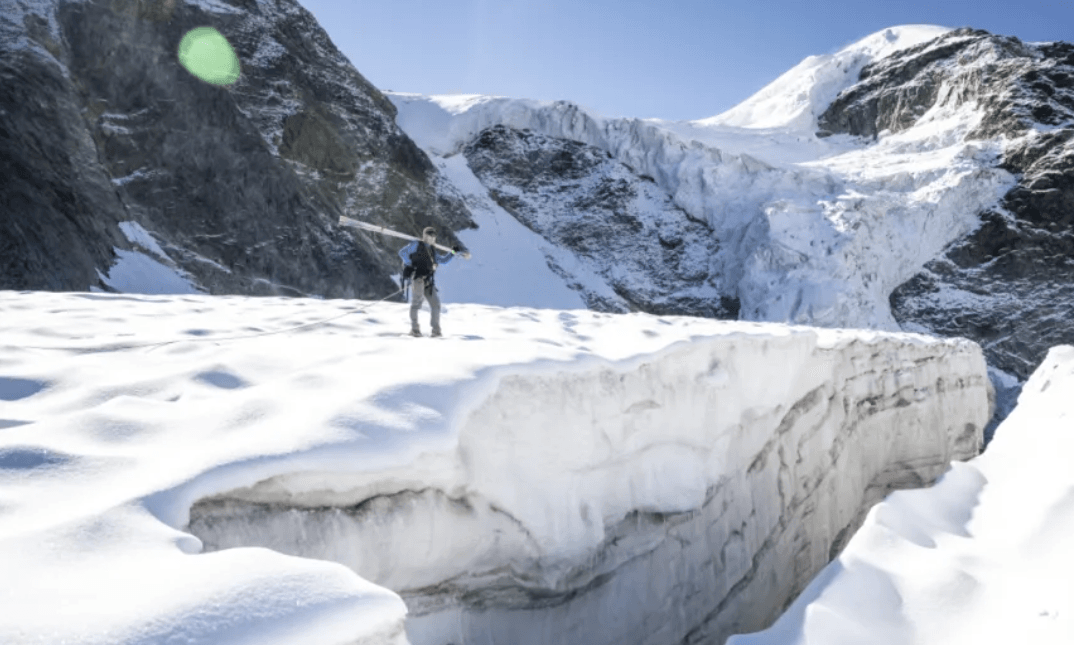
Glaciers across Switzerland are experiencing a significant snow deficit this winter, raising concerns about accelerated melting during the upcoming summer season.

According to the Swiss Glacier Monitoring Network, snowfall levels were substantially below average across several key regions, including Upper Valais, Ticino, and Graubünden.

The monitoring organization reported that winter 2025–26 shows an average 25% snow deficit compared to the 2010–2020 baseline.

GLAMOS collected measurements from 25 glaciers across Switzerland during April, revealing that a warm and unusually dry spring contributed heavily to reduced snow accumulation.

Some regions, such as the Bernese Oberland and central Valais, were less affected and remain closer to long-term seasonal averages. However, other glacier zones show clear signs of reduced snowpack.

Experts warn that low winter snow cover is critical because it acts as a protective layer that slows glacier melt during warmer months. Without sufficient snow insulation, glaciers absorb more heat and lose mass more rapidly.

Scientists now expect that the reduced snow cover could intensify glacier retreat in 2026, continuing the long-term trend of ice loss observed across the Swiss Alps.

Switzerland’s glaciers have already been shrinking for decades due to rising temperatures, and this winter’s deficit may further accelerate the process.

Climate researchers emphasize that continued monitoring is essential to understand how extreme weather patterns are impacting alpine ice reserves.

Swiss Consumer Confidence Rises Slightly but Remains Weak

Consumer confidence in Switzerland has shown a slight improvement in April, but overall sentiment remains weak as households continue to face economic uncertainty and persistent high prices.

According to data released by the State Secretariat for Economic Affairs, the consumer confidence index rose to -40.0 points in April, up from -42.9 in March. In February, the index had already dropped sharply from -30.4, indicating continued volatility in public sentiment.

Despite the monthly improvement, the index remains below the long-term average of -37.5, highlighting ongoing economic concerns among Swiss households.

On a year-on-year basis, consumer confidence improved slightly by 2.4 points, but expectations for the future remain cautious.

A key driver of the slight improvement is the better perception of the overall economic outlook. The sub-index measuring expected economic development rose from -67.9 to -58.0 in April.

However, this figure is still far below its long-term average of -33.6, showing that consumers remain pessimistic about future economic growth.

Experts note that job insecurity, inflationary pressure, and high living costs continue to weigh heavily on household sentiment.

While some stabilization is visible, economists caution that consumer confidence in Switzerland is still fragile and could be affected by global economic conditions, interest rate changes, and geopolitical uncertainty.

EU Jobless Reform Could Cost Switzerland Up to CHF 900 Million

A proposed reform by the European Union on unemployment insurance rules for cross-border workers could significantly increase costs for Switzerland, according to estimates from the State Secretariat for Economic Affairs.

The Swiss government agency warned that the planned changes could result in additional annual expenses ranging between CHF 600 million and CHF 900 million (approximately $771 million to CHF 1.1 billion).

The reform, currently being discussed within the European Union, aims to change the system for paying unemployment benefits for cross-border workers.

Under the new proposal, responsibility for unemployment payments would shift from the worker’s country of residence to the country where the individual last worked before becoming unemployed.

SECO published the cost estimates on its official website, following earlier reporting by the Swiss newspaper Neue Zürcher Zeitung.

However, Swiss authorities stressed that the figures remain highly uncertain due to limited data on unemployed cross-border workers.

Officials stated that a more accurate financial assessment will only be possible once the final version of the EU regulation is approved.

Before implementation, the proposal must be accepted by both the EU Council and the European Parliament. An EU diplomat reportedly expressed confidence that the reform is likely to pass.

The issue is particularly important for Switzerland due to its large number of cross-border workers from neighboring EU countries, especially in regions such as Geneva, Basel, and Ticino.

Experts warn that any change in benefit responsibility could place additional pressure on Switzerland’s unemployment insurance system and federal budget.

Special Screening of “Neelira” Film to Take Place in Kloten.

A special screening of the Tamil film Neelira and an interactive discussion with its director will take place in Kloten, Switzerland, on May 10, 2026.

The film, directed by Somitharan, is based on events that reportedly took place during a single night in Eelam in 1988. The production explores historical and emotional themes connected to the Sri Lankan Tamil experience.

The movie is presented by acclaimed filmmaker Karthik Subbaraj and actor Rana Daggubati, adding significant attention to the project among Tamil cinema audiences worldwide.

Alongside the screening, organizers have arranged a live discussion session with director Somitharan, giving audiences an opportunity to learn more about the film’s background, storytelling approach, and historical inspiration.

The event is scheduled to take place on Sunday, May 10, 2026, at 6:30 PM at Cinema Claudia in Kloten.

Tamil film enthusiasts and members of the Tamil diaspora community interested in Eelam history and culturally significant cinema are expected to attend the event.

Swiss Media Industry Adopts AI Code of Conduct.

The Switzerland media industry has officially adopted a new code of conduct for the responsible use of artificial intelligence in journalism and publishing.

The initiative aims to strengthen public trust in AI technologies while ensuring ethical standards remain central to modern media practices.

According to industry representatives, the framework is based on principles outlined in a Council of Europe convention and is designed to guide media companies in using AI responsibly and transparently.

Andrea Masüger, President of the German-language publishers’ association Schweizer Medien, emphasized the importance of public confidence in journalism.

“Trust is the media’s most precious asset,” Masüger stated while discussing the need for clear ethical standards around AI-generated content and automated technologies.

The new guidelines are expected to address issues such as transparency, accountability, editorial oversight, misinformation risks, and the protection of journalistic integrity.

Media organizations across Europe are increasingly introducing AI policies as artificial intelligence tools become more common in news production, content generation, translation, and audience engagement.

Swiss publishers hope the new code will encourage responsible innovation while maintaining high standards of accuracy, independence, and credibility in the digital media landscape.

The move reflects growing international concern about the impact of AI on journalism, democracy, and public trust in information.

Swiss Travel Safety Concerns Rise in 2026

A new survey reveals that people in Switzerland are becoming increasingly concerned about safety when travelling abroad, even as demand for holidays remains strong.

Despite growing concerns, travel demand continues to recover. The proportion of people reducing or avoiding travel has dropped from 61% last year to 49%, indicating that a majority of Swiss residents still plan to travel abroad.

The survey highlights that political instability and global conflicts are the main factors influencing travel decisions. Around two-thirds of respondents cited these risks, leading to a noticeable shift toward European destinations, while interest in North America has declined.

Travel habits are also evolving. The preference for private cars has decreased significantly—from 67% two years ago to 51% today. Cars are now almost equally preferred alongside airplanes (51%) and trains (50%), reflecting a more balanced approach to transportation.

The study was conducted between February and March, covering more than 1,000 participants across Switzerland’s German-, French-, and Italian-speaking regions, along with additional TCS members.

Tamil Book “Vairakuduvai” Launch Event to Be Held in Bern, Switzerland

A special Tamil literary event is set to take place in Bern, where the new book titled “Vairakuduvai” will be officially launched. The event aims to promote Tamil literature and strengthen cultural ties within the Tamil community in Switzerland.

The book launch ceremony will be held on May 9, 2026, at 3:30 PM at the Tamil cultural venue located at Europaplatz B1, Bern Tamil Cultural Center. The event is expected to bring together writers, artists, and members of the Tamil diaspora.

The book “Vairakuduvai” has been authored by Th. Thilak (Kiri). The event will be presided over by Janani Karthigesu.

The program will begin with a welcome dance performance by students of Thirukoneshwara Nadanalaya. This will be followed by the welcome address delivered by Ms. Theelini Ketheeswaran.

A special blessing speech will be presented by Sivarusi Dharmalingam Sasi Kumar, adding cultural and spiritual significance to the event.

Several distinguished speakers, including Rasathurai Sivakanesan, Manimoli Kripakaran, and Aadhilakshmi Sivakumar, will deliver keynote addresses during the ceremony. The event will also include a felicitation segment honoring notable personalities for their contributions.

Cultural performances, including dance presentations led by Aadhilakshmi Sivakumar, will be featured as part of the celebrations. The event will conclude with a vote of thanks, marking the successful completion of the program.

Organizers have extended an invitation to Tamil literature enthusiasts, writers, and the general public to participate and support this important cultural and literary event, which aims to strengthen Tamil heritage and community bonds in Switzerland.

Swiss Parliament Rejects Proposal to Simplify Citizenship Process

The Swiss House of Representatives has voted against a proposal that aimed to simplify the citizenship process for foreigners living in Switzerland. The proposal was rejected with a two-thirds majority vote in Parliament.

The initiative had been introduced to make naturalisation easier for long-term foreign residents, including families, workers, and students who have been living in Switzerland for many years.

Supporters of the proposal argued that the current process is complicated and time-consuming. They believed that immigrants who are well integrated into Swiss society should receive easier access to Swiss citizenship.

However, a majority of Swiss lawmakers opposed the proposal and decided to keep the existing naturalisation system unchanged. Counter-proposals suggested by minority members of Parliament were also rejected during the voting process.

At present, applicants seeking Swiss citizenship must continue to meet several requirements, including residency duration, language ability, social integration, and a clean legal record.

The decision is expected to be closely followed by immigrant communities across Switzerland, including the Tamil diaspora.