


EU Antibiotic Security at Risk, Warns Sandoz.

Swiss-based pharmaceutical company Sandoz has raised serious concerns over the growing import of low-cost antibiotics from China, warning that it could threaten Europe’s healthcare security and industrial stability.

Complaint Filed to European Commission

Sandoz has submitted a draft complaint to the European Commission targeting imports of penicillin-based antibiotics, particularly the active ingredient used in amoxicillin. The company argues that heavily subsidized Chinese production is distorting global competition.

Concerns Over Market Dependency

According to Sandoz CEO Richard Saynor, up to 90% of global antibiotic active substances are now produced outside Europe, mainly in China. He warned that this creates a critical strategic vulnerability for public health systems and crisis preparedness across Europe.

Pricing and Industry Pressure

Sandoz claims that antibiotics are being systematically undervalued in global markets, with pricing structures failing to reflect their importance in healthcare systems. The company argues that this focus on low-cost supply is weakening long-term production sustainability.

Risk to European Production Capacity

The company is actively trying to maintain Europe’s last remaining major antibiotic production facility in Kundl, Austria, which marks its 80th anniversary this year. Industry leaders warn that without stronger protections, Europe risks losing domestic production capability entirely.

Policy Response in Europe

Some progress has been made through initiatives such as the “Alpbach Communiqué,” which proposes that at least 30% of essential medicine supplies should come from European producers.

The EU’s proposed Critical Medicines Act is also seen as a step forward, although implementation details remain uncertain.

Global Comparison and Policy Debate

Sandoz has pointed to India’s policy model, where minimum import pricing is used to protect domestic pharmaceutical production. The company argues that Europe may need similar measures to secure long-term supply stability.

Conclusion

The dispute highlights growing global tensions over pharmaceutical supply chains, pricing fairness, and strategic independence in essential medicines, particularly antibiotics.

Rare Hearing Disorder Prevents Woman From Hearing Male Voices in China

Doctors in China were surprised after a young woman reportedly developed a rare hearing condition that prevented her from hearing male voices clearly while still being able to hear female voices.

The unusual medical case was reported in Xiamen, China, where the woman woke up one morning and discovered that she could not properly hear her boyfriend speaking. She later realized that male voices around her sounded unclear or completely inaudible.

Medical experts diagnosed the condition as “Reverse Slope Hearing Loss,” a rare form of hearing impairment that affects the ability to hear low-frequency sounds. Since male voices generally have lower sound frequencies compared to female voices, the woman struggled to hear conversations involving men.

Doctors explained that the condition may have been triggered by severe stress, emotional exhaustion, and lack of sleep. According to reports, the woman had recently experienced high stress levels and sleep deprivation before the symptoms appeared.

When she visited the hospital, she reportedly heard female nurses speaking without difficulty, while male voices remained difficult to understand. The unusual case quickly attracted public attention and sparked discussions about hearing health and stress-related medical conditions.

Medical professionals say Reverse Slope Hearing Loss is extremely rare compared to common hearing disorders. Experts also warn that chronic stress and poor sleep can negatively affect both mental and physical health, including hearing ability in some cases.

Doctors recommend seeking medical attention immediately if sudden hearing changes or unusual auditory symptoms appear.

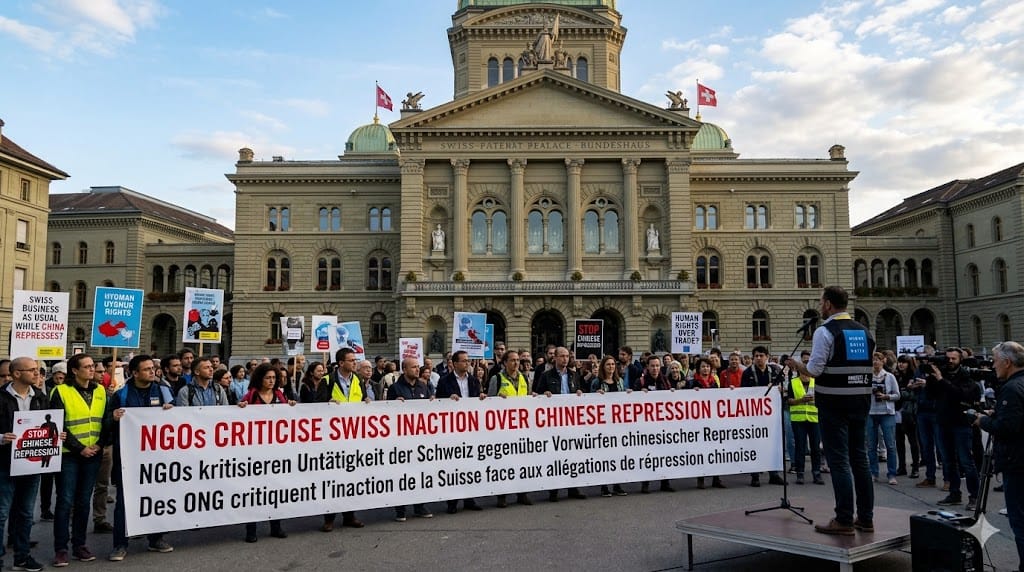
NGOs Criticise Swiss Inaction Over Chinese Repression Claims

Human rights organisations have criticised Switzerland for failing to take concrete action against alleged transnational repression targeting Tibetan and Uyghur communities.

According to NGOs, including Voices, there has been little progress since the Federal Council acknowledged last year that individuals in Switzerland were being affected by pressure and surveillance linked to Chinese authorities.

Selina Morell, programme manager at Voices, expressed disappointment, stating that expectations for stronger protection measures have not been met. She noted that victims continue to face intimidation despite official recognition of the issue.

Experts describe this phenomenon as transnational repression, where governments attempt to influence or silence critics living abroad. Such actions can include surveillance, threats, and indirect pressure through family members.

Although there are no precise figures for incidents in Switzerland, observers report that the trend is increasing. Data from Freedom House indicates that at least 1,375 serious cases of transnational repression have been documented globally since 2014. These include incidents such as abductions, arbitrary detention, and physical assaults.

However, many forms of intimidation—such as monitoring and psychological pressure—are not included in these statistics, suggesting the true scale may be significantly higher.

The issue continues to raise concerns about the protection of human rights within Switzerland and the country’s response to international political pressures.