Switzerland to Align with EU on Migrant Return Centres Abroad.

Switzerland is set to follow new European Union (EU) migration rules that allow for the creation of migrant return centres outside Europe for rejected asylum seekers. As part of the Schengen area, Switzerland is required to align its national laws with the evolving EU migration framework.

A deal reached in Brussels will introduce measures aimed at speeding up deportation procedures and improving coordination among member states. Countries that choose to participate will be allowed to establish centres in third countries to host individuals whose asylum applications have been rejected.

According to Switzerland’s State Secretariat for Migration (SEM), the country will have up to two years to integrate the new rules into national legislation. The proposal will be reviewed by the Swiss Parliament and may also be subject to an optional referendum.

However, the implementation of such centres depends on whether suitable partner countries agree to host them. These centres could serve either as final destinations or temporary holding locations before migrants are transferred to their country of origin or another third state. All arrangements must comply with international human rights standards.

The European Council has stated that families may also be placed in these centres, although unaccompanied minors will be exempt under the current framework. Discussions are still ongoing regarding potential host countries and operational structures.

Swiss authorities have indicated that any participation will depend on legal compliance, international agreements, and parliamentary approval. The issue is expected to generate political debate within Switzerland as migration policy remains a sensitive national topic.


Polish President Visits Switzerland in Bern Ceremony.

Polish President Karol Nawrocki receives full military honours during an official visit to Switzerland in Bern on Wednesday. Swiss leaders welcome him at Parliament Square, highlighting strong diplomatic and economic relations between the two countries.

President Nawrocki states that relations between Poland and Switzerland remain “of very high quality,” while Swiss officials confirm that cooperation between Bern and Warsaw has “never been better.”

Both nations focus discussions on strengthening economic ties, with Poland emerging as Switzerland’s most important trading partner in Central Europe. In 2025, bilateral trade reaches nearly CHF 6.5 billion, reflecting growing commercial cooperation.

Switzerland continues to support Poland through its EU cohesion contribution, with Warsaw receiving around CHF 320 million. The funding supports infrastructure upgrades in medium-sized Polish cities and promotes research and innovation projects.

Swiss officials emphasize that improved infrastructure in Poland also benefits Swiss companies operating in the region. The visit reinforces long-term economic collaboration and political goodwill between the two European partners.

Swiss President Criticises EU Steel Tariffs as Harmful

Swiss President Guy Parmelin has strongly criticised new steel tariffs approved by the European Union, calling the measures “counterproductive” and harmful to European supply chains.

Speaking to Swiss public broadcaster SRF, Parmelin said he had already warned European Commission President Ursula von der Leyen that the tariffs could become an “own goal” for Europe.

The EU plans to introduce stricter protections for its steel sector starting July 1, including a major reduction in duty-free steel import quotas. Swiss steel producers are expected to be affected by the changes despite Switzerland’s close economic integration with European manufacturing industries.

Parmelin argued that Switzerland plays a crucial role in European industrial supply chains, particularly in sectors such as aerospace and advanced manufacturing. He warned that restricting Swiss steel imports could negatively impact European companies that depend on Swiss materials and components.

The Swiss government and the European Commission are now expected to negotiate updated import quotas through the framework of the World Trade Organization.

The Swiss president also expressed frustration over new EU rules concerning unemployment benefits for cross-border workers. Under the proposed regulation, unemployed cross-border workers would receive benefits from the country where they last worked instead of their country of residence.

According to Switzerland’s State Secretariat for Economic Affairs (SECO), the change could cost Switzerland up to CHF900 million annually. Parmelin described the move as unhelpful and said he was surprised that the EU had raised several sensitive issues while Switzerland and the EU were still discussing broader agreements on bilateral relations.

At the same time, Switzerland’s trade discussions with the United States are also facing difficulties. Parmelin noted that uncertainty surrounding a recent US Supreme Court decision on presidential tariff powers has complicated negotiations between Bern and Washington.

Swiss officials are still awaiting a formal response from the US regarding Switzerland’s trade proposals. Analysts say the situation highlights the increasing pressure facing Switzerland as it navigates complex trade relationships with both the EU and the United States.

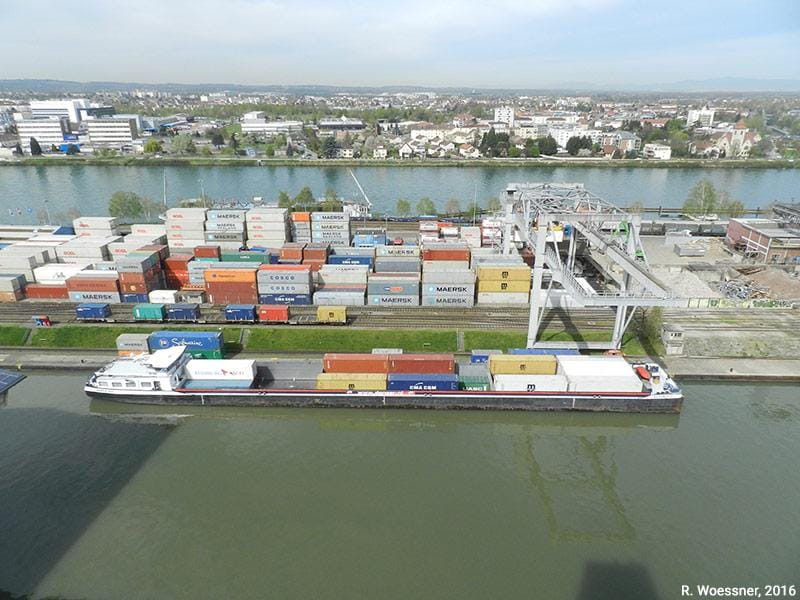
Switzerland Joins Rhine Transport Network.

The agreement was finalized through the signing of the European Corridor Management Agreement (ECMA) by Port of Switzerland (SRH) during a meeting of the European River Information Services (EuRIS) in Basel.

The EuRIS platform provides real-time shipping information including traffic conditions, waiting times, route disruptions, and navigation updates. Swiss authorities say the move will improve coordination and logistics efficiency across the Rhine corridor.

With Switzerland’s participation, all sections of the Rhine River are now integrated into the European system, creating more complete cross-border transport monitoring for commercial shipping operators.

Swiss waterway data is expected to become available on the platform in the coming months. The EuRIS system was launched in 2022 and currently connects over 29,500 kilometres of European waterways across 13 countries.

Switzerland’s three Rhine ports with direct access to the sea are located in Basel, Birsfelden, and Muttenz. These ports play a major role in the country’s freight transport infrastructure.

According to the SRH, around 80 port companies rely on the Rhine ports to manage goods transport by rail and road, as well as storage and logistics operations.

In addition to infrastructure management, Swiss Rhine authorities are responsible for overseeing navigation safety and ensuring compliance with both national and international shipping regulations.

The agreement highlights Switzerland’s growing integration into European transport coordination systems and reinforces the importance of the Rhine as a strategic trade route for the continent.

France Demands Switzerland Reform Cross-Border Jobless Benefits System

France is increasing pressure on Switzerland to reform unemployment benefit rules for cross-border workers following a new agreement between Switzerland and the European Union.

French Labour Minister Jean-Pierre Farandou urged Switzerland to accelerate implementation of the revised system, which would shift responsibility for unemployment payments to the country where a person works rather than where they live.

Under the current arrangement, France pays unemployment benefits to many French residents employed in Switzerland after they lose their jobs.

French officials argue that this system creates a major financial burden for neighbouring countries with large numbers of cross-border commuters.

Speaking before the French parliament, Farandou stated that France currently loses around €860 million annually under the existing rules.

He noted that a timetable for implementation has already been agreed with Luxembourg and stressed that Switzerland must also comply with agreements linked to the European Union.

The reform proposal follows nearly a decade of negotiations between EU member states and aims to modernise rules affecting thousands of cross-border workers across Europe.

However, Swiss authorities have raised concerns about the financial impact of the changes.

According to estimates from the State Secretariat for Economic Affairs (SECO), Switzerland could face additional annual costs ranging between CHF600 million and CHF900 million if the new rules are implemented.

The issue is particularly significant for border regions where many residents commute daily between France and Switzerland for work.

Analysts say the debate could become an important topic in future Switzerland-EU relations and labour market negotiations.

The proposed reform highlights the growing economic and political challenges surrounding cross-border employment in Europe as governments seek fairer distribution of social welfare costs.