


Britain Faces Growing Food Crisis Warning.

Food experts warn that Britain is moving toward a major food crisis driven by extreme weather, rising inflation, and global geopolitical tensions. Industry leaders say the government must act urgently to strengthen national food security before conditions worsen.

Farmers across the UK are struggling through severe heatwaves after an unusually dry spring. High temperatures are reducing crop yields, stressing livestock, and increasing wildfire risks. Experts believe the economic damage could reach hundreds of millions of pounds.

Food inflation already continues to pressure British households. Analysts predict food prices could become 50% higher this November compared to levels seen five years ago. Ongoing climate disruptions and supply chain instability are expected to worsen the situation further.

The conflict involving Iran also adds pressure on global fuel and fertiliser markets. Experts warn that disruptions near the Strait of Hormuz continue to affect international trade routes, increasing costs for farmers and food producers worldwide.

A coalition of food policy experts has written to UK ministers demanding an updated national food strategy. The group calls for stronger domestic food production, better protection against supply chain shocks, and improved public access to affordable and healthy food.

Food policy specialist Tim Lang criticises the government for treating the crisis as “business as usual.” He warns that climate change, inflation, and geopolitical instability are creating long-term risks to national food security.

Retired General Richard Nugee also describes food security as a major national security issue. He says supply disruptions and rising living costs could increase public frustration if the government fails to maintain stable and affordable food supplies.

Experts now urge Britain to prepare for a future shaped by extreme weather, global instability, and increasing pressure on agricultural systems.
Swiss Study Shows Wars Can Alter Groundwater and Water Systems

A new Swiss academic study has revealed that armed conflicts can significantly alter underground water systems and groundwater dynamics, reshaping how water resources behave in war-affected regions.

Research conducted at the University of Neuchâtel shows that large-scale population displacement and abandoned agricultural activity can directly influence groundwater recharge patterns.

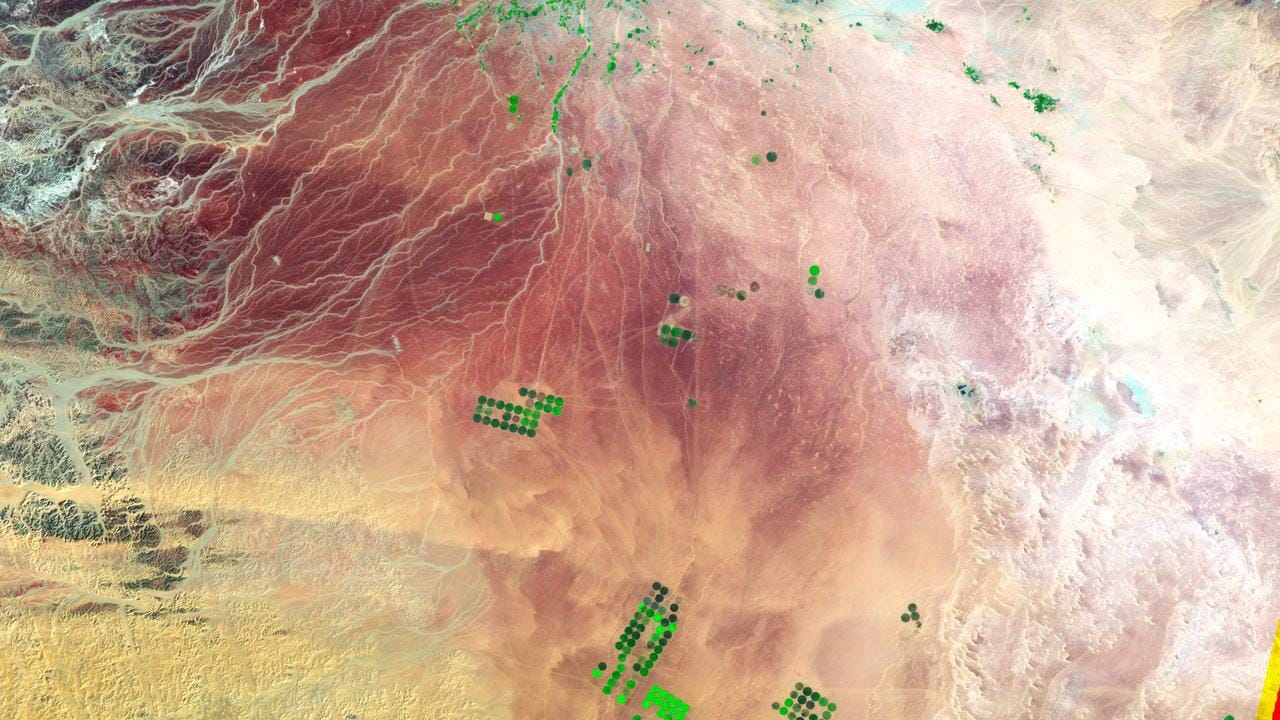
Doctoral researcher Saeed Mhanna observed unexpected changes in an underground water system in a Syrian river basin, using satellite-based InSAR technology to study areas that are otherwise inaccessible due to ongoing conflict.

The findings suggest that when populations are forced to leave farmland during war, the cessation of irrigation allows groundwater levels to partially recover. In some locations, the soil surface even rose by up to 4 cm per year due to changes in underground pressure.

The study highlights how the invisible nature of aquifers makes wartime water assessment extremely difficult, especially when field access is restricted. Satellite data and indirect measurement techniques were therefore combined to analyze changes in water storage and recharge.

Beyond Syria, the research also examined the impact of the Kakhovka dam collapse in Ukraine in 2023. The study found that the destruction of the dam drastically disrupted the regional hydrological system along the Dnieper River.

Researchers estimate that the volume of water lost to the Black Sea after the dam’s collapse was roughly equivalent to the capacity of Lake Geneva, though with a significant margin of uncertainty.

The study demonstrates that modern satellite monitoring can play a crucial role in identifying damaged water infrastructure, tracking groundwater depletion, and detecting unexpected water recovery in conflict zones.

Experts say these insights could help governments and aid organizations prioritize emergency repairs, protect critical water infrastructure such as wells and pipelines, and improve humanitarian response in war-affected regions.

The research highlights the growing importance of space-based environmental monitoring in understanding how human conflicts reshape natural water systems over time.