

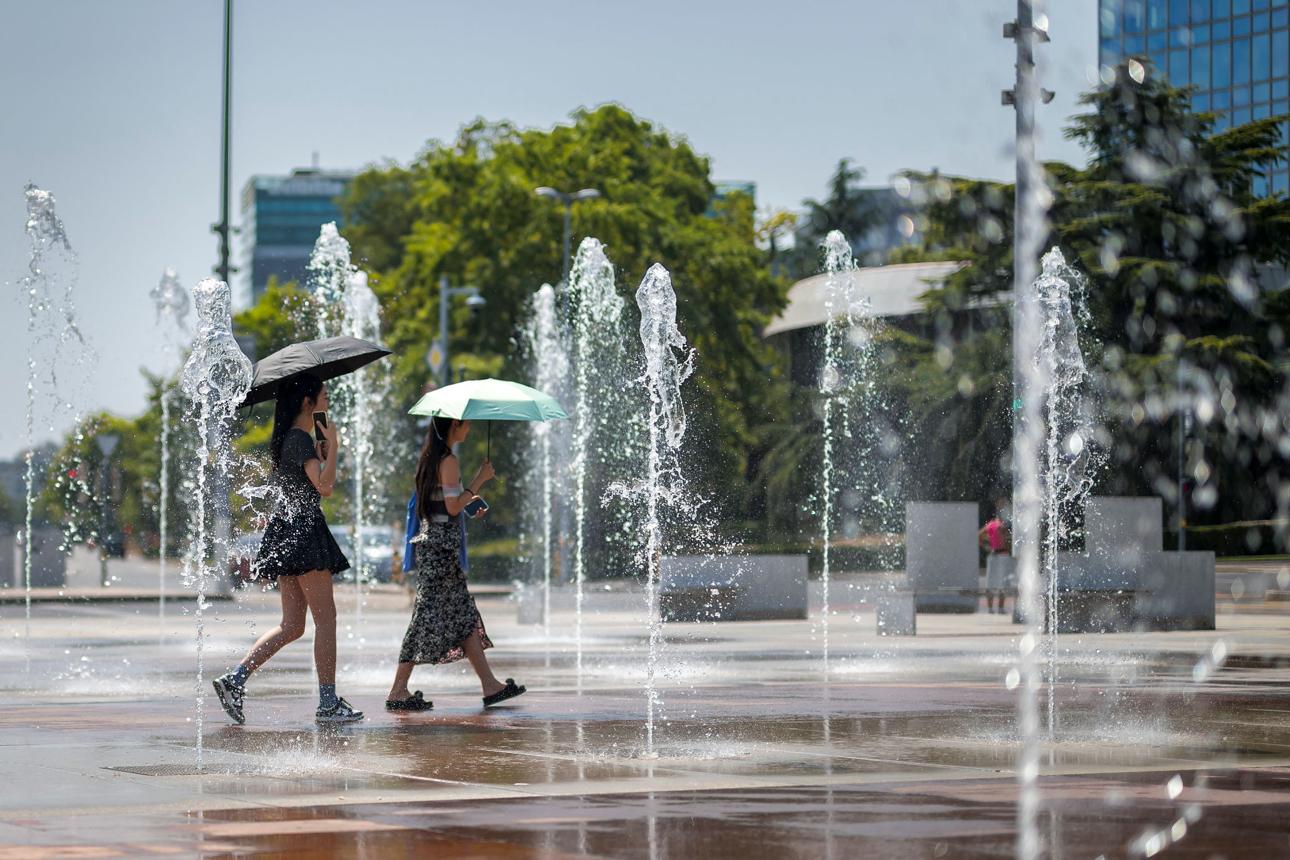
Switzerland Records Fourth Hottest May Since 1864 Amid Severe Dry Conditions

Switzerland is set to record its fourth hottest May since weather records began in 1864, according to the national meteorological service MeteoSwiss. The country is also experiencing unusually dry conditions across many regions.

Temperature Above Average

Meteorological data shows that temperatures in May 2026 have been approximately 1.8°C above the long-term average. The nationwide average daily temperature has reached 10.7°C so far this month.

Early rainfall at the beginning of May was not sufficient to compensate for a significant precipitation deficit that has developed since March.

Severe Rainfall Deficit

Rainfall levels across Switzerland have dropped sharply, with only around 56% of the average precipitation recorded nationally. In some regions, rainfall has fallen to just 40% of normal levels.

Canton Graubünden and the Engadine region have been particularly affected, receiving less than half of their typical rainfall.

Comparison With Historic Droughts

Experts note that current conditions resemble historic drought years such as 1944 and 1976. The ongoing spring season is also expected to rank among the driest since modern records began in 1901.

Government Weather Alert

The Swiss government has issued a Level 2 drought alert, currently affecting the Alps and eastern Plateau regions. Authorities classify this as a mild drought, with no immediate improvement expected in the short term.

Early Heatwave Conditions

Switzerland has already experienced early heatwave conditions, with temperatures exceeding 30°C in several regions. In Ticino and parts north of the Alps, temperatures have climbed above 34°C.

In Valais, the temperature reached 34.2°C in Sion, marking one of the earliest intense heat events of the season.

Impact on High Altitudes

Even high mountain regions have been affected. The 0°C isotherm rose to 4,328 metres above sea level during Whitsun weekend, making it one of the highest recorded levels for May.

Climate Change Influence

Meteorologists highlight that climate change is influencing seasonal patterns in Switzerland. Heatwaves are occurring earlier, lasting longer, and affecting higher altitudes with increasing intensity.

The Federal Office of Meteorology and Climatology warns that such extreme conditions are becoming more frequent across the Alpine region.


Britain Faces Growing Food Crisis Warning.

Food experts warn that Britain is moving toward a major food crisis driven by extreme weather, rising inflation, and global geopolitical tensions. Industry leaders say the government must act urgently to strengthen national food security before conditions worsen.

Farmers across the UK are struggling through severe heatwaves after an unusually dry spring. High temperatures are reducing crop yields, stressing livestock, and increasing wildfire risks. Experts believe the economic damage could reach hundreds of millions of pounds.

Food inflation already continues to pressure British households. Analysts predict food prices could become 50% higher this November compared to levels seen five years ago. Ongoing climate disruptions and supply chain instability are expected to worsen the situation further.

The conflict involving Iran also adds pressure on global fuel and fertiliser markets. Experts warn that disruptions near the Strait of Hormuz continue to affect international trade routes, increasing costs for farmers and food producers worldwide.

A coalition of food policy experts has written to UK ministers demanding an updated national food strategy. The group calls for stronger domestic food production, better protection against supply chain shocks, and improved public access to affordable and healthy food.

Food policy specialist Tim Lang criticises the government for treating the crisis as “business as usual.” He warns that climate change, inflation, and geopolitical instability are creating long-term risks to national food security.

Retired General Richard Nugee also describes food security as a major national security issue. He says supply disruptions and rising living costs could increase public frustration if the government fails to maintain stable and affordable food supplies.

Experts now urge Britain to prepare for a future shaped by extreme weather, global instability, and increasing pressure on agricultural systems.

Switzerland Faces Early Heatwave Over 30°C.

Switzerland has experienced its first short heatwave of the year during the Whitsun weekend, with daytime temperatures rising above 30°C across several regions.

However, according to the Federal Office of Meteorology and Climatology MeteoSwiss, the event does not officially qualify as a heatwave. In Switzerland, a heatwave is only declared when the average daily temperature reaches 25°C or more for at least three consecutive days.

Meteorologists emphasize that the key factor is the 24-hour average temperature, which includes cooler nighttime and morning hours. Although daytime temperatures exceeded 30°C at multiple stations, the overall daily averages remained below the official threshold.

At the Basel-Binningen station, temperatures reached 31°C, but the average daily temperature was recorded at 22.9°C. Similarly, in Sion, temperatures peaked at 32.4°C, while the average remained around 23°C.

Despite this, both locations officially recorded “hot days,” as temperatures crossed the 30°C mark during peak hours. However, this alone is not sufficient to classify the event as a full heatwave.

Experts highlight that nighttime cooling plays a crucial role in reducing health risks. When nights remain cooler, the human body and cardiovascular system are able to recover, reducing stress caused by prolonged heat exposure.

MeteoSwiss also noted that such early-season heat is unusual but not unprecedented. Historical records show that the earliest hot days in Switzerland were recorded in May 1945 in Basel and May 1958 in Sion.

On average, Switzerland’s first hot day typically occurs in June, around June 7 in Sion and June 9 in Basel-Binningen, indicating that this year’s warm spell arrived earlier than usual but remains within natural variability.