

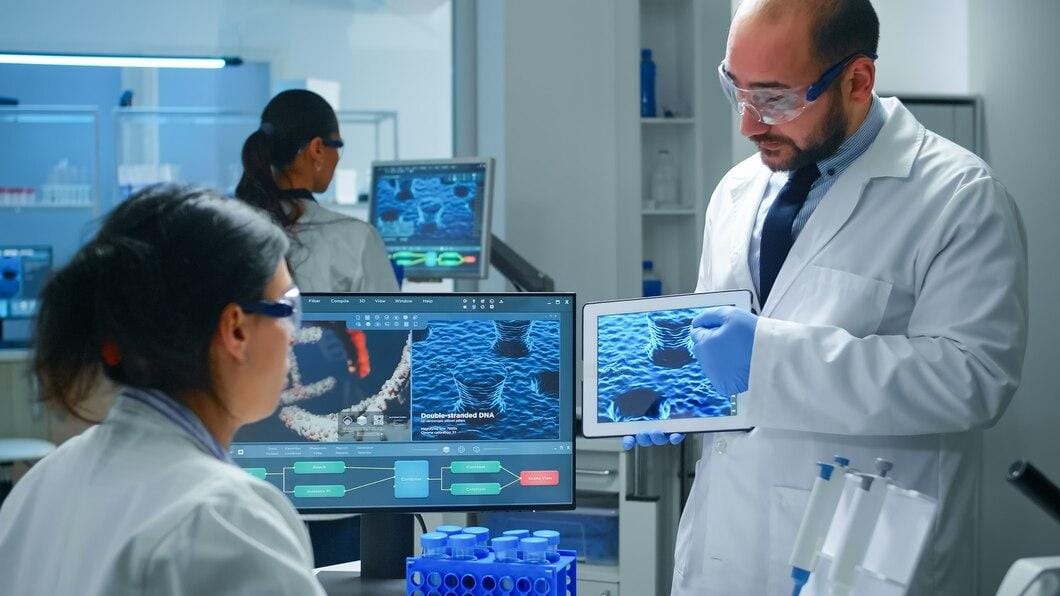
Roche Invests $700M in Cancer Drug Deal.

Swiss pharmaceutical leader Roche has entered a major partnership with California-based Nurix Therapeutics, committing $700 million to support the development of an experimental cancer treatment known as bexobrutideg. The agreement strengthens Roche’s position in the rapidly growing oncology market and highlights its continued focus on innovative cancer therapies.

Bexobrutideg is currently being developed as a treatment for chronic lymphocytic leukemia (CLL), one of the most common forms of blood cancer. The drug is expected to enter its final phase of clinical development later this year, bringing it one step closer to potential regulatory approval.

Researchers are also exploring the therapy’s potential use in treating B-cell lymphomas, as well as applications in neurology and immunology. This broader scope could significantly increase the medicine’s future commercial and medical value.

The collaboration agreement could eventually be worth as much as $2.3 billion if specific development and commercial milestones are achieved. Under the terms of the deal, Roche and Nurix will share profits and losses equally within the United States market.

Outside the United States, Nurix will receive royalty payments ranging from 10% to 20% of Roche’s revenue generated from the treatment. Roche will also assume responsibility for 60% of future development costs associated with the drug.

Industry analysts view the partnership as a strategic investment in a rapidly expanding healthcare sector. Roche estimates that the combined market for chronic lymphocytic leukemia and non-Hodgkin lymphoma treatments could reach approximately $41 billion by 2031. Within that market, therapies targeting Bruton’s tyrosine kinase are expected to account for nearly $19 billion.

The agreement demonstrates Roche’s commitment to advancing next-generation cancer treatments and expanding its oncology portfolio. If successful, bexobrutideg could provide new treatment options for patients while strengthening Roche’s leadership position in the global pharmaceutical industry.

As demand for innovative cancer therapies continues to grow worldwide, partnerships between major pharmaceutical companies and biotechnology firms are becoming increasingly important in accelerating medical breakthroughs and improving patient outcomes.
Swiss Scientists Develop New Gene Clock.

An international research team with Swiss participation has developed advanced “gene clocks” capable of measuring biological age and predicting lifespan in real time. The breakthrough study could transform future ageing research and health monitoring.

Scientists analysed more than 11,000 tissue samples collected from mice, rats, macaques, and humans. Researchers discovered that molecular ageing patterns inside the transcriptome remain remarkably similar across species and cell types.

The study reveals that ageing activates genes linked to inflammation, cell damage, and programmed cell death. At the same time, genes responsible for tissue repair, wound healing, and regeneration become less active as the body grows older.

Using this data, researchers created highly dynamic transcriptome clocks that can measure biological ageing more accurately. To validate the technology for humans, scientists tested the system using data from over 50,000 participants in the UK Biobank.

Experts say the new gene clocks perform similarly to modern epigenetic ageing clocks already used in scientific research. However, transcriptome clocks offer a major advantage because they respond quickly to changes happening inside cells in real time.

Researchers believe this technology could help scientists evaluate the effectiveness of anti-ageing treatments, diets, and medicines much faster than current methods. The discovery may open new opportunities in personalised healthcare and longevity research.

The study involved ETH Zurich researcher Adrian Molière and was led by Harvard Medical School scientist Vadim Gladyshev.

Geneva Scientists Advance Diabetes Cure.

Scientists at the University of Geneva have announced a major breakthrough that could pave the way toward an insulin-free future for patients with type 1 diabetes.

Researchers from University of Geneva and Geneva University Hospitals have developed an innovative hydrogel called Amniogel, which has shown promising results in preclinical tests on mice.

The study, led by Professor Ekaterine Berishvili, focuses on improving the survival and function of insulin-producing cells after transplantation into the body. Traditional pancreatic islet transplants often face challenges such as immune rejection, inflammation, and poor blood supply, especially when placed in the liver.

Amniogel, derived from human amniotic membrane, helps create a supportive microenvironment for transplanted cells. It promotes the formation of a microvascular network before transplantation, allowing better integration with the host’s bloodstream.

Researchers say this “protective environment” enables the transplanted cells to function effectively and maintain normal blood glucose levels.

In experiments involving diabetic mice, small grafts using the hydrogel maintained stable blood sugar levels for at least 100 days without the need for external insulin injections.

This marks a significant step forward in the development of a bioartificial pancreas, a long-term goal in diabetes research aimed at reducing or eliminating the need for daily insulin therapy.

The next phase of research will focus on scaling up the technology, increasing graft size and quantity, and preparing for potential human clinical trials.

Beyond diabetes treatment, scientists believe the hydrogel platform could be adapted for other types of cell-based therapies, potentially opening new possibilities in regenerative medicine.