

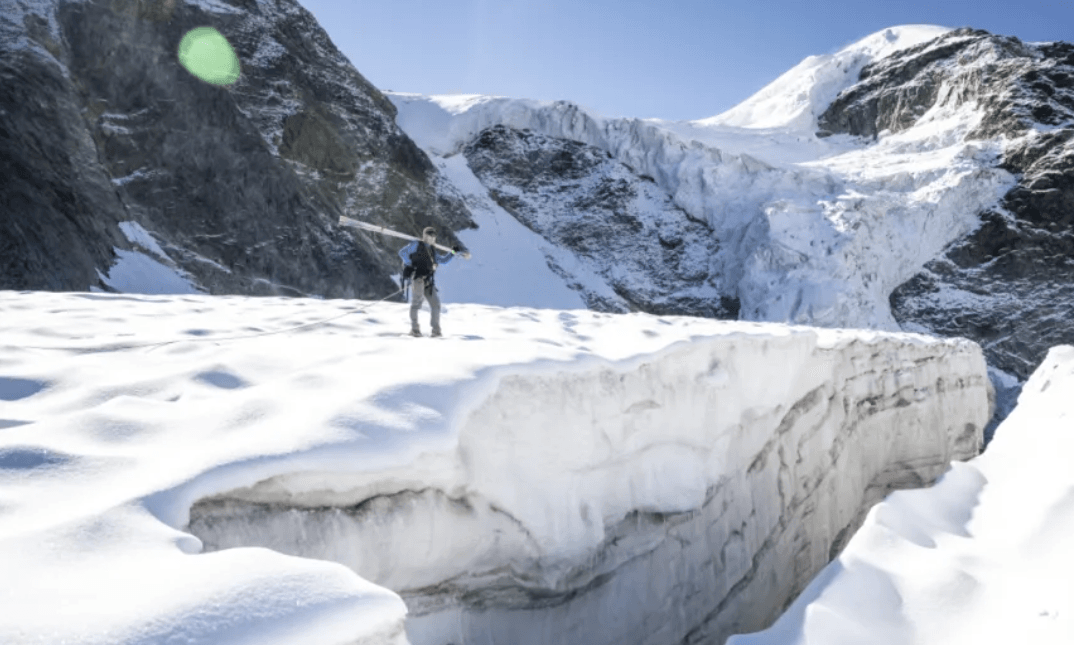

Swiss Glaciers Record Major Snow Deficit Across Regions
Glaciers across Switzerland are experiencing a significant snow deficit this winter, raising concerns about accelerated melting during the upcoming summer season.
According to the Swiss Glacier Monitoring Network, snowfall levels were substantially below average across several key regions, including Upper Valais, Ticino, and Graubünden.
The monitoring organization reported that winter 2025–26 shows an average 25% snow deficit compared to the 2010–2020 baseline.
GLAMOS collected measurements from 25 glaciers across Switzerland during April, revealing that a warm and unusually dry spring contributed heavily to reduced snow accumulation.
Some regions, such as the Bernese Oberland and central Valais, were less affected and remain closer to long-term seasonal averages. However, other glacier zones show clear signs of reduced snowpack.
Experts warn that low winter snow cover is critical because it acts as a protective layer that slows glacier melt during warmer months. Without sufficient snow insulation, glaciers absorb more heat and lose mass more rapidly.
Scientists now expect that the reduced snow cover could intensify glacier retreat in 2026, continuing the long-term trend of ice loss observed across the Swiss Alps.
Switzerland’s glaciers have already been shrinking for decades due to rising temperatures, and this winter’s deficit may further accelerate the process.
Climate researchers emphasize that continued monitoring is essential to understand how extreme weather patterns are impacting alpine ice reserves.