Strong Call in Switzerland to Protect Sri Lanka’s Local Farmers Through Higher Import Taxes.

A strong appeal has been made in Switzerland urging the Government of Sri Lanka to take urgent action to protect its local agricultural sector by increasing import taxes on essential food items.

During an official visit by Sri Lankan Prime Minister Harini Amarasuriya, a Sri Lankan expatriate entrepreneur presented a significant proposal focusing on strengthening domestic agriculture and reducing dependency on imports.

The proposal highlighted that essential commodities such as rice, potatoes, big onions, small onions, and dried chillies can be sufficiently produced within Sri Lanka. Therefore, increasing import duties on these goods would help stabilize local market prices and ensure better demand for domestic farmers.

Supporters of the proposal emphasized that restricting unnecessary imports would also help preserve the country’s valuable foreign exchange reserves, reducing pressure on Sri Lanka’s economy.

This viewpoint aligns with concerns previously expressed by several Northern Province representatives, including Members of Parliament who have spoken publicly about controlling rice imports to protect local producers.

However, the expatriate community stressed that such concerns should not remain only as political discussions or media statements. Instead, they urged that the policy should be formally debated in Parliament and enacted as a legally binding framework.

They further stated that only a structured import taxation policy can guarantee long-term protection for farmers, ensuring fair pricing, stable demand, and sustainable agricultural growth in Sri Lanka.


Switzerland Faces Call to Scrap OECD Minimum Tax.

A new study from the University of St. Gallen (HSG) urges Switzerland to abolish the OECD minimum tax, arguing that the system is outdated, legally uncertain, and economically harmful for the country’s competitiveness.

Professor Peter Hongler from HSG’s Institute of Law and Economics stated that global conditions have changed significantly since Switzerland’s 2023 referendum approval. He emphasized that the tax no longer serves its original purpose and now creates more risks than benefits for Switzerland’s business environment.

The study highlights that Switzerland introduced the OECD minimum tax in 2024 expecting widespread global adoption. However, only around 33 countries have fully implemented the rules so far, far below the expected 140 nations.

Researchers also warn that the absence of major economies, including the United States, has weakened the global effectiveness of the policy. According to the report, the framework has shifted from a global agreement into what is effectively an EU-centered initiative.

The study concludes that Switzerland should reconsider its participation, as the current system may reduce investment attractiveness and create unnecessary fiscal and legal exposure.

Financial Pressure Growing Among Switzerland’s Middle Class.

Financial pressure is increasing for many middle-class families in Switzerland, according to new data released by the Federal Statistical Office.

Although the majority of people in Switzerland are classified as middle income, many households are struggling with financial insecurity and rising living costs.

The Federal Statistical Office reported that around one in four people in the lower middle class would be unable to cover an unexpected expense of CHF 2,500 (approximately $3,200).

The findings are based on Switzerland’s household budget survey and research into income and living conditions.

According to the FSO, approximately 4.9 million people in Switzerland belonged to the middle-income category in 2024.

The classification includes single adults earning between CHF 4,228 and CHF 9,061 per month, as well as couples with two children earning a combined gross monthly income between CHF 8,800 and CHF 19,028.

However, the data show that financial difficulties are especially severe among the lower middle class, which represents roughly 2.3 million residents.

This category includes single individuals earning below CHF 6,041 monthly and families with two young children earning less than CHF 12,685 combined income.

Experts say rising housing costs, healthcare expenses, inflation, and everyday living costs continue to place increasing pressure on middle-income households across Switzerland.

The report highlights growing concerns over financial vulnerability even among people traditionally considered economically stable.

Economists warn that continued increases in living expenses could further weaken household purchasing power and long-term financial security for many Swiss residents.

Switzerland Continues US Trade Talks Despite Tariff Court Ruling.

The Switzerland government says it will continue trade negotiations with the United States despite a recent US court ruling against tariffs introduced under former President Donald Trump.

According to Swiss officials, reaching a long-term trade agreement with the United States remains a top priority for the Swiss Federal Council.

The statement came after a US trade court ruled on Thursday that the latest 10% temporary global tariffs introduced under Trump’s trade policy were unjustified under a 1970s trade law.

However, Swiss authorities stressed that the ruling will not affect the ongoing Swiss-US trade discussions.

A spokesperson for the Swiss economics ministry stated that the main objective of the negotiations is to secure fair and non-discriminatory access for Swiss companies to the American market.

Swiss officials also highlighted the importance of long-term legal certainty and stable trade conditions for businesses operating internationally.

The US court decision reportedly blocks the tariffs only for two private importers and the State of Washington, meaning broader tariff policies remain under legal and political debate.

Economic experts say Switzerland is seeking stronger economic ties with the US to protect exports, investment opportunities, and market competitiveness.

The United States remains one of Switzerland’s most important trading partners, especially in sectors such as pharmaceuticals, finance, machinery, and technology.

Both countries are expected to continue negotiations as global trade tensions and tariff disputes continue to shape international economic policy.

Monaco Fines UBS €6 Million Over Money Laundering Failures.

UBS has been fined €6 million by Monaco’s financial watchdog over serious failures linked to anti-money laundering and counter-terrorism financing controls.

The penalty was imposed by the Monegasque Financial Security Authority, which accused the Swiss banking giant’s Monaco subsidiary of multiple compliance breaches between 2018 and 2023.

According to the regulator, UBS failed to maintain effective internal controls and did not adequately meet legal obligations related to identifying high-risk clients and monitoring suspicious financial activity.

The AMSF stated that the repeated nature of the shortcomings demonstrated a broader failure within the institution’s compliance system.

Investigators found delays in reporting suspicious transactions and weaknesses in the preparation of the bank’s overall risk assessments.

The regulator also criticized UBS for failing to properly verify customer identities, income sources, and beneficial ownership structures — especially in complex corporate arrangements involving multiple ownership layers.

Authorities noted that more than half of UBS Monaco’s client base was classified as medium to very high risk, increasing the importance of strict compliance procedures.

The case highlights growing international pressure on major financial institutions to strengthen anti-money laundering systems and improve transparency in global banking operations.

Switzerland’s banking sector has faced increased scrutiny in recent years regarding financial crime prevention, transparency standards, and international regulatory compliance.

The fine adds to broader concerns across Europe about illicit financial flows, hidden ownership structures, and the role of global banks in preventing money laundering activities.

Global Gold Prices Surge Sharply in International Market.

Global gold and silver prices recorded a sharp increase in the international market today (March 29, 2026). This sudden surge reflects growing investor demand and ongoing economic uncertainty across global financial markets.

According to the latest reports, the price of one ounce of gold has reached $4,493.79, marking a significant rise compared to previous trading sessions. Analysts state that geopolitical tensions and inflation concerns continue to drive investors toward safe-haven assets like gold.

At the same time, silver prices also experienced a strong upward movement. One ounce of silver is currently trading at $69.77, showing increased demand in both industrial and investment sectors.

Over the past few days, domestic gold prices have fluctuated due to these global trends. Experts predict that jewelry gold prices may continue to change in the coming days, especially as international market volatility remains high.

Furthermore, economists highlight that currency fluctuations and global trade uncertainty play a major role in influencing precious metal prices. As a result, both investors and consumers are closely monitoring market developments.

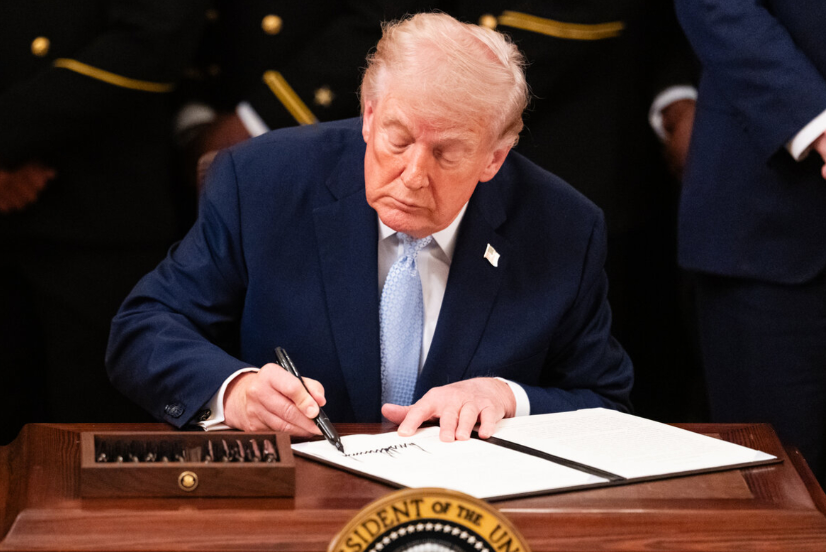
Trump Signature on US Dollar

Traditionally, US dollar banknotes carried only the signatures of the Treasury Secretary and the Treasurer of the United States. However, the new policy allows a president’s signature to appear on national currency for the first time. As a result, the announcement represents a historic shift in the presentation of American currency. Political observers believe the administration introduced this change to highlight confidence in the strength of the US economy. In addition, the decision comes during a period of global economic pressure and geopolitical tension. Therefore, officials see the move as a strong symbolic statement.

According to Treasury officials, the new design will first appear on $20 and $100 dollar notes. Later, authorities plan to expand the update to other denominations step by step. Meanwhile, existing currency notes will remain valid across the United States. The announcement has already created strong reactions nationwide. Some citizens support the decision as a bold leadership signal. However, others criticize the move as a break from long-standing institutional tradition. Consequently, economists and political analysts continue to debate the long-term impact of the decision.