
Switzerland Advances Hezbollah Ban as Hamas Restrictions Expand.

Switzerland is moving forward with plans to ban the Lebanese group Hezbollah while also extending its existing ban on Hamas from five years to ten years. The latest measures mark a significant development in Swiss security and counterterrorism policy.

The Swiss government announced on Friday that it has launched a consultation process on a draft law that would officially prohibit Hezbollah activities in Switzerland. The move follows a directive from parliament, which approved motions targeting both Hamas and Hezbollah at the end of 2024.

The consultation period will remain open until October 5, allowing political parties, organizations, and other stakeholders to provide feedback before the legislation moves forward.

Hamas Ban Set for Extension

The ban on Hamas has been in force in Switzerland for the past year. Under the new proposal, the duration of the restriction would be extended from five years to ten years.

Swiss authorities previously justified the Hamas ban by citing the unprecedented terrorist attacks carried out against Israel on October 7, 2023. The government described the measure as an exceptional response to extraordinary circumstances.

Switzerland Balances Security and Neutrality

The Swiss government has repeatedly stated that organization bans should remain rare exceptions. Officials have expressed concerns that creating formal lists of prohibited groups could affect Switzerland’s traditional role as a neutral mediator in international conflicts.

Switzerland has long been known for facilitating dialogue between opposing parties and hosting peace negotiations. According to the government, maintaining that diplomatic role remains an important consideration when introducing such measures.

Parliament Calls for Action Against Hezbollah

Despite reservations about expanding organizational bans, the government stated that it is legally required to implement parliament’s decision regarding Hezbollah.

Lawmakers voted in favor of banning the Lebanese group alongside Hamas, arguing that stronger legal tools are necessary to address security concerns and prevent support activities linked to militant organizations.

The outcome of the consultation process will determine the final structure of the legislation before it is presented for formal approval.

Why This Matters

The proposed Hezbollah ban and extension of the Hamas prohibition reflect Switzerland’s evolving approach to national security while attempting to preserve its international reputation for neutrality and mediation. The decisions could have implications for Swiss foreign policy, security cooperation, and future counterterrorism measures.
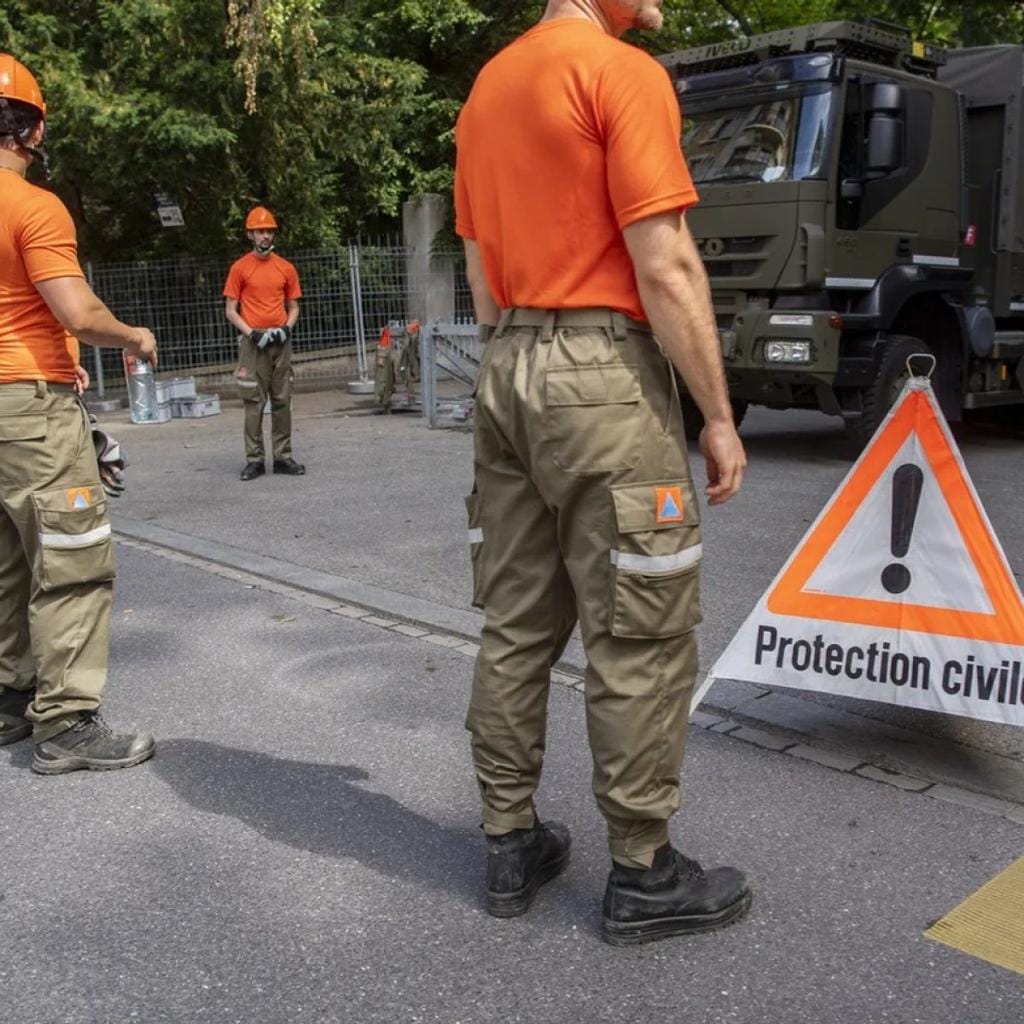

Swiss House Supports Role for Foreigners in Civil Defence

The Swiss House of Representatives has approved a proposal allowing foreign nationals with long-term residence permits to take on civil defence duties in Switzerland.

The motion passed with 120 votes in favour, 66 against, and two abstentions. It will now be forwarded to the Senate for further consideration.

The proposal was introduced by Martin Candinas of the Centre Party, who argued that expanding compulsory service obligations could help address staffing and funding challenges faced by civil defence organisations across the country.

Supporters of the motion also highlighted its potential contribution to social integration. Under the proposal, long-term foreign residents would be able to participate in civil protection duties in the same way as Swiss citizens, strengthening their involvement in public service and community safety.

In several municipalities, foreign residents are already required to take part in compulsory firefighting services, making this proposal an extension of existing local practices to a broader national level.

Proponents say the reform could improve operational capacity in civil defence services, while also reinforcing equality and shared responsibility among residents living in Switzerland.

The Senate will now review the proposal before any final decision is made on its implementation.

Swiss Parliament Approves Mandatory Electronic Prescriptions.

Switzerland is taking a major step toward digitalising its healthcare system after the Swiss parliament approved new rules making electronic prescriptions and medication plans compulsory.

The Senate passed the amendments to the Therapeutic Products Act on Thursday in an overwhelming vote of 33 to 1, signaling strong political support for the reform. The primary goal of the change is to improve patient safety and reduce medication errors.

Under the new regulation, healthcare professionals will be required to issue prescriptions exclusively in electronic form. This applies not only to prescriptions but also to medication plans used by patients and medical providers.

Authorities believe that the digital system will reduce the risk of incorrect drug dispensing and improve coordination between doctors, pharmacies, and other healthcare professionals. By enabling better information exchange, the system aims to make treatment more efficient and transparent.

Despite the shift to digital prescriptions, patients will still retain flexibility. Individuals will be able to request a printed copy of their electronic medication plan if needed, ensuring accessibility for those less comfortable with digital tools.

The reform is part of Switzerland’s broader effort to modernize its healthcare infrastructure and integrate digital solutions into everyday medical practice. Officials say this transformation is essential for improving efficiency, safety, and long-term system sustainability.

Health authorities also expect that digital prescriptions will help address challenges such as medicine shortages by improving tracking and coordination across the supply chain.

The new system marks a significant milestone in Switzerland’s healthcare digitalisation strategy and is expected to be implemented across the country in the coming years.

Swiss Parliament Rejects Return to Joint Taxation of Married Couples.

The Swiss Senate has rejected a proposal aimed at reintroducing joint taxation for married couples, following a closely contested vote that ended 24 to 21 in opposition.

The initiative, put forward by the Centre Party, sought to challenge the outcome of a nationwide referendum held in March, where Swiss voters supported a shift toward individual taxation by a 54.2% majority. That decision marked a major change in Switzerland’s tax system, ending the joint taxation model that has been in place since 1984.

Supporters of the Centre Party initiative argued that the current individual taxation system could disadvantage single-income households within marriages. They proposed an alternative model allowing couples to choose between joint or individual taxation, with tax authorities automatically applying the more favorable option.

The proposal also included a transitional framework giving parliament up to three years to implement a practical system. If no solution was reached within that timeframe, authorities would apply the alternative calculation method by default.

However, a majority in the Senate opposed the initiative, arguing that it would create unnecessary administrative complexity and significantly increase bureaucratic costs. Lawmakers also emphasized the importance of respecting the outcome of the recent popular vote, which clearly supported individual taxation.

Critics of the proposal, including members of the centre-right Radical-Liberal Party, stated that the system would be more expensive and difficult to administer compared to the newly approved tax model.

The rejection in the Senate follows a similar decision in the House of Representatives, reinforcing Switzerland’s move toward a fully individual taxation system for spouses.

Switzerland Opens Ukraine Reconstruction to Private Companies.

Switzerland has approved a new bilateral agreement that will allow private companies to participate in the reconstruction of Ukraine, marking a significant shift in its development cooperation approach.

Both chambers of the Swiss Parliament supported the agreement, which was originally signed in July 2025. The decision enables Swiss companies— including those not currently operating in Ukraine— to take part in rebuilding infrastructure in the war-affected country.

Under the new system, reconstruction projects will be managed through official tenders organised by Swiss authorities, based on requests from Ukrainian institutions. This ensures that projects are coordinated transparently while expanding opportunities for Swiss businesses in international development work.

The government noted that this form of “tied aid,” which links development assistance with domestic economic participation, required a legal basis because it does not fully align with existing Swiss development cooperation law.

Authorities also highlighted that financial risks, including corruption concerns, are reduced because funds will not be transferred directly to Ukrainian state bodies. Instead, payments will go directly to Swiss companies delivering approved projects.

The initiative reflects Switzerland’s broader effort to combine humanitarian support with economic engagement while contributing to Ukraine’s long-term reconstruction and stability.

Swiss Parliament Approves Funding for EU Research Programmes.

Switzerland has taken another important step in strengthening its position in international research and innovation. The Swiss Parliament approved CHF58.3 million in funding for European Union research programmes as part of a supplementary 2026 budget package worth nearly CHF90 million.

The funding will support Switzerland’s participation in major European research initiatives, including Horizon Europe and Euratom. Lawmakers emphasized that maintaining access to these programmes is crucial for Swiss universities, researchers, scientists, and technology companies that rely on international collaboration and advanced research networks.

Parliament reduced the government’s original request of CHF67.3 million by removing a reserve fund that was no longer necessary. Despite the reduction, the approved funding ensures Switzerland can continue contributing to and benefiting from some of the world’s largest research and innovation projects.

Supporters of the measure argued that Switzerland must remain connected to global scientific developments and avoid another period of exclusion from key European research platforms. They stressed that research cooperation plays a vital role in driving innovation, economic growth, technological advancement, and international competitiveness.

The budget supplement also includes additional funding for the European Space Agency, Swiss rail cargo services, and transportation infrastructure projects. The decision highlights Switzerland’s continued commitment to science, technology, and international research partnerships.

Swiss Committee Backs Double Majority for EU Deal.

A parliamentary committee in Switzerland has supported a proposal requiring a double-majority vote—both of the people and the cantons—for the approval of the upcoming Swiss–EU agreement package.

The proposal, backed by the House of Representatives’ Committee of Political Institutions, reflects growing political debate over how major international agreements should be ratified within Switzerland’s direct democratic system.

The committee approved the plan by 15 votes to 10, stating that the agreement’s importance and constitutional implications justify a higher level of democratic approval.

Under the proposed system, the bilateral agreements between Switzerland and the European Union would need not only a majority of voters but also a majority of cantonal approval to be adopted.

The idea aligns with Switzerland’s tradition of direct democracy, where major constitutional or highly significant national decisions often require approval from both citizens and cantons.

At the same time, lawmakers are also exploring an alternative approach known as a “sui generis” referendum model, which would be a unique voting mechanism tailored specifically for this agreement package. The committee has requested further examination of this option, which was supported by a 16–9 vote.

The debate highlights the political sensitivity surrounding Switzerland’s relationship with the European Union and the constitutional questions linked to future bilateral cooperation.