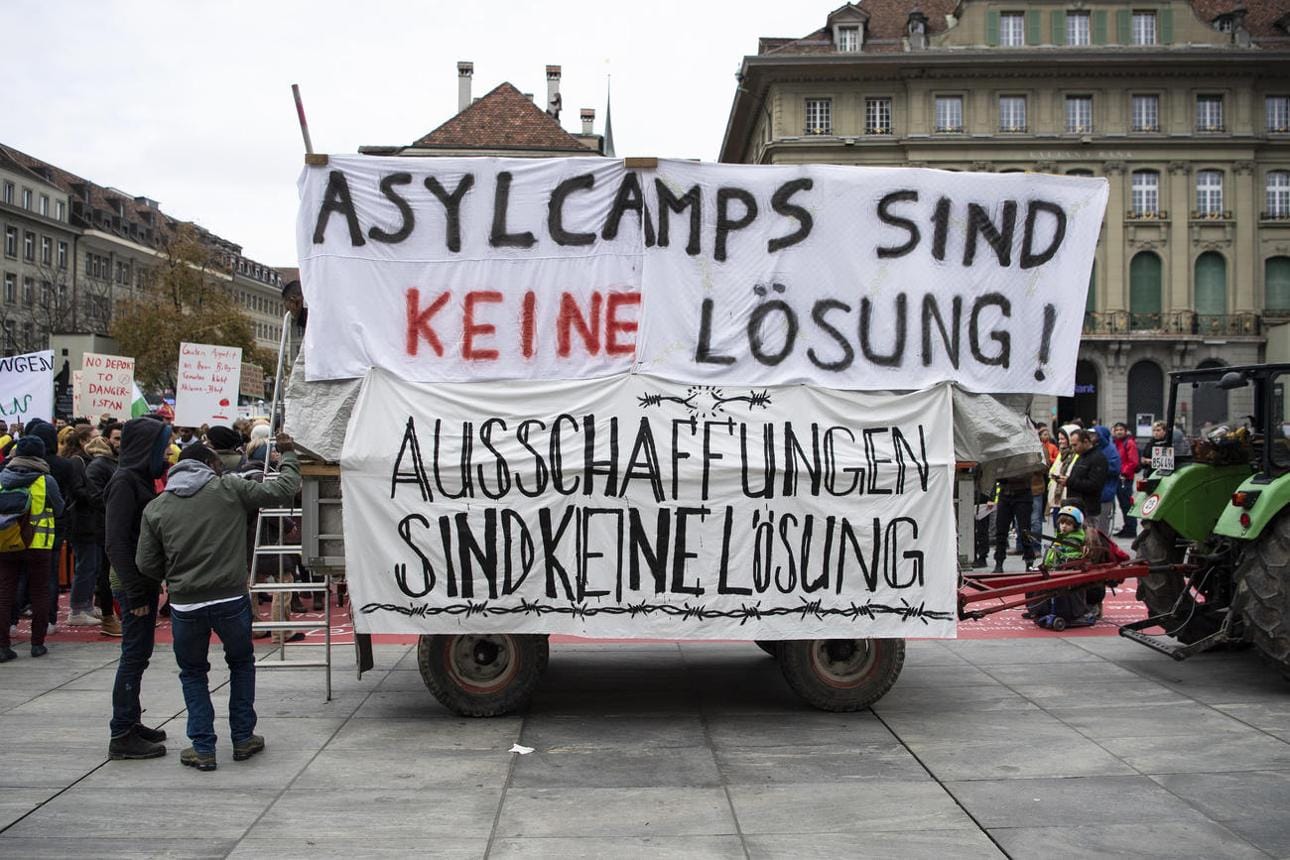
Tighter Asylum Criteria in Switzerland Trigger Political Division

A proposal to tighten asylum rules in Switzerland has sparked strong disagreement among political parties and organisations, highlighting deep divisions over migration policy.

A parliamentary committee has suggested introducing clearer and more restrictive criteria for determining when asylum seekers can be granted provisional admission or protected from deportation.

Proposal to Limit Deportation Exceptions

Under the draft legislation, the grounds for deeming deportation “unreasonable” would be strictly defined in law. The proposal aims to replace the current flexible wording in the Foreign Nationals and Integration Act, specifically removing open-ended phrases such as “in situations such as.”

Instead, only a limited set of conditions would qualify as valid reasons to prevent deportation. These include war, civil war, general violence, or serious medical emergencies.

By narrowing the legal framework, authorities would have less discretion in individual cases. Supporters argue that this would increase legal clarity and consistency in decision-making.

Political and Public Division

The proposal has created a clear split among political actors and organisations. Advocacy groups and several associations argue that the changes go too far and could weaken humanitarian protection standards in Switzerland.

On the other hand, the right-wing Swiss People’s Party (SVP) believes the proposal does not go far enough and has called for even stricter asylum regulations.

Cost Reduction and Policy Goals

One of the key objectives of the reform is to reduce the number of provisional admissions, which authorities say would help lower public costs associated with asylum procedures and long-term support.

The initiative is based on a parliamentary motion introduced by SVP politician Gregor Rutz, reflecting ongoing political efforts to reform Switzerland’s migration system.

Broader Debate on Migration Policy

The discussion comes at a time when asylum and migration remain highly sensitive topics in Swiss politics. Lawmakers continue to balance humanitarian obligations with domestic political pressure and administrative capacity.

The consultation phase on the draft proposal concluded on Friday, and further parliamentary debate is expected in the coming months before any final decision is made.

Swiss Parliament Approves Mandatory Electronic Prescriptions.

Switzerland is taking a major step toward digitalising its healthcare system after the Swiss parliament approved new rules making electronic prescriptions and medication plans compulsory.

The Senate passed the amendments to the Therapeutic Products Act on Thursday in an overwhelming vote of 33 to 1, signaling strong political support for the reform. The primary goal of the change is to improve patient safety and reduce medication errors.

Under the new regulation, healthcare professionals will be required to issue prescriptions exclusively in electronic form. This applies not only to prescriptions but also to medication plans used by patients and medical providers.

Authorities believe that the digital system will reduce the risk of incorrect drug dispensing and improve coordination between doctors, pharmacies, and other healthcare professionals. By enabling better information exchange, the system aims to make treatment more efficient and transparent.

Despite the shift to digital prescriptions, patients will still retain flexibility. Individuals will be able to request a printed copy of their electronic medication plan if needed, ensuring accessibility for those less comfortable with digital tools.

The reform is part of Switzerland’s broader effort to modernize its healthcare infrastructure and integrate digital solutions into everyday medical practice. Officials say this transformation is essential for improving efficiency, safety, and long-term system sustainability.

Health authorities also expect that digital prescriptions will help address challenges such as medicine shortages by improving tracking and coordination across the supply chain.

The new system marks a significant milestone in Switzerland’s healthcare digitalisation strategy and is expected to be implemented across the country in the coming years.

Switzerland Ranks Near Bottom in Europe for Tobacco Control.

Switzerland ranks among the worst-performing countries in Europe for tobacco control, according to a new report published by the Swiss Association for Tobacco Prevention (AT).

The index places Switzerland second from last out of 37 European countries assessed, highlighting significant gaps in smoking prevention policies compared to other nations.

Only Bosnia and Herzegovina scored lower in the ranking. Meanwhile, Ireland, the United Kingdom, and the Netherlands topped the list as the strongest performers in tobacco control measures.

The report groups Switzerland with several Eastern European countries, as well as Italy and the Balkans, reflecting its relatively weak regulatory framework on smoking compared to its Western European peers.

Among neighbouring countries, France ranked highly at 4th place, while Austria placed 22nd and Germany 25th, both significantly ahead of Switzerland’s 36th position.

The findings suggest that Switzerland continues to lag behind in implementing strict tobacco regulations, including measures related to smoking bans, advertising restrictions, and prevention policies.

Health experts argue that stronger public health strategies are needed to reduce smoking rates and improve long-term health outcomes across the country.

‘King of Switzerland’ Wins Partial Victory in Armoured Vehicle Case

Self-proclaimed “King of Switzerland,” Jonas Lauwiner, has secured a partial legal victory in a dispute over his armoured vehicle in Switzerland.

The Bern Administrative Court ruled that authorities must reassess their decision to revoke the licence and number plates of Lauwiner’s vehicle. The court found that the withdrawal was ordered without a sufficiently detailed evaluation of roadworthiness and operational safety.

The ruling partially overturned a previous decision by the cantonal safety directorate. Judges stated that officials should have conducted a comprehensive technical review before taking action.

This decision means the case is not fully resolved, but it strengthens Lauwiner’s legal position. The case revolves around a decommissioned BRDM-2, which Lauwiner imported from Germany.

  • Initially registered in the canton of Zug
  • Later moved to the canton of Bern
  • Licence revoked due to safety concerns

Authorities cited issues such as sharp edges and potential risks to road users. Lauwiner argued that the vehicle had already passed inspections and met Swiss legal standards when it was first registered. He claimed that Bern authorities relied on assumptions rather than verified technical assessments. The Road Traffic Office must now re-evaluate the case based on proper safety analysis. The final outcome will depend on whether the vehicle meets all regulatory requirements.

King of Switzerland’ Claim Sparks Political Controversy

A 31-year-old man, Jonas Lauwiner, has triggered widespread political and legal debate in Switzerland after declaring himself the country’s “king” and claiming ownership of multiple unregistered land plots.

According to reports, Lauwiner has asserted control over 148 land parcels, covering approximately 117,000 square meters. His claims reportedly include 83 road sections, some of which are currently used by the public.

Legal Loophole Raises Concerns

Lauwiner is believed to have used a provision in Swiss law that allows individuals to claim ownership of land classified as “ownerless” by submitting a formal request to local authorities—often without payment.

Critics argue that exploiting this legal loophole for personal gain could set a dangerous precedent, especially if public-use areas fall under private control.

Political Backlash Intensifies

The move has sparked strong reactions from politicians and local communities. Lawmakers warn that such actions could undermine public access to shared infrastructure and open the door for similar claims by others.

Several cantons are now considering tightening regulations to prevent misuse of land ownership laws and to safeguard public property.


Public Access at Risk?

The controversy highlights broader concerns about balancing individual property rights with public interest. If such claims go unchecked, roads and commonly used areas could potentially become privately controlled spaces.

This unusual case has exposed gaps in Swiss land ownership regulations and triggered urgent discussions on legal reforms. Authorities are now under pressure to act quickly to prevent further exploitation.