Indian Regulator Targets Owner of Swiss Gold Refinery Valcambi

A major financial controversy has emerged involving Rajesh Exports, the Indian company that owns Switzerland-based gold refinery Valcambi. India’s stock market regulator has accused the company of significant accounting irregularities and claims that its turnover may have been overstated by approximately $159 billion (CHF 127 billion) over several years.

In a provisional ruling released on Wednesday, the regulator stated that Rajesh Exports allegedly presented an inflated and misleading picture of its financial strength and business scale. As part of the action, Chief Executive Officer and majority shareholder Rajesh Mehta has been temporarily barred from trading shares of the company until further notice.

The investigation centers on Valcambi, one of the world’s most recognized gold refineries, located in Ticino, Switzerland. Rajesh Exports acquired Valcambi in 2015 for approximately $400 million. According to the regulator, a large portion of the group’s reported revenue originated from foreign subsidiaries, particularly the Swiss refinery.

Authorities criticized the company for failing to disclose important financial information related to Valcambi and several other overseas subsidiaries. Regulators noted that Valcambi’s audited financial statements reportedly showed substantially lower sales figures than those reflected in the group’s consolidated accounts.

The regulator believes these discrepancies may indicate that the overall operational size and turnover of the company were significantly overstated for an extended period. The investigation began in 2024 after a shareholder submitted a formal complaint regarding the company’s financial reporting practices.

Importantly, the ruling does not accuse Valcambi itself of any wrongdoing. The allegations currently focus on Rajesh Exports and its management team. The Swiss refinery has not been directly implicated in the accounting concerns raised by Indian authorities.

The case is expected to attract significant attention from investors, financial regulators, and the global precious metals industry as further details emerge in the coming months.


Authorities Rule Out Terrorism in Bellinzona Knife Attack Case.

Swiss authorities have confirmed that no terrorist or jihadist motive was identified in a knife attack that took place in Bellinzona, despite earlier concerns raised in media reports.

In late January, a 37-year-old Swiss-Turkish woman entered a mobile phone shop in the Ticino town and threatened employees with a knife. Reports indicated that she allegedly shouted religious phrases during the incident, which initially raised suspicions of a possible extremist link.

However, the Office of the Attorney General of Switzerland (OAG) has now confirmed that investigations found no evidence of a terrorist background or ideological motive. The case is being treated as a criminal incident rather than an act of terrorism.

Authorities also stated that the suspect is currently receiving outpatient psychiatric treatment. Medical assessments indicated that she was not fit for questioning or trial at the time of the incident, leading to her involuntary admission to a psychiatric facility.

The legal proceedings remain ongoing, and officials have not released further details due to the sensitivity of the case.

The clarification highlights the importance of distinguishing between mental health-related incidents and ideologically motivated attacks during criminal investigations.

Swiss Spring 2026 Among Warmest on Record.

Swiss Spring 2026 became the third warmest spring ever recorded in Switzerland, according to the Federal Office of Meteorology and Climatology (MeteoSwiss). The season brought unusually high temperatures, abundant sunshine, and exceptionally dry weather across much of the country. National temperatures from March to May averaged 1.6°C above the 1991–2020 climate reference period, making it one of the warmest springs in Swiss history.

April stood out as one of the hottest months ever recorded, while May delivered dramatic weather changes. A brief cold spell with frost and snowfall at lower elevations quickly gave way to an unusually early heatwave. By the end of May, several regions recorded new daily temperature highs, highlighting the intensity of the warming trend across Switzerland.

The southern Swiss town of Biasca in Canton Ticino reached 34.8°C on May 28, setting a new May temperature record for the southern side of the Alps. The figure came remarkably close to Switzerland’s all-time May record of 35.1°C, recorded in Sion in 2009. Meteorologists noted that such extreme temperatures are becoming increasingly common during spring months.

Switzerland also experienced one of its driest springs on record. Many regions received between 40% and 90% less rainfall than normal. Eastern Switzerland, including Graubünden and the Engadin region, faced particularly severe dryness, recording the driest spring since weather observations began in 1901.

Experts continue to monitor these climate patterns as rising temperatures and prolonged dry conditions increasingly affect agriculture, water resources, and ecosystems across Switzerland. The latest data highlights the growing impact of climate change on the country’s seasonal weather patterns.

Switzerland Raises Concerns Over Italy’s Cross-Border Health Tax Plan.

Switzerland has raised serious concerns over Italy’s proposed “health tax” on cross-border workers, a move that could affect thousands of commuters, especially in the border region of Canton of Ticino.

During discussions in Bellinzona, Swiss Foreign Minister Ignazio Cassis emphasized the importance of maintaining strong bilateral relations between Switzerland and Italy. He expressed hope that ongoing dialogue would remain constructive as both countries address sensitive cross-border issues.

The proposed Italian policy would allow border regions to impose a levy of around 3% to 6% on net wages earned in Switzerland by Italian cross-border workers. Swiss authorities warn that this could create economic pressure and disrupt labor mobility between the two countries.

Officials also raised concerns about Italy’s idea of introducing “special economic zones” in border areas. These zones aim to reduce taxes and bureaucracy to encourage businesses to stay in Italy instead of relocating to Switzerland.

In addition, discussions included broader financial topics such as inter-cantonal financial equalization, budget tightening measures, and the promotion of the Italian language in Switzerland. The Ticino government has urged reforms to prevent widening economic gaps between Swiss cantons.

The issue will remain politically sensitive as both nations prepare for the upcoming OSCE Ministerial Council meeting in Lugano, scheduled for December 3–4, where diplomatic cooperation will be further tested.

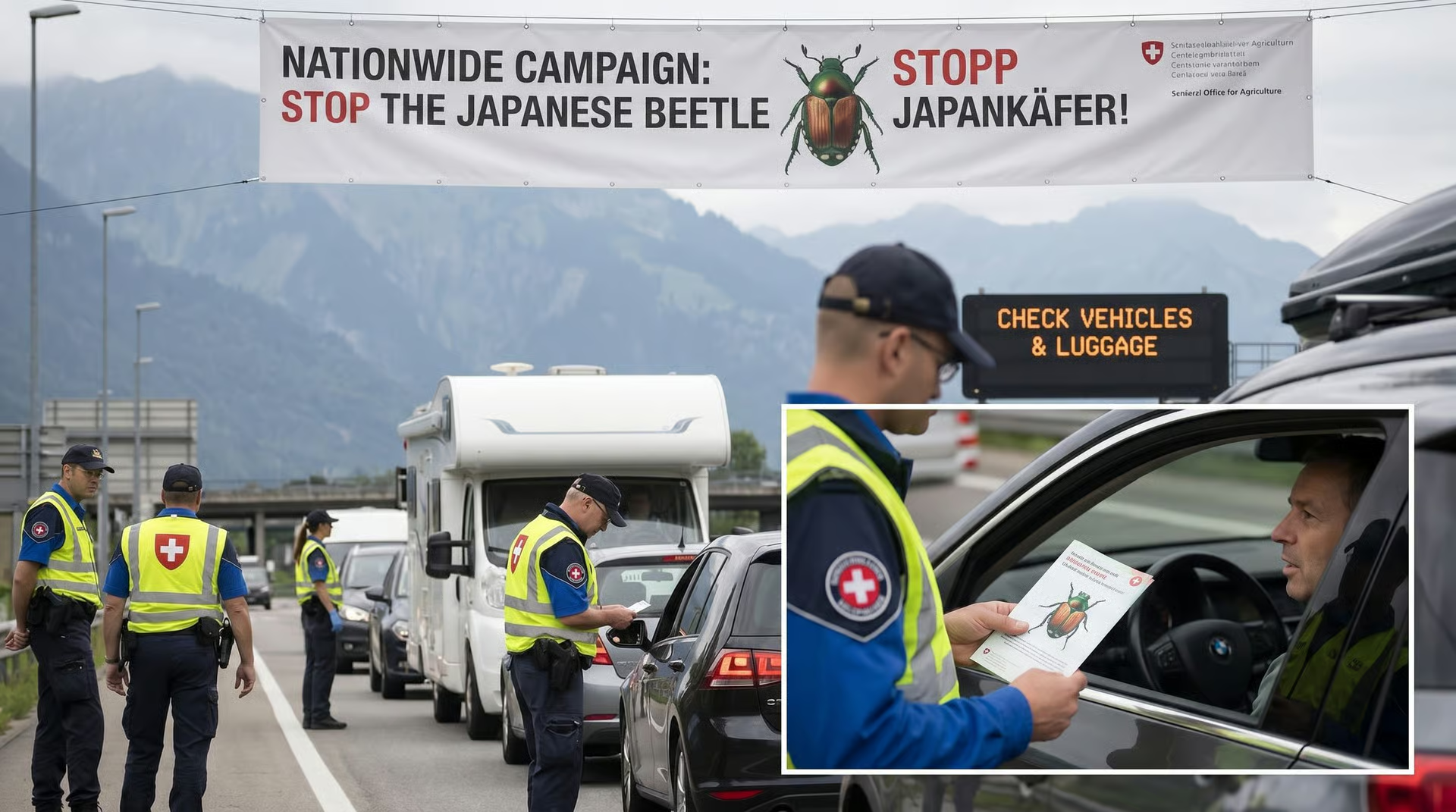
Switzerland Launches Nationwide Campaign Against Invasive Japanese Beetle

Federal Office for Agriculture has launched a nationwide awareness campaign to stop the spread of the invasive Japanese Beetle, a destructive pest threatening Switzerland’s environment, agriculture, and biodiversity.

Swiss authorities are urging travelers returning from Ticino, parts of Valais and Graubünden, as well as northern regions of Italy, to carefully inspect vehicles, luggage, and equipment for the beetles before entering other parts of the country.

Experts warn that the Japanese beetle poses a major threat to more than 400 plant species. The invasive insect damages crops, flowers, fruit trees, lawns, and grasslands by attacking both leaves and root systems. Swiss agricultural officials say the pest could seriously impact farming and dairy production if it spreads further across the country.

The entire canton of Ticino has already been classified as an infested area. Authorities also detected infestations in parts of Valais, Graubünden, and even major northern cities such as Basel and Zurich during 2025.

Scientists say the beetles spread rapidly by attaching themselves to vehicles, freight shipments, and travel luggage, allowing them to move much faster than through natural migration alone.

Swiss authorities have now shifted their strategy from eradication to containment in heavily affected southern regions. Monitoring systems, insect traps, and inspection campaigns are being expanded to slow the beetle’s spread north of the Alps.

The Federal Office for Agriculture is asking the public to immediately report any suspected sightings to cantonal plant protection services. Travelers are also advised to capture and safely dispose of the insects if found.

Environmental experts say public cooperation will play a crucial role in protecting Switzerland’s ecosystems, agriculture, and green landscapes from one of Europe’s fastest-growing invasive species threats.

Switzerland Launches Campaign to Stop Spread of Japanese Beetle

Switzerland has launched a nationwide awareness campaign to slow the spread of the invasive Japanese Beetle, which continues to threaten agriculture, plants, and ecosystems across several Swiss regions.

The Federal Office for Agriculture (FOAG) is asking travellers to carefully inspect their vehicles, luggage, and personal belongings when returning from affected regions in Switzerland and neighboring countries.

According to Swiss authorities, the Japanese beetle often spreads unnoticed through cars, trains, freight transport, and travel luggage. Infested areas currently include the entire canton of Ticino, parts of Graubünden and Valais, as well as northern Italian regions including Lombardy and Piedmont.

Swiss officials also reported major beetle infestations in the cantons of Basel and Zurich during 2025.

The awareness campaign will run across north-south transport routes, railway stations, freight terminals, tourist areas in Ticino, and online platforms. Authorities say public cooperation is now essential to slowing the insect’s spread.

Experts warn that while complete eradication is no longer possible in some affected regions, containment measures have successfully reduced the speed of expansion. Slowing the spread remains critical to protecting agricultural land and ecosystems north of the Alps where the beetle is still relatively rare.

The Japanese beetle is considered highly destructive because it feeds on hundreds of plant species, including crops, fruit trees, flowers, and grasslands.

Luxury Car Theft Surges Across Switzerland.

Luxury car theft is rising sharply across Switzerland, with new data highlighting a growing concern for vehicle owners and insurers. According to AXA, the number of reported car theft cases has increased significantly in recent years.

In 2025 alone, nearly 400 vehicle theft cases were reported to AXA. The total financial damage reached approximately CHF 5 million, almost double the losses recorded before the pandemic.

The average cost per car theft has also increased. In 2025, each case resulted in an average loss of around CHF 14,000, marking a steady rise over the past decade. Experts note that the average damage value has increased by about CHF 4,000 over the last ten years.

Certain regions have been more affected than others. The cantons of Geneva, Vaud, and Basel City reported the highest number of car theft cases. Ticino also recorded above-average incidents over the past decade.

In contrast, regions such as Obwalden and Glarus reported the lowest rates of vehicle theft.

Experts suggest that proximity to international borders plays a key role in these trends. Organized criminal groups are increasingly targeting high-value vehicles and transporting them خارج the country. Urban areas, with higher vehicle density, also provide more opportunities for theft.

Insurance officials warn that the trend could continue if preventive measures are not strengthened. Vehicle owners are advised to use enhanced security systems and remain vigilant, especially in high-risk regions.

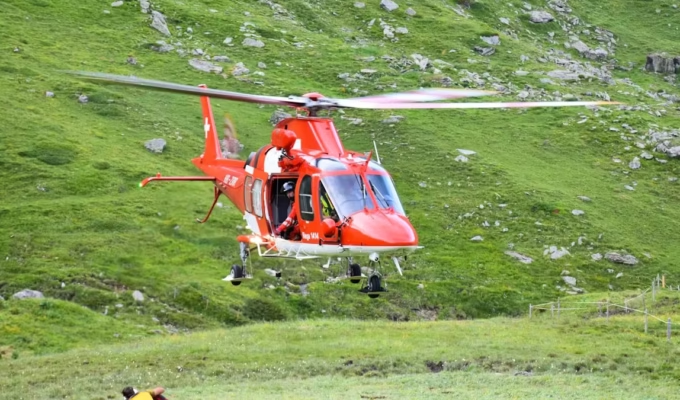
Helicopter Crash in Ticino Leaves Six Injured, One in Critical Condition

A serious helicopter crash in Ticino has left six people injured, including one person in critical condition, raising concerns over aviation safety in Switzerland.

The incident occurred in Mezzovico-Vira on Monday afternoon shortly after 4:30 PM. According to authorities, the helicopter was attempting to land at a construction site when it suddenly fell from a height of approximately 20 meters.

The aircraft belonged to a private company, and all six people on board, including the pilot, sustained injuries. Local police identified as Kantonspolizei Tessin confirmed that one passenger is in life-threatening condition, while two others suffered moderate injuries. The remaining individuals were treated for minor injuries.

Emergency response teams, including fire services from Lugano and Rivera, the rescue organization Rega, and medical teams from Croce Verde, were quickly deployed to the scene to assist in rescue operations.

Authorities have launched a full investigation into the cause of the crash. The Swiss Transportation Safety Investigation Board, known as SUST, is currently examining the incident alongside federal police officials.

At this stage, the exact reason for the crash remains unknown. Investigators are focusing on technical failure, weather conditions, and landing procedures as possible factors.

This incident has once again raised serious questions about aviation safety standards in Switzerland, particularly in construction and low-altitude flight operations.

Disturbance at Lugano Shelter: Police Intervene, Two Injured.

A disturbance broke out at a homeless shelter in Lugano, prompting a large police response and leaving two people with minor injuries.

The incident occurred late last night at the Botta shelter in the canton of Ticino, shortly after 10:30 PM. Authorities stated that the exact cause of the conflict remains unclear.

According to initial reports, a sudden argument escalated quickly, resulting in two individuals sustaining minor injuries. They received immediate medical attention at the scene.

Officers from Lugano City Police were the first to arrive, followed by support from Kantonspolizei Tessin and regional units. Emergency responders from Croce Verde Lugano also assisted.

During the operation, several individuals reportedly obstructed police efforts, forcing officers to use pepper spray to regain control of the situation.

Authorities confirmed that calm was restored by around 11:00 PM. Investigations are ongoing to determine the cause of the disturbance and identify those involved.

Ticino Retailers Struggle as Cross-Border Shopping to Italy Surges

Retailers in Ticino are coming under increasing pressure as cross-border shopping in nearby Italy continues to rise sharply, shifting consumer spending away from local stores.

According to industry estimates, the value of purchases made abroad by Ticino residents has grown from around Swiss Franc 500 million to CHF 700 million over the past five years. Many residents now rely heavily on supermarkets and retail outlets across the border in Italy for everyday goods.

Enzo Lucibello, president of the Ticino Association of Large Retailers (Disti), confirmed the trend, citing data reported by Corriere del Ticino and global VAT refund operator Global Blue.

A key factor behind the increase is Italy’s revised VAT refund policy. Since February 1, 2024, the minimum spending threshold for tax-free purchases has been reduced to €70, encouraging more Swiss shoppers to shop across the border.

The city of Como has seen a 6% rise in tax-free spending over the past two years, significantly above the national average. Swiss consumers account for 61% of total VAT refund spending, making them the largest group of cross-border shoppers.

Data shows that while non-EU customers tend to spend on luxury goods, Swiss shoppers primarily purchase groceries and everyday products. In fact, around one in two Swiss users of the VAT refund system shop mainly in supermarkets near the border.

The trend continues to challenge local retailers in Ticino, raising concerns about the long-term impact on the region’s domestic retail sector.