Gotthard Tunnel Traffic Jam Reaches 20km

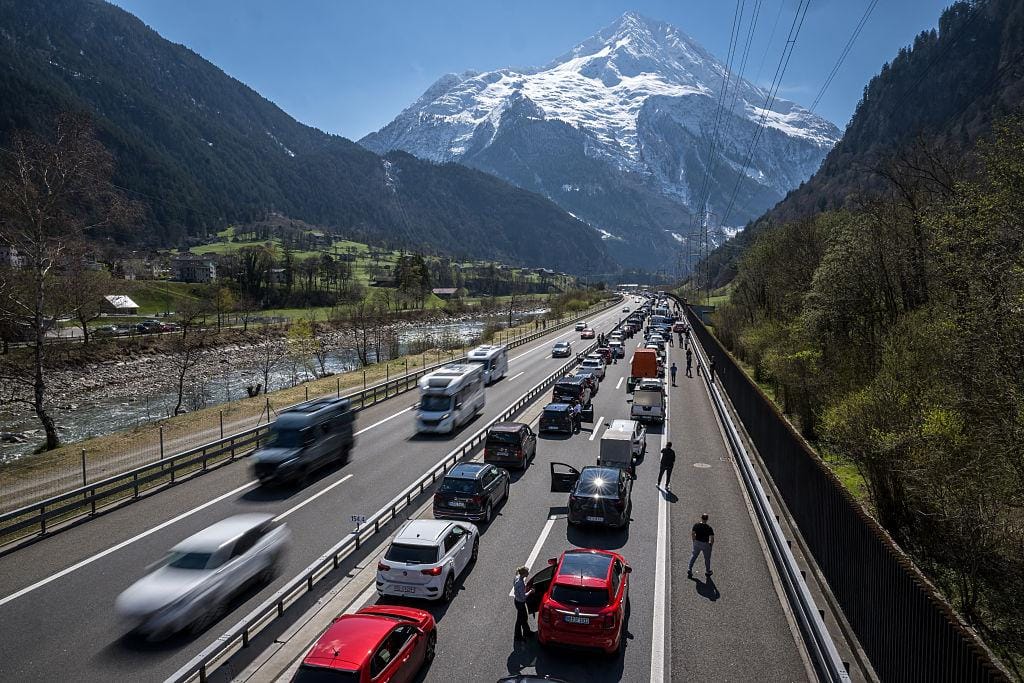
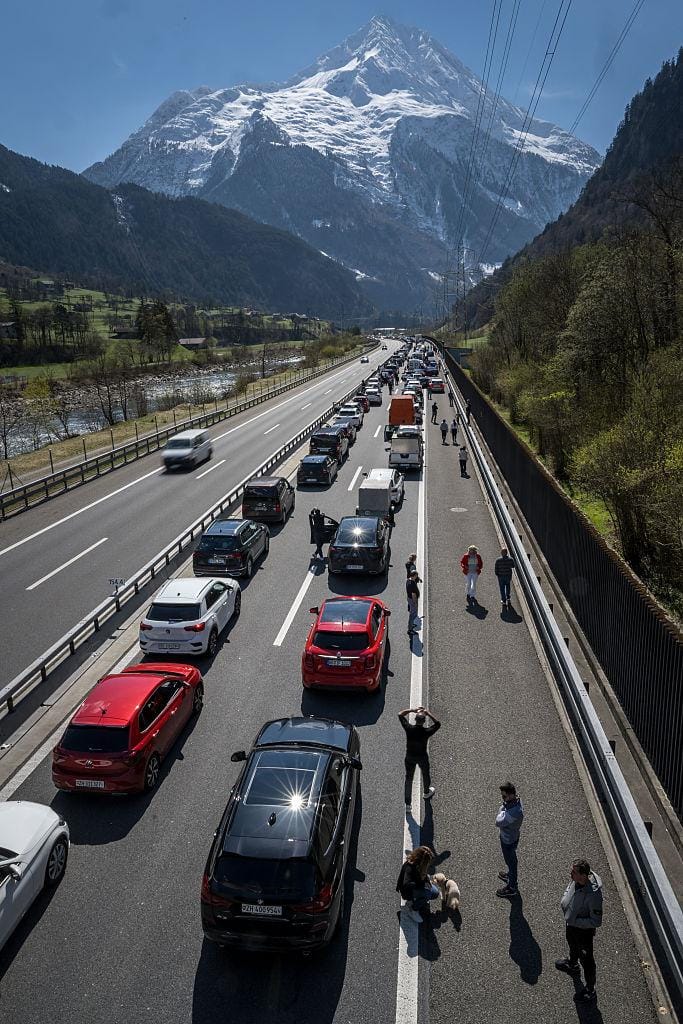
Heavy holiday traffic caused major congestion at Switzerland’s famous Gotthard Road Tunnel on Saturday, with the traffic jam at the northern entrance stretching to 20 kilometres by mid-morning.

According to the Touring Club Switzerland (TCS), drivers heading toward southern Switzerland faced delays of more than three hours and 20 minutes due to the severe congestion.

Traffic conditions worsened rapidly during the morning. In the early hours, the queue measured around 10 kilometres, but it doubled in length shortly before 10am as more vehicles entered the holiday travel routes during the Whitsun weekend.

Authorities also warned that alternative routes were experiencing heavy traffic. The A13 motorway via the San Bernardino Tunnel was already congested over a distance of approximately 17 kilometres.

The TCS advised travellers to consider diversions through the A9 Simplon route or use the Lötschberg car transport service to avoid the worst traffic conditions.

The Federal Roads Office (Astra) had already predicted exceptionally high traffic volumes during the long holiday weekend. Officials noted that the historic record at the Gotthard Tunnel remains 28 kilometres of congestion, recorded during the 2018 Whitsun period.

The Gotthard route is one of Europe’s most important north-south transport corridors and regularly experiences major congestion during peak holiday travel seasons.
Switzerland Fuel Prices Drop Slightly as Oil Market Eases

Fuel prices in Switzerland have fallen slightly in recent days, offering limited relief to motorists after months of elevated energy costs.

According to the Touring Club Switzerland (TCS), the average national fuel prices during the week stood at CHF1.89 per litre for unleaded 95 petrol, CHF2.00 for unleaded 98, and CHF2.14 for diesel.

Compared with the end of April, petrol prices have dropped by CHF0.01, while diesel prices declined by CHF0.03 per litre. Despite the decrease, fuel remains significantly more expensive than before the escalation of tensions in the Middle East earlier this year.

Before the regional conflict intensified, fuel prices at the end of February averaged CHF1.

67 for unleaded 95, CHF1.78 for unleaded 98, and CHF1.79 for diesel. Current prices therefore remain roughly 13% higher for petrol and more than 20% higher for diesel.

The TCS says stronger industrial demand has contributed to the sharper increase in diesel prices compared with petrol.

Global oil prices have also eased slightly. A barrel of Brent crude traded at just under $108 this week, down around $10 from late April levels.

Oil markets had surged earlier after concerns over conflict in the Middle East and fears surrounding possible disruptions to the strategically important Strait of Hormuz shipping route.

The TCS noted that actual fuel prices can vary across Swiss regions and petrol stations, as its published figures are based on estimates and market sampling.

Although prices have softened slightly, Swiss consumers continue to face elevated transport and energy costs compared to earlier in the year.

Long Traffic Jams Build Early at Switzerland’s Gotthard Tunnel.

Heavy traffic congestion has already formed at the northern entrance of the Gotthard Road Tunnel as holiday and transit traffic intensifies across Switzerland.

According to the Touring Club Switzerland (TCS), a queue measuring approximately 9 kilometres had developed at the north portal by 7:20am on Thursday morning.

Motorists faced waiting times exceeding 90 minutes before entering the tunnel. Traffic authorities reported that the line of vehicles was divided into several sections between Erstfeld and Göschenen.

Drivers heading south were advised to use the alternative route via the A13 motorway and the San Bernardino Tunnel to avoid severe delays.

Traffic pressure at the Gotthard route has remained high in recent days. On Wednesday afternoon, authorities had already recorded a traffic jam stretching around 10 kilometres at the same location.

The Gotthard corridor is one of Europe’s most important north-south transit routes, particularly during holiday periods and long weekends, often leading to significant congestion at tunnel access points.

Swiss traffic authorities continue to monitor the situation and recommend that travelers check live traffic updates before beginning their journeys.

Swiss Travel Safety Concerns Rise in 2026

A new survey reveals that people in Switzerland are becoming increasingly concerned about safety when travelling abroad, even as demand for holidays remains strong.

Despite growing concerns, travel demand continues to recover. The proportion of people reducing or avoiding travel has dropped from 61% last year to 49%, indicating that a majority of Swiss residents still plan to travel abroad.

The survey highlights that political instability and global conflicts are the main factors influencing travel decisions. Around two-thirds of respondents cited these risks, leading to a noticeable shift toward European destinations, while interest in North America has declined.

Travel habits are also evolving. The preference for private cars has decreased significantly—from 67% two years ago to 51% today. Cars are now almost equally preferred alongside airplanes (51%) and trains (50%), reflecting a more balanced approach to transportation.

The study was conducted between February and March, covering more than 1,000 participants across Switzerland’s German-, French-, and Italian-speaking regions, along with additional TCS members.