


Swiss Rail Freight Restructuring Impacts Nearly 200 Employees

Swiss Federal Railways is reorganizing its freight operations, leading to major internal changes that will affect nearly 200 employees across Switzerland.

The restructuring focuses on strengthening wagonload freight services (TWCI), where wagons from different customers are combined into single freight trains to improve efficiency and reduce operational costs.

The Swiss government has assigned SBB’s cargo division a public service mandate, requiring it to improve performance and ensure long-term sustainability in freight transport.

Under the new plan, the company aims to make freight operations profitable by 2033. SBB stated that the revised system will become significantly more efficient starting in December, as part of a broader modernization strategy.

As part of the restructuring, employees will either be relocated, retrained, or integrated into subsidiary companies or partner networks. The company emphasized that redundancies will remain rare and will be considered only as a last resort.

Around 30 employees in French-speaking regions of Switzerland are directly affected, with support measures offered to help them transition into new roles within or outside the organization.

The freight overhaul reflects Switzerland’s efforts to strengthen its logistics infrastructure while adapting to changing transport demands and financial pressures in the rail sector.
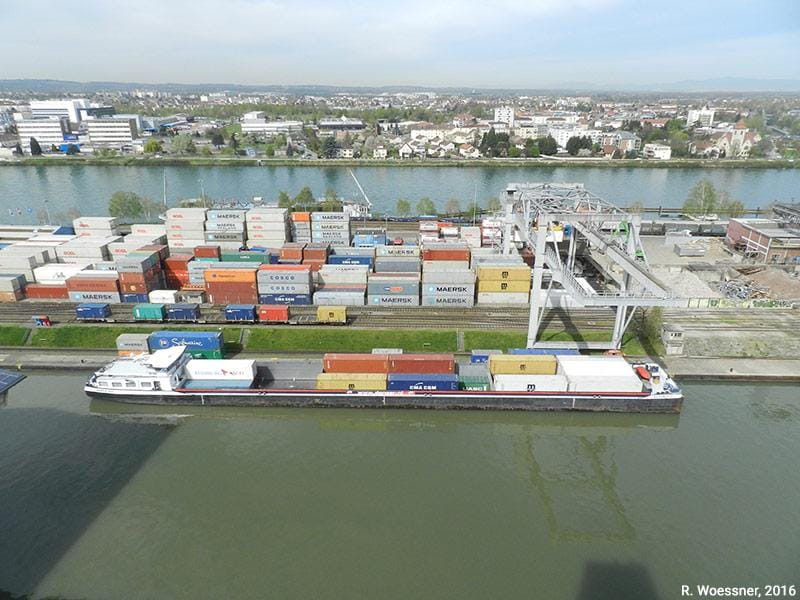
Switzerland Joins Rhine Transport Network.

The agreement was finalized through the signing of the European Corridor Management Agreement (ECMA) by Port of Switzerland (SRH) during a meeting of the European River Information Services (EuRIS) in Basel.

The EuRIS platform provides real-time shipping information including traffic conditions, waiting times, route disruptions, and navigation updates. Swiss authorities say the move will improve coordination and logistics efficiency across the Rhine corridor.

With Switzerland’s participation, all sections of the Rhine River are now integrated into the European system, creating more complete cross-border transport monitoring for commercial shipping operators.

Swiss waterway data is expected to become available on the platform in the coming months. The EuRIS system was launched in 2022 and currently connects over 29,500 kilometres of European waterways across 13 countries.

Switzerland’s three Rhine ports with direct access to the sea are located in Basel, Birsfelden, and Muttenz. These ports play a major role in the country’s freight transport infrastructure.

According to the SRH, around 80 port companies rely on the Rhine ports to manage goods transport by rail and road, as well as storage and logistics operations.

In addition to infrastructure management, Swiss Rhine authorities are responsible for overseeing navigation safety and ensuring compliance with both national and international shipping regulations.

The agreement highlights Switzerland’s growing integration into European transport coordination systems and reinforces the importance of the Rhine as a strategic trade route for the continent.