Zurich Riots Leave Officer Injured.

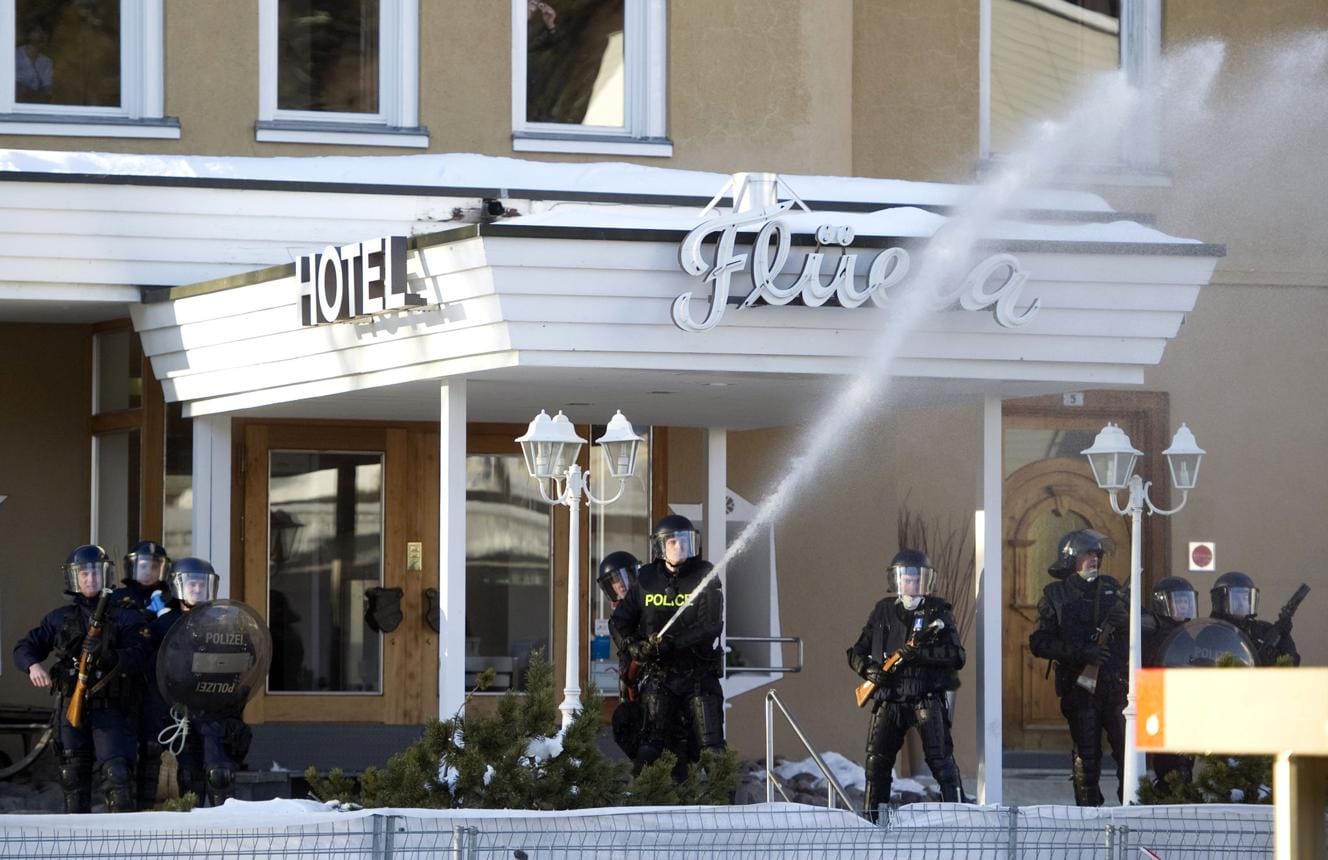
A violent disturbance erupted in the city of Zurich in Zurich over the weekend, leaving a police officer slightly injured after clashes with a large group of rioters.

According to police reports, officers were initially called to the scene following complaints of a noise disturbance in the early hours of Sunday morning. A patrol arrived shortly after 2:30 a.m., but was immediately met with aggression as a group of individuals began throwing bottles and stones at police vehicles.

As the situation escalated, officers were forced to withdraw from the area and request reinforcements. Law enforcement then responded with crowd-control measures, including rubber bullets and chemical sprays, in an attempt to disperse the group.

Additional police units were deployed, including a water cannon and police dogs, to regain control of the situation and contain the unrest.

During the confrontation, one officer was struck by an object and sustained minor injuries. A police vehicle was also damaged in the incident before the crowd eventually dispersed.

Authorities have launched an investigation into the unrest and are working to identify those involved in the violence.

Elderly Man Dies After Horse Farm Fire in Hombrechtikon.

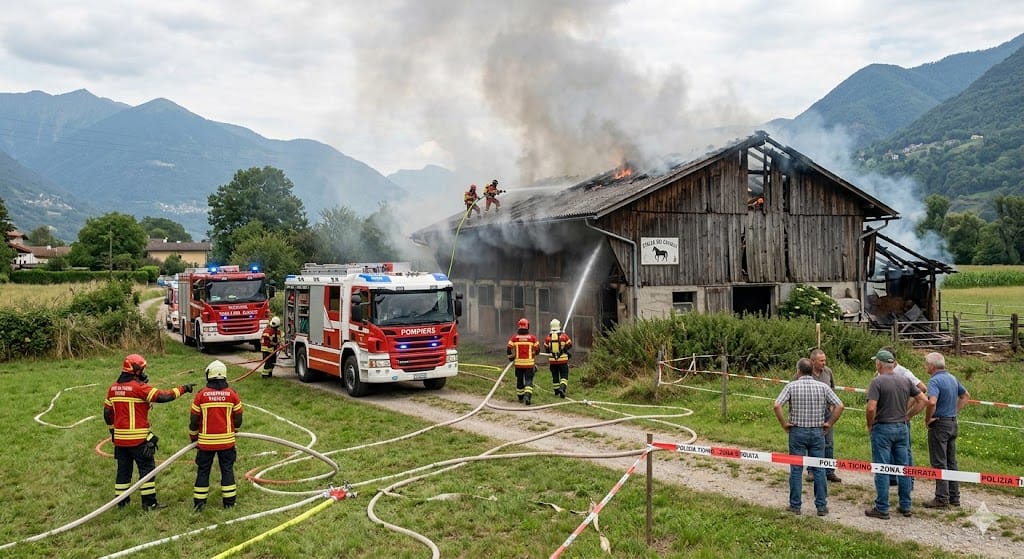
A 73-year-old man has died following severe burn injuries sustained in a fire at a horse farm in Hombrechtikon, authorities confirmed.

The fire broke out on April 24 in the canton of Zurich, leaving a total of 10 people injured. While eight individuals suffered minor injuries, two were critically hurt in the incident.

The elderly man, who had been receiving treatment in a hospital in Zurich, succumbed to his injuries on Saturday evening. Another victim, an 84-year-old woman, was also seriously injured and transported to hospital by helicopter.

Emergency services received the alert shortly before 6:30 PM and responded quickly. By the time rescue teams arrived, all occupants had already evacuated the building.

Firefighters managed to bring the blaze under control, but the horse farm and adjacent residential areas suffered extensive damage.

Authorities estimate that the fire caused property losses exceeding one million Swiss Franc. Investigations are ongoing to determine the exact cause of the fire.

Man Declares Himself King of Switzerland, Sparks Political Outrage

A man has declared himself the “King” of Switzerland, claiming authority over a private land area measuring approximately 117,000 square meters. The unusual announcement has quickly drawn attention across the country and triggered strong reactions from political leaders.

The individual reportedly marked his privately owned land as an independent kingdom. He claimed sovereign status and attempted to establish symbolic control over the area. While the land legally belongs to him, Swiss law does not recognize any form of monarchy or self-declared sovereignty.

Swiss politicians have openly criticized the move. Officials described the declaration as misleading and potentially harmful to public understanding of national laws. They emphasized that Switzerland operates under a federal democratic system, where no individual can claim royal authority.

Authorities are now reviewing whether the man’s actions violate any legal frameworks. Experts highlight that declaring a kingdom within Switzerland has no legal standing and may lead to consequences if it causes public confusion or administrative issues.

The incident has sparked widespread discussion online and in media circles. Some view the act as symbolic or attention-seeking, while others see it as a serious misuse of legal boundaries. The situation continues to attract public curiosity and debate.

This unusual case highlights the limits of private ownership and the importance of legal structures in modern democracies. Swiss authorities continue to monitor the situation closely as discussions around sovereignty and law gain momentum.

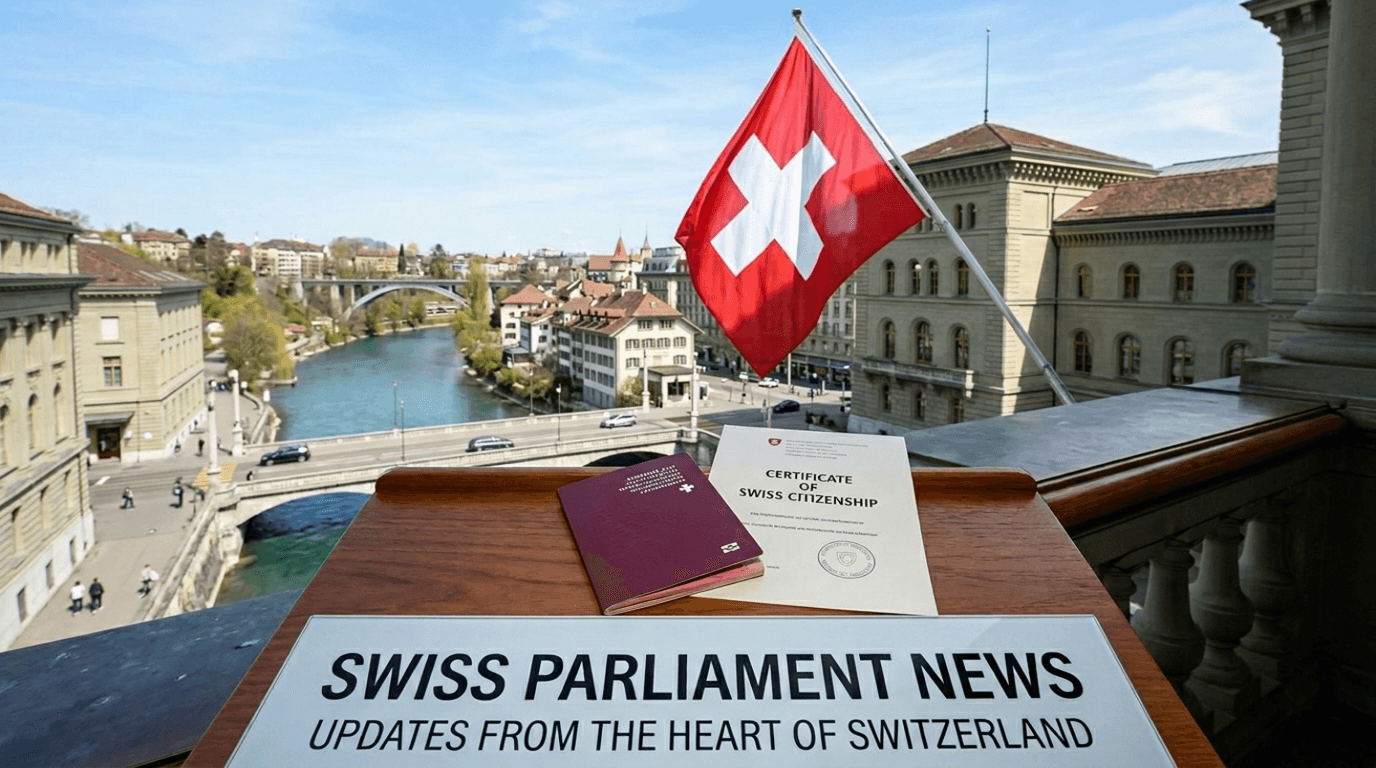
Swiss Parliament Rejects Proposal to Simplify Citizenship Process

The Swiss House of Representatives has voted against a proposal that aimed to simplify the citizenship process for foreigners living in Switzerland. The proposal was rejected with a two-thirds majority vote in Parliament.

The initiative had been introduced to make naturalisation easier for long-term foreign residents, including families, workers, and students who have been living in Switzerland for many years.

Supporters of the proposal argued that the current process is complicated and time-consuming. They believed that immigrants who are well integrated into Swiss society should receive easier access to Swiss citizenship.

However, a majority of Swiss lawmakers opposed the proposal and decided to keep the existing naturalisation system unchanged. Counter-proposals suggested by minority members of Parliament were also rejected during the voting process.

At present, applicants seeking Swiss citizenship must continue to meet several requirements, including residency duration, language ability, social integration, and a clean legal record.

The decision is expected to be closely followed by immigrant communities across Switzerland, including the Tamil diaspora.

Swiss Court Rules Only Dairy Can Be Called “Milk”

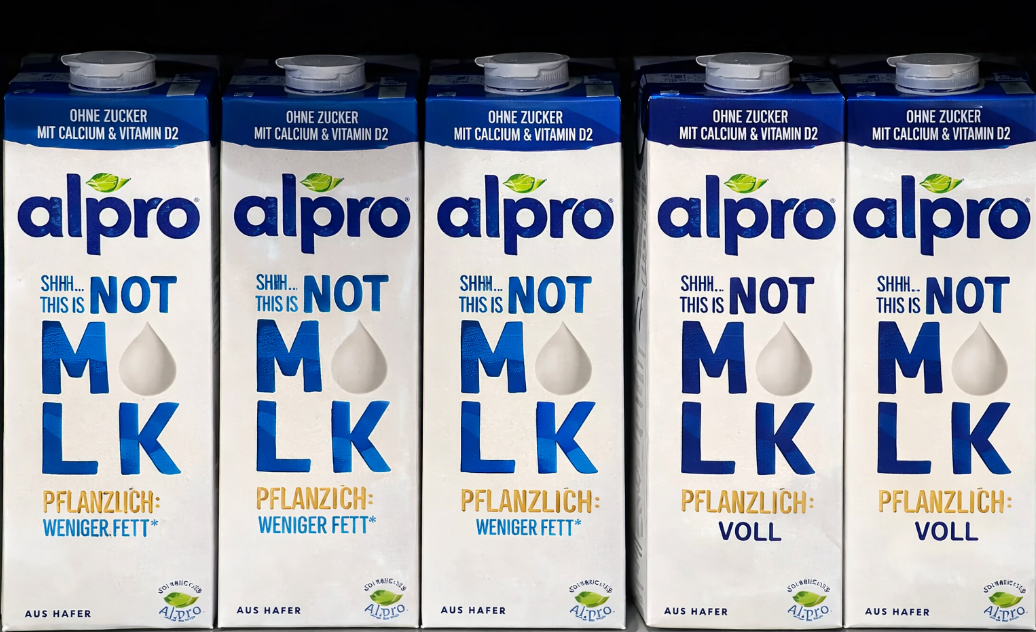
A significant ruling from the Swiss Federal Supreme Court has clarified that the term “milk” may only be used for products derived from an animal’s udder. Plant-based alternatives, including oat, soy, and almond drinks, are now prohibited from displaying the word on packaging—even in negated forms such as “not milk.”

The case focused on an oat-based beverage marketed by Danone under its Alpro brand, sold in supermarkets like Migros and Coop. The packaging featured the tagline “Shhh… this is not milk”, with the letter “i” replaced by a droplet. Swiss authorities, including the cantonal laboratory in Zurich, determined that such labeling could mislead consumers into thinking the product was dairy due to visual cues such as the white-and-blue carton.

Under Swiss food law, plant-based substitutes must be clearly differentiated from animal products. Terms traditionally associated with meat or dairy, such as “salami,” “meatloaf,” or “milk,” are off limits for vegan alternatives. Guidance from the Federal Food Safety and Veterinary Office had already advised that even negated claims could be misleading. The Supreme Court’s decision now makes this binding nationwide, with a majority of four to one ruling against the use of “milk” for plant-based products. One dissenting judge noted that terms like “soy milk” and “almond milk” are widely understood and unlikely to confuse consumers.

Critics argue the decision is out of step with common usage, as plant-based and dairy beverages are often sold side by side and used interchangeably in everyday meals like coffee or muesli. While the ruling strengthens legal clarity, it does not rely on empirical evidence of consumer confusion. A 2024 Swiss study suggested that consumers overwhelmingly recognize plant-based drinks as distinct from dairy products.

The case reflects longstanding structural influences in Swiss law, shaped in part by agricultural and dairy interests seeking to protect traditional product names. However, the Supreme Court applies the law as written, emphasizing strict definitions of dairy-related terminology across the country. This ruling follows a previous judgment banning labels like “planted chicken” for similar reasons.