

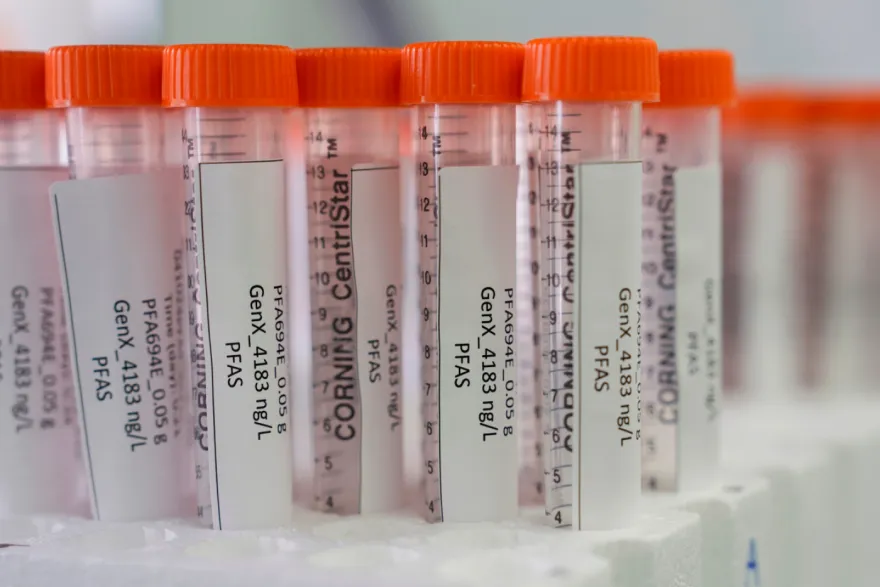
Switzerland PFAS Food Rule Sparks Debate.

The Swiss government proposes a temporary rule that allows food producers to blend animal products containing higher levels of PFAS, known as “forever chemicals,” into final food items as long as the end product stays within safety limits.

The Federal Council opens a public consultation and invites stakeholders to comment on the proposal until September 18. The measure aims to support farmers who need more time to meet strict PFAS contamination standards.

PFAS chemicals are found in multiple regions of Switzerland and can enter the food chain through contaminated soil and water. These substances have been linked to potential health risks, leading Switzerland to enforce maximum PFAS limits for meat, fish, and eggs since 2024.

Under the proposed three-year transition plan, consumers will receive clear information if food products include blended ingredients that exceed PFAS limits before processing. The government also considers financial support for affected farms facing contamination challenges.

Parliament urges the Federal Council to protect farmers’ livelihoods while ensuring food safety. A separate special law to support contaminated farms is expected to go into consultation in March 2027.

Swiss Old-Age Pension Payments Hit Record High.

Switzerland has reported a record rise in old-age pension payments, reflecting the country’s steadily ageing population. According to the Federal Social Insurance Office, a total of 2.64 million old-age pensions were paid out last year, marking a 1.6% increase compared to the previous year.

The data shows that Switzerland continues to experience a consistent rise in pension recipients. In the previous year, the number of beneficiaries had already increased by around 1.8%, adding approximately 44,000 new pensioners. In the latest reporting period, a further net increase of about 40,400 people was recorded.

By the end of 2025, the Swiss pension system was paying out a total of around 2.91 million pensions, including old-age pensions as well as widows’, widowers’, and orphans’ benefits. Notably, around one-third of these pensions are being paid to individuals living outside Switzerland, highlighting the global nature of Swiss retirement distribution.

Despite the growing number of beneficiaries, the Swiss pension system remained financially stable. It closed the year with a surplus, as total income exceeded expenditure by CHF1.8 billion. When investment income is included, the overall operating result reached CHF4.4 billion, although this was lower than the CHF5.6 billion recorded the previous year.

The continued growth in pension payouts reflects demographic changes in Switzerland, where an ageing population is placing increasing pressure on long-term social insurance systems. Policymakers continue to monitor sustainability measures to ensure that future generations receive stable retirement support.

The report has sparked renewed discussion about retirement planning, cost of living for pensioners, and the financial balance of Switzerland’s public pension system.