


Swiss Households Could Pay CHF 635 More Per Year if Anti-Immigration Proposal Passes

Switzerland households could face higher annual costs if the proposed “No to 10 million” anti-immigration initiative is approved, according to opponents of the plan.

Campaigners against the proposal warn that the policy could increase the average household burden by around CHF 635 per year, driven by reduced tax revenues, higher public service costs, and increased pressure on the national economy.

The initiative aims to significantly restrict immigration levels in Switzerland, but critics argue that such limits would weaken the country’s labour market and strain public finances.

Opponents claim that fewer working-age migrants would reduce tax contributions while increasing per-capita costs for healthcare, pensions, and infrastructure. They also warn that businesses could face labour shortages, potentially slowing economic growth.

The warning adds to a growing debate ahead of the referendum on whether Switzerland should introduce stricter population controls. Government-linked analyses have previously suggested that long-term fiscal impacts could outweigh any benefits such as reduced housing pressure.

Supporters of the initiative argue that limiting population growth would ease housing shortages and reduce overcrowding in urban areas, but critics say these gains would be limited compared to broader economic losses.

The proposal remains highly contested, with both sides presenting sharply different forecasts about its impact on the economy and everyday living costs.
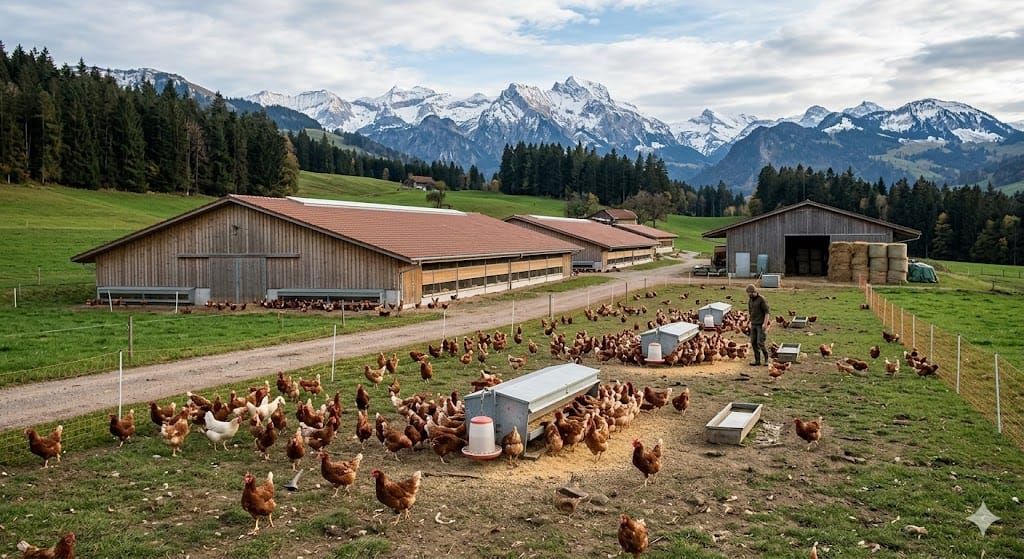

Switzerland Chicken Consumption Surge Drives Imports Higher

Chicken consumption in Switzerland has increased significantly over the past few years, reflecting a major shift in dietary habits. Consumers are choosing poultry more frequently, making it one of the most popular meat options in the country.

In 2024, the average per capita chicken consumption reached 15.9 kilograms. This marks a 70% increase compared to the year 2000. While pork consumption has declined and beef remains stable, chicken has gained a dominant position in everyday diets.

In 2025, more than 82 million chickens were raised for meat production in Switzerland. Despite this large-scale production, domestic supply still falls short of demand. As a result, nearly one-third of chicken meat is imported from countries such as Brazil.

Restaurants and fast-food chains have played a key role in boosting chicken consumption. Chicken-based meals have become increasingly popular, and several international food brands that previously struggled in Switzerland are now succeeding by focusing on poultry offerings.

The growing demand has created new opportunities for local farmers. Many farmers are shifting from dairy production to poultry farming. While dairy farming faces price pressure, poultry farming offers more stable returns and better pricing structures.

This shift indicates a broader transformation in Switzerland’s agricultural sector. Farmers are adapting to changing consumer preferences and market conditions, ensuring a steady supply of poultry products in the future.

The rapid rise in chicken consumption highlights evolving food trends in Switzerland. As demand continues to grow, both imports and local production will play a crucial role in meeting consumer needs.

Switzerland Records Lowest Tax Burden in Europe, Says OECD Report.

Switzerland continues to offer one of the lowest tax burdens in Europe, according to a new report by the Organisation for Economic Co-operation and Development. The findings highlight a major financial advantage for residents despite the country’s high cost of living.

The OECD report, released on April 22, reveals that Switzerland ranks among the lowest-taxed countries within its 38 member nations. Only a few countries, including Colombia, Chile, New Zealand, and Mexico, report lower overall tax contributions.

On average, individuals in Switzerland pay around 22.9% of their income in taxes and social security contributions. This figure stands well below the OECD average of 35.1%, making Switzerland the lowest-tax country in Europe.

Families with children enjoy even greater financial advantages. Tax deductions vary across cantons, but dual-income households with two children see their tax burden drop from 22.9% to approximately 17.1%. Larger families benefit from even higher reductions.

Residents can expect additional tax relief in 2026. Local governments across several cantons have approved tax reductions and adjustments linked to lower inflation. These changes aim to reduce financial pressure on households.

Tax savings vary by region. Residents in Geneva can expect savings of at least 1,000 Swiss francs. In Zurich, St. Gallen, Graubünden, and Ticino, savings range between 500 and 1,200 francs. Areas such as Lucerne, Aargau, and Schwyz also report significant reductions.

Several factors explain Switzerland’s low tax rates. The country maintains a very low unemployment rate, allowing more people to contribute to tax revenue. In addition, Switzerland spends less on social welfare programs compared to countries like Sweden, promoting a system where individuals remain financially independent.

For many residents, including members of the Tamil community living and working in Switzerland, these lower taxes provide financial relief. However, experts advise careful financial planning due to the country’s high living costs.

Switzerland’s low tax structure continues to strengthen its economic appeal. With further tax reductions expected in 2026, residents are likely to experience improved financial stability despite rising living expenses.