


Language Barrier Nearly Causes Train Collision in Switzerland

A serious railway incident was narrowly avoided in Neuchâtel-Vauseyon, Switzerland, after two trains travelling in opposite directions were brought to a halt just 50 metres apart. The situation has raised important questions about communication and safety in multilingual environments.

According to reports, the incident involved a communication breakdown between German-speaking train drivers and French-speaking control room staff. Instructions issued by the control centre were given in French, but the drivers were unable to fully understand the messages in time to act immediately.

At the same time, no German-speaking staff were available in the control room to assist with translation or urgent communication. This delay nearly led to a catastrophic collision, which was only avoided when both train drivers managed to stop their trains in time.

Authorities confirmed that all staff involved were formally qualified and met the required language standards. However, the incident revealed that formal certification alone may not be sufficient in high-pressure emergency situations where rapid, clear communication is critical.

The near-miss has sparked renewed debate about the importance of practical language training in operational environments. Experts argue that employees in safety-critical sectors such as rail transport must be able to communicate effectively under emergency conditions, not just pass language examinations.

The event also highlights broader challenges faced in multilingual countries like Switzerland, where German, French, Italian, and Romansh are all official languages. While this diversity is a national strength, it can also create risks if communication systems are not fully aligned during emergencies.

Rail safety authorities are expected to review communication protocols following the incident to prevent similar situations in the future.
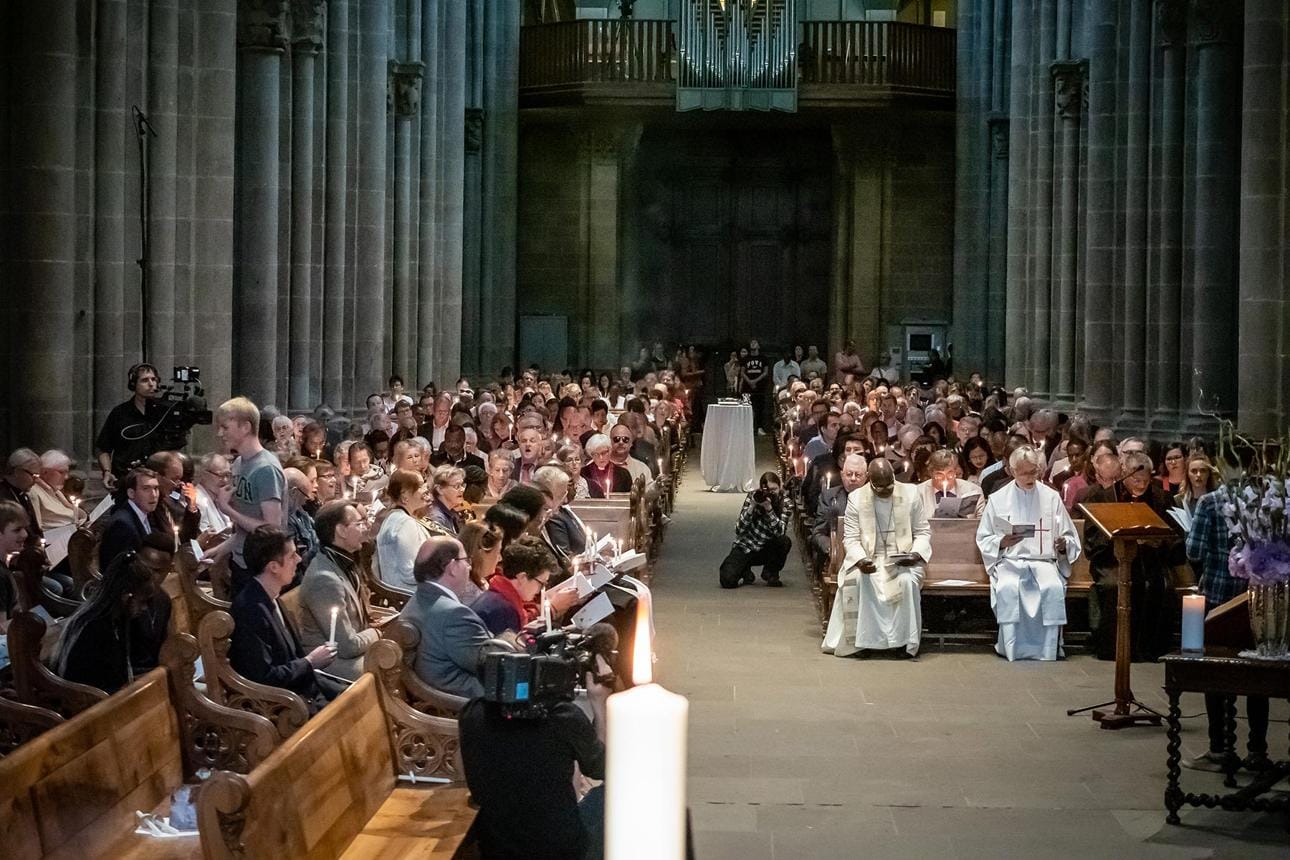
Geneva Cathedral Hosts Emotional Farewell for Jean Ziegler

St Peter’s Cathedral in Geneva was filled to capacity as mourners gathered for the farewell ceremony of Jean Ziegler, the Swiss sociologist, former politician, and UN human rights advocate. The event drew a large and diverse audience, including political figures, activists, UN representatives, and international supporters.

In a rare and symbolic moment, the left-wing anthem The Internationale was played on the cathedral organ and sung collectively by attendees, reflecting Ziegler’s lifelong commitment to social justice and political activism.

The ceremony lasted nearly two and a half hours, featuring speeches, musical tributes, and personal reflections. Geneva Mayor Christina Kitsos described Ziegler as “one of the greatest voices of conscience,” highlighting his long-standing campaigns against global hunger and inequality.

Former Swiss President Micheline Calmy-Rey also paid tribute, addressing past accusations made against Ziegler during his criticism of Swiss banking institutions. She emphasized that his actions were driven by love for Switzerland and a desire for justice and accountability.

The event was attended by people from various communities, including activists and supporters from Latin America, Africa, the Middle East, and Europe. Many described Ziegler as a global figure whose influence extended far beyond Switzerland.

Francesca Albanese, UN Special Rapporteur on the Palestinian territories, referred to him as “a giant” within the international human rights system, underscoring his impact on global advocacy for justice and food rights.

Video messages and tributes were also shared by international figures, including French politician Jean-Luc Mélenchon, who praised Ziegler’s lifelong dedication to activism and social causes.

Family members shared more personal memories, describing him as both a passionate activist and a warm, affectionate presence within the family. They recalled his energetic personality, sense of humor, and unwavering commitment to protest and public engagement.