

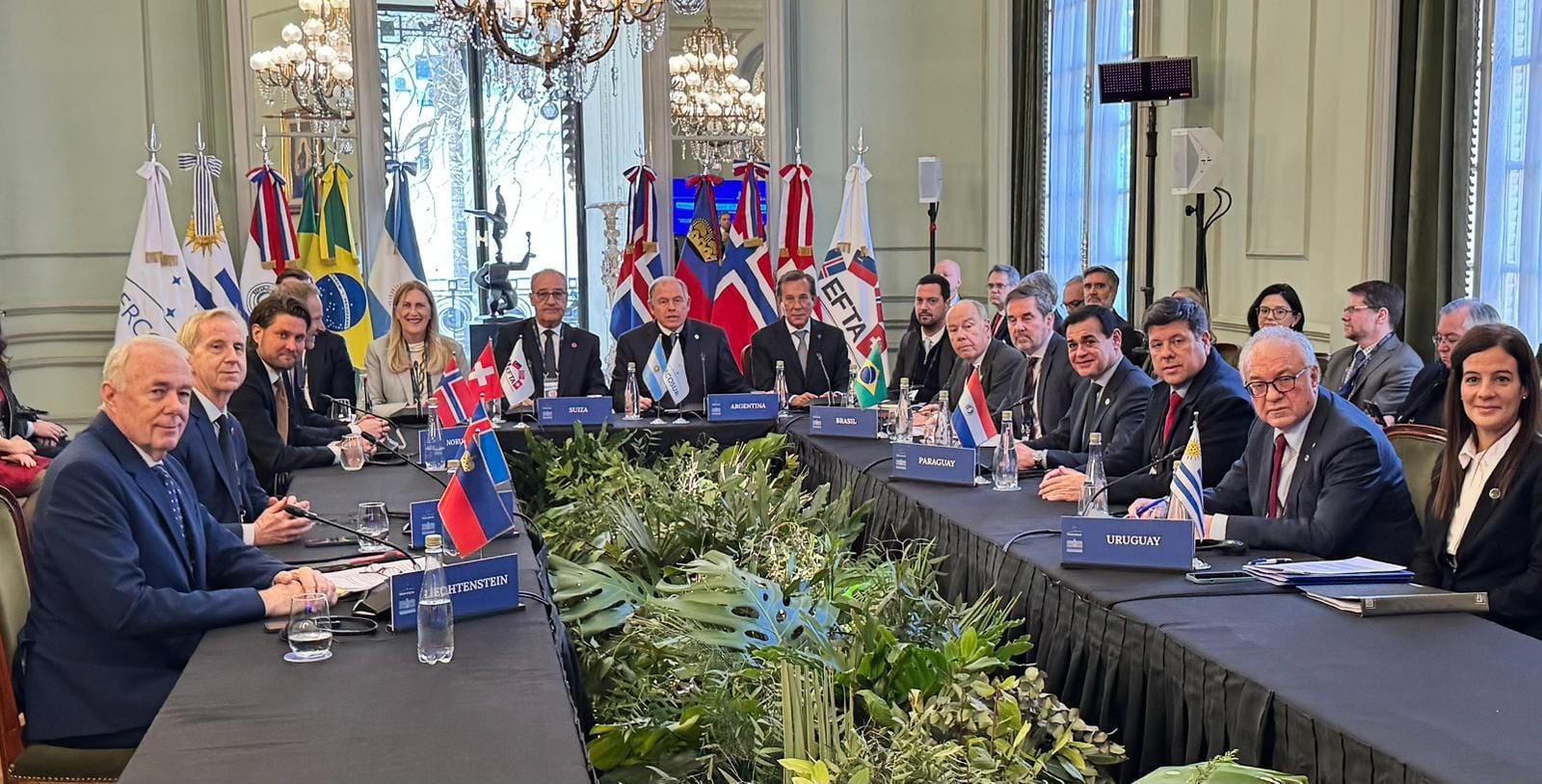

Swiss Parliament Rejects EFTA-Mercosur Free Trade Agreement
Switzerland’s House of Representatives has voted against the proposed free trade agreement between the European Free Trade Association (EFTA) and the South American Mercosur bloc, creating uncertainty over one of the country’s most significant international trade initiatives.
The agreement was rejected by 96 votes to 86, with nine abstentions, following a heated parliamentary debate that highlighted concerns about agriculture, environmental protection, and the impact on Swiss producers.
Opposition came from several political parties, including the Social Democratic Party, the Green Party, sections of the Swiss People’s Party, and some members of the Centre Party. Lawmakers raised questions about the agreement’s long-term consequences for Swiss farmers and environmental standards.
A major point of contention involved proposals for support measures aimed at protecting Swiss agriculture. Parliament rejected plans for an CHF 880 million support package intended to help farmers adapt to increased international competition. Lawmakers also declined to incorporate elements of the European Union’s Deforestation Regulation into the agreement.
The debate reflected broader concerns about balancing economic growth with environmental responsibility. Several parliamentarians argued that trade expansion should not come at the expense of rainforest protection or indigenous rights in South America.
The Mercosur bloc includes Argentina, Brazil, Paraguay, and Uruguay, representing a market of approximately 270 million people. The agreement was negotiated jointly by the four EFTA members: Switzerland, Norway, Iceland, and Liechtenstein.
Supporters of the agreement highlighted its economic benefits. According to the proposed terms, 96% of Swiss exports to Mercosur countries would become duty-free, potentially improving market access for Swiss businesses. Officials estimated annual customs savings of approximately CHF 155 million.
The agreement also included provisions allowing Mercosur countries access to limited Swiss import quotas for sensitive agricultural products, including meat and wine. Swiss authorities would retain control over the management of these quotas.
Despite the House’s rejection, the process is not yet complete. The proposal will now move to the Swiss Senate for further consideration. If the Senate approves the agreement, the House of Representatives will have the opportunity to review the matter again. The outcome highlights the ongoing challenge of balancing international trade opportunities with domestic agricultural interests and environmental concerns in Swiss policymaking.